Luxury pop-ups in China no longer compete on aesthetics alone. The more effective model combines location, experience design, hospitality, and digital follow-through into one connected engagement system.
In this article, we examine Burberry’s Plaza 66 pop-up in Shanghai as a visible market example and draw out the strategic lessons luxury leaders can apply to their own retail activations in China.
Burberry’s Shanghai pop-up offers a useful market example of how a luxury brand can structure an offline experience to attract the right audience, deepen participation, and create a more deliberate bridge into clienteling.
Executive Summary:
1. Burberry’s Plaza 66 placement appears designed to capture both destination luxury shoppers and surrounding city traffic with a strong brand fit.
2. The pop-up’s maze-style journey, photo moments, and hospitality features were built to encourage exploration, sharing, and longer visits.
3. Comfort and atmosphere were treated as business tools that supported engagement rather than decorative extras.
4. The WeCom touchpoint made digital connection feel like part of the experience rather than a separate CRM step.
5. The broader lesson for luxury brands in China is to design pop-ups so they generate reusable clienteling value, not just branded attention.
Table of Contents
- Why This Pop-up Matters for Luxury Retail in China
- How Burberry Used Placement to Shape Audience Quality
- How Burberry Designed the Pop-up for Exploration, Sharing, and Comfort
- How Burberry Built WeCom Clienteling into the Pop-up Experience
- Burberry Shanghai Pop-Up: What It Shows About Luxury Retail in China
- Conclusion
Why This Pop-up Matters for Luxury Retail in China
The commercial standard for luxury pop-ups in China has moved. Brand visibility still matters, but visibility alone is not enough.
A more effective pop-up now needs to attract the right audience, hold attention long enough to shape perception, create social distribution, and open a practical path to follow-up.
That shift is visible at the market level. According to Bain’s 2026 spring luxury update, leading luxury brands are under pressure to create more immersive, emotionally resonant experiences while reinforcing cultural relevance.
Burberry’s Shanghai pop-up fits that direction closely.
The useful lesson is not that every brand should copy Burberry’s creative concept. It is that every retail experience should have a clear commercial role within the wider customer journey.
How Burberry Used Placement to Shape Audience Quality
The first strategic choice was not visual. It was the location.
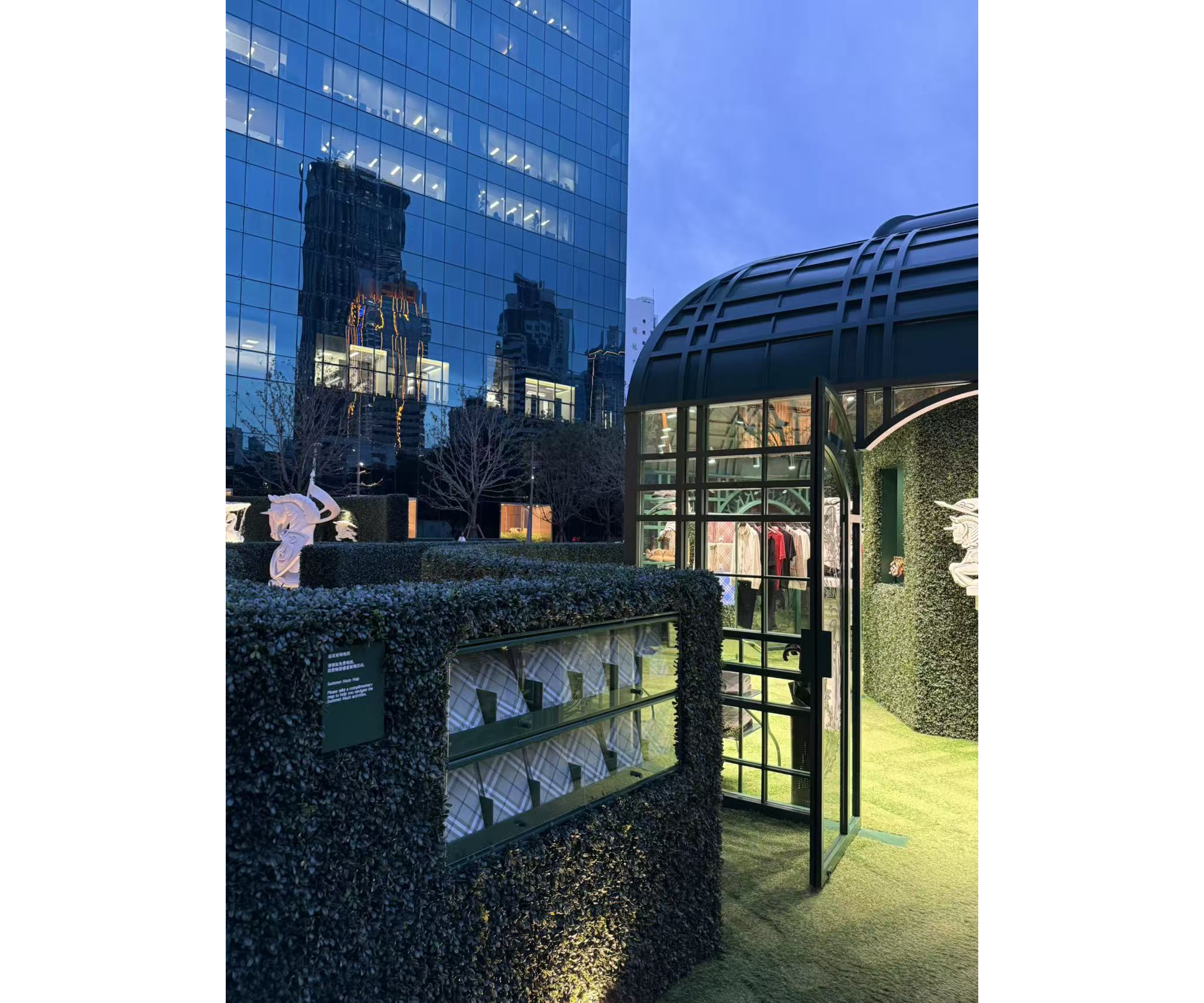
Plaza 66 already places Burberry inside one of Shanghai’s strongest luxury retail environments. That gives the pop-up immediate brand fit, adjacency, and credibility.
Just as importantly, the pop-up also appears positioned to benefit from surrounding city and office traffic beyond destination shoppers alone.
That creates a useful audience mix for a luxury retail pop-up in China:
- Visitors already in a luxury shopping mindset
- Nearby professionals and city traffic with strong brand-awareness potential
- Passersby are more willing to enter an open, experience-led environment than a formal store setting
This matters because the best pop-ups do not rely only on existing brand loyalists. They lower the threshold for participation without lowering perceived prestige. Burberry’s setup appears to strike that balance well.
For decision-makers, the takeaway is practical: choose sites based not only on prestige, but on the combination of audience relevance, visibility, and the likelihood of natural discovery.
How Burberry Designed the Pop-up for Exploration, Sharing, and Comfort
The second strength was how the pop-up shaped visitor behavior.
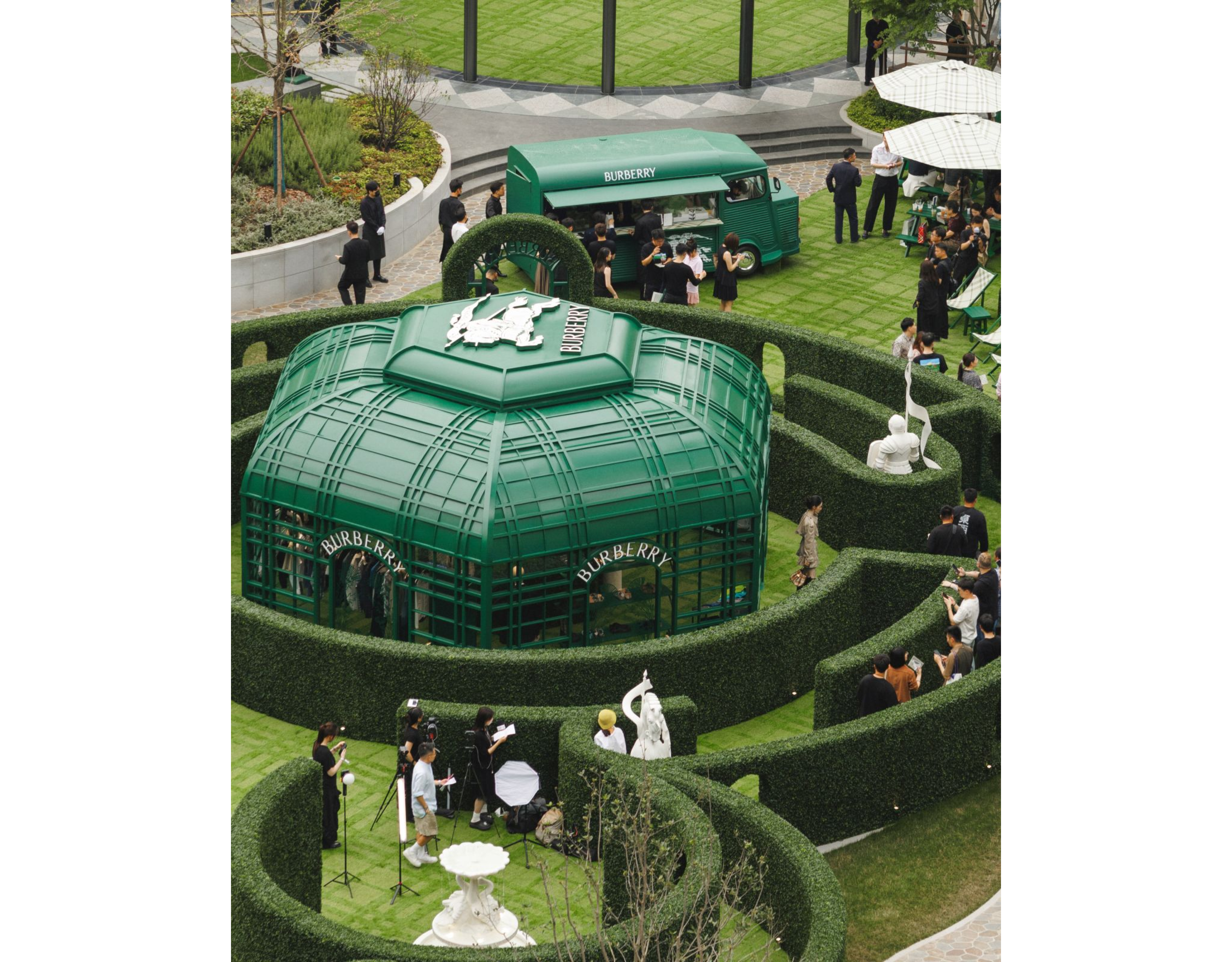
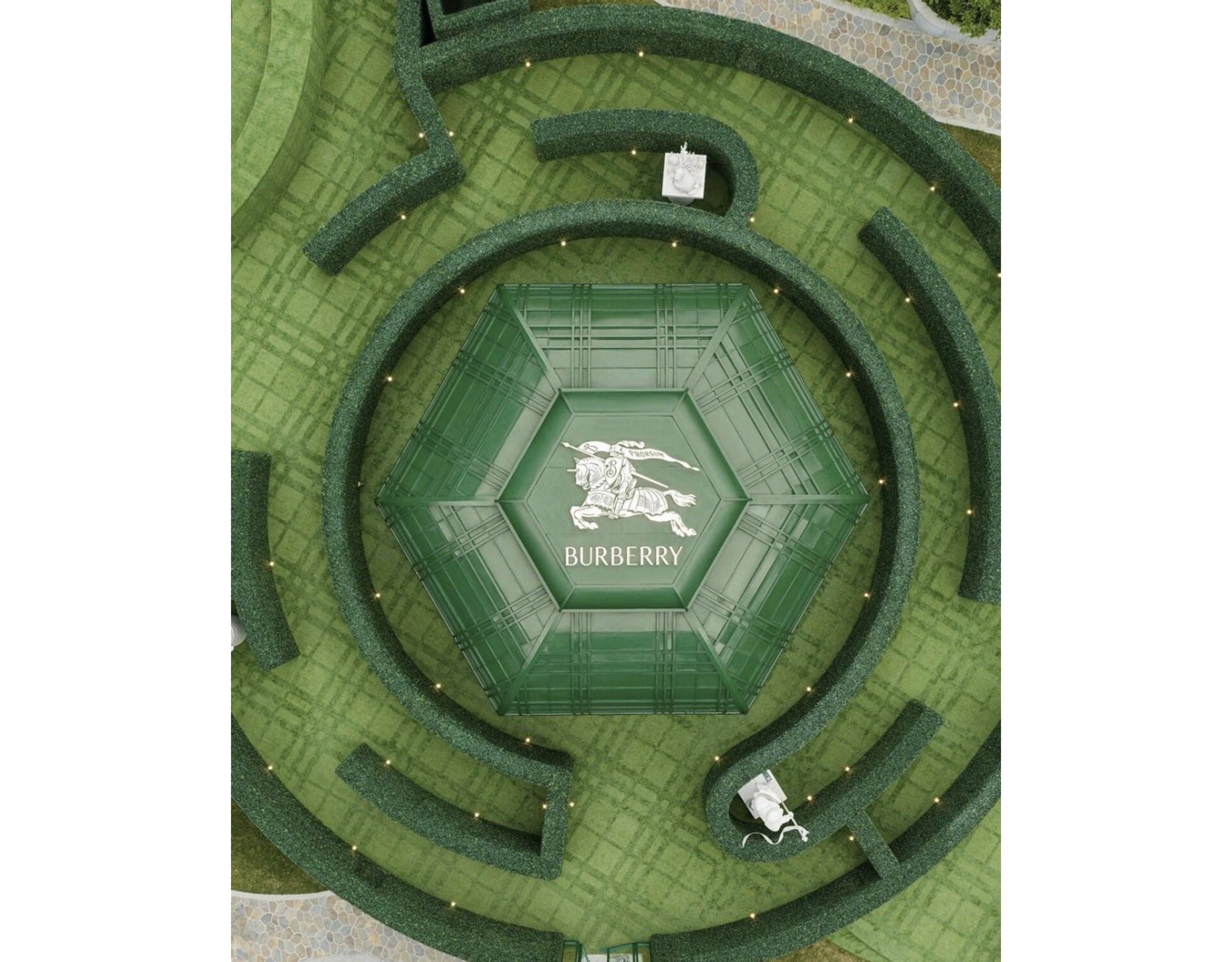
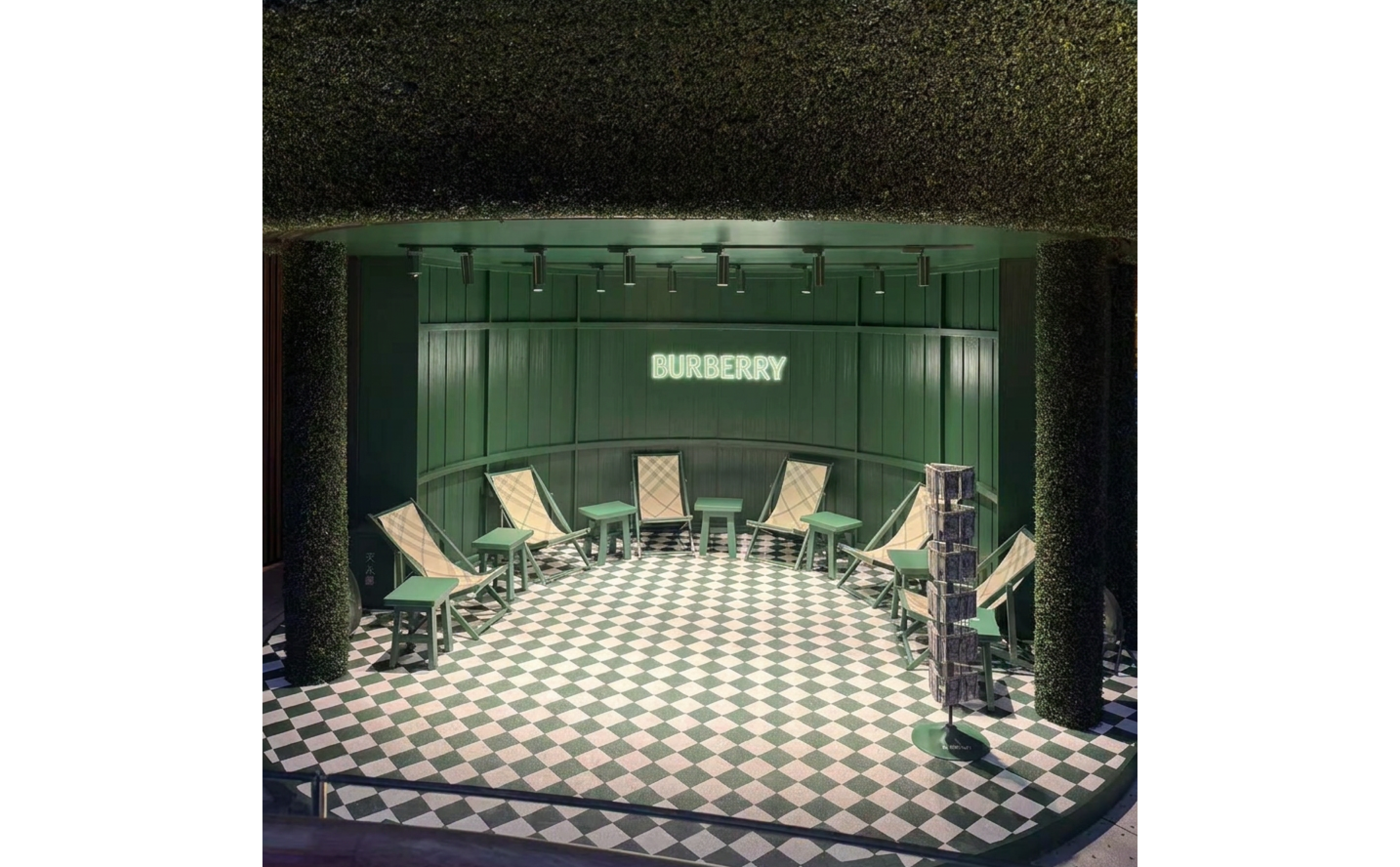
Burberry created a summer environment with hedge-like structures, greenhouse-inspired displays, equestrian references, and strong visual landmarks.
The entrance arch established an immediate photo moment, while the maze-style path encouraged people to move deeper into the space rather than stopping at the perimeter.
Those choices matter because strong luxury design should do more than look luxurious. It should guide visitors into a richer form of participation.
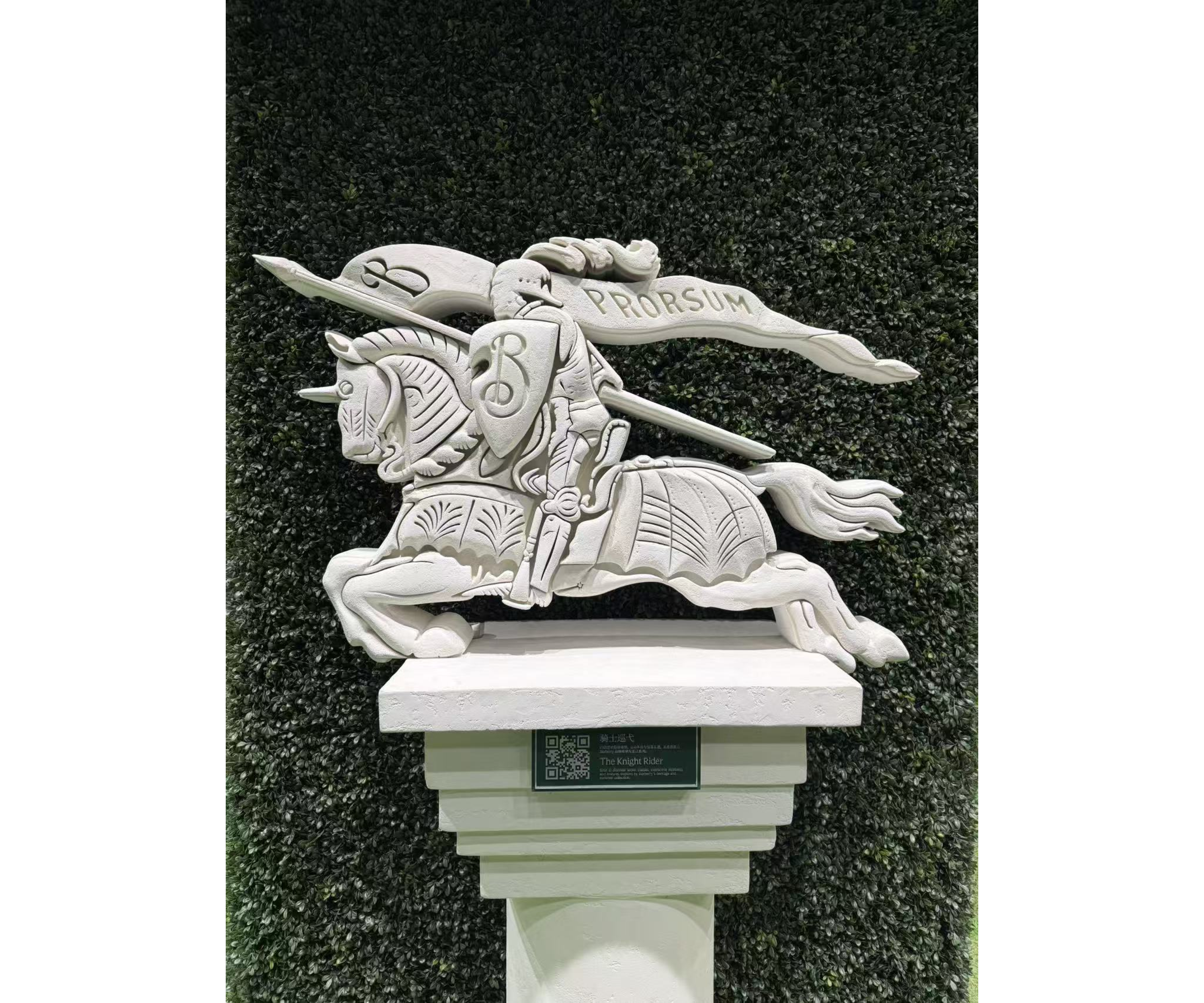
In this case, the environment was built to support several concrete outcomes at once:
- A more exploratory journey through the space
- Repeated reasons to photograph and share the visit
- Product discovery that feels embedded in the setting rather than pushed forward as a hard sales layer
- A stronger sense of seasonal identity without losing Burberry’s heritage cues
The hospitality layer strengthened that logic. The café van and seating zones made the pop-up feel more like a temporary lifestyle destination than a short retail display.
Burberry also appears to have extended that thinking into the refreshment offer itself — serving iced drinks topped with the brand logo and logo-shaped ice cream, turning simple refreshments into part of the visual experience.
That does not prove a specific uplift in dwell time, but it clearly shows an effort to make visitors more comfortable staying, pausing, and engaging more naturally.
For luxury brands, that distinction matters. A photogenic pop-up may generate quick attention. A better-designed one creates the conditions for deeper engagement.
How Burberry Built WeCom Clienteling into the Pop-up Experience
The most important operating lesson in the pop-up is the handoff to WeCom — the dedicated clienteling tool for managing leads and clients on WeChat.
For luxury brands in China, that handoff matters because offline activation is only the opening move.
The real commercial value comes from extending the relationship into a persistent one-to-one channel that customers already use daily.
That is where WeCom becomes strategically important: it gives brands a more usable bridge from physical experience to follow-up, invitations, service, and longer-term clienteling.
In many retail environments, that transition still feels disconnected from the branded experience. A WeCom QR code appears at the end; staff ask for an “add friend,” and the interaction shifts abruptly from emotion to administration.
Burberry’s setup appears more thoughtful. During the visit, a sales associate would invite guests to connect on WeCom in exchange for a themed digital postcard, making the handoff feel like part of the experience rather than a generic contact-capture step.
That changes the meaning of the exchange:
- From contact capture to branded participation
- From an operational ask to a customer-facing value exchange
- From a one-time visit to a more usable relationship starting point
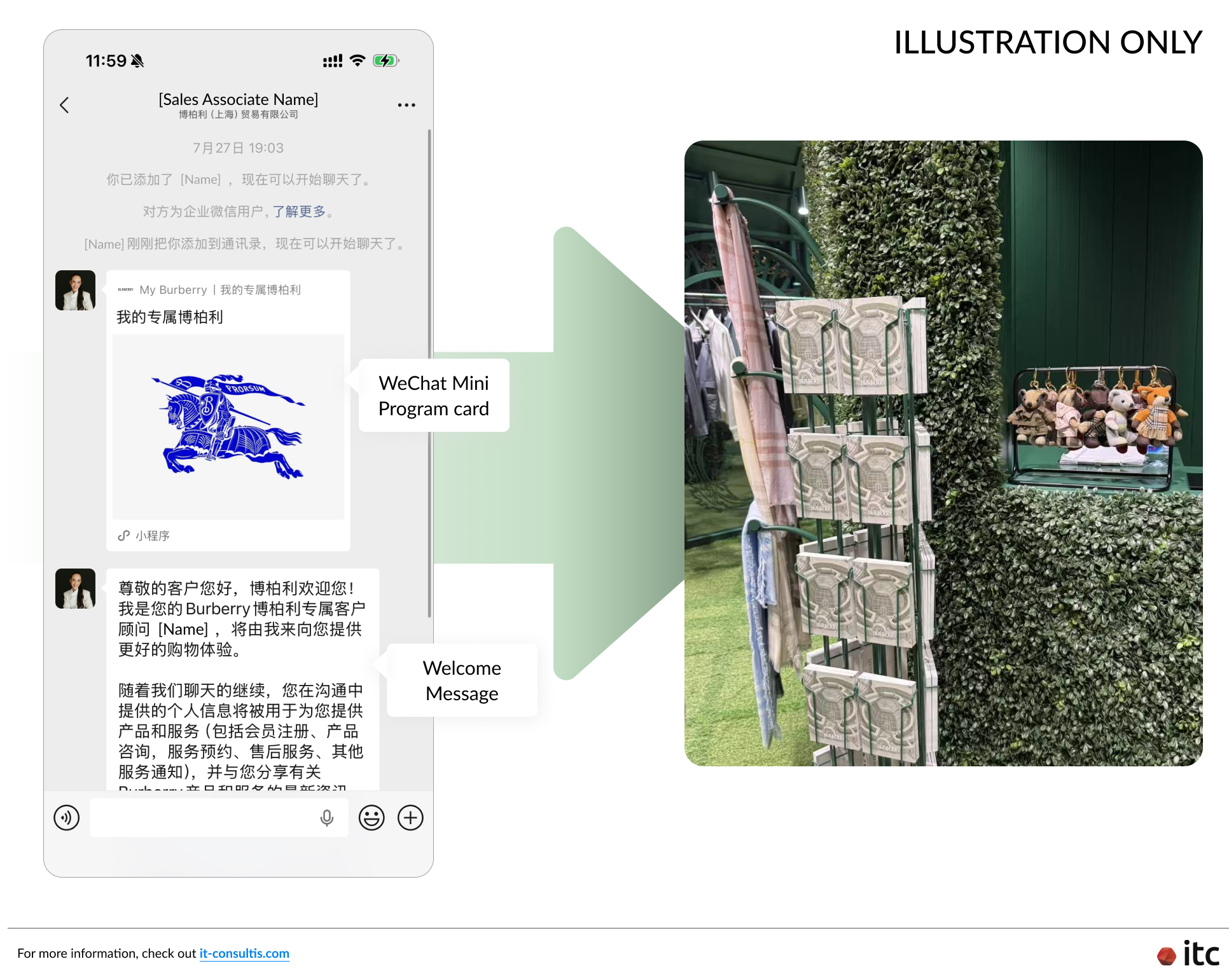
For China-based retail and marketing teams, that is the most important operating takeaway. The digital relationship layer should not sit outside the activation narrative. It should feel like the natural next step in it.
For more information on how to elevate clienteling in China, check out the ITC Insights Vol. 1 white paper.
Burberry Shanghai Pop-Up: What It Shows About Luxury Retail in China
Burberry’s Shanghai pop-up points to a stronger operating model for luxury activations in China.
The next step for decision-makers is not to copy the visual concept. It is to translate the underlying logic into an execution model that their own teams can scale.
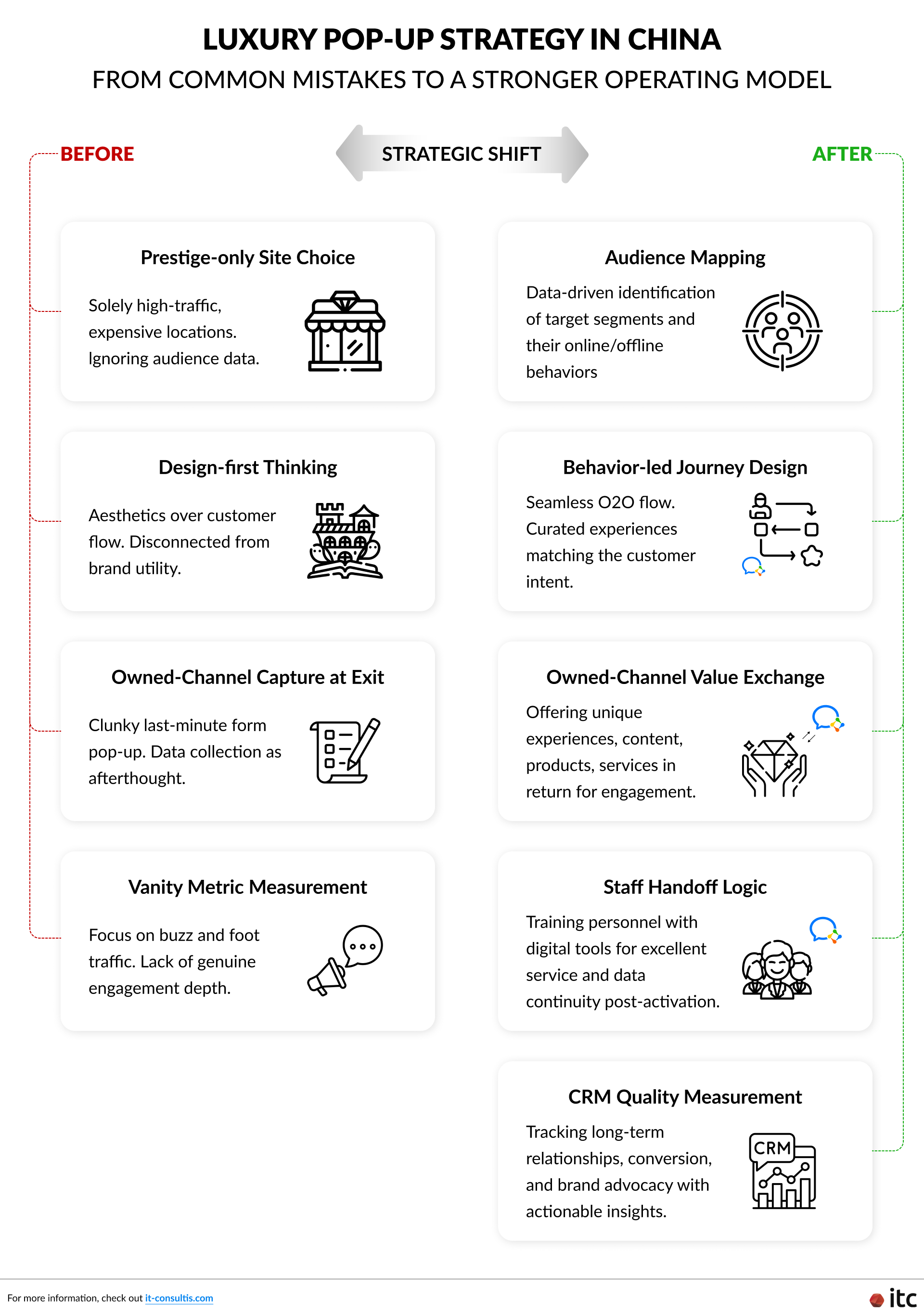
Risks to Avoid
- Choosing sites on prestige alone without testing the audience mix and discovery value
- Treating design as the end goal rather than the behavior-shaping layer of the pop-up
- Bolting WeCom or another owned-channel mechanic onto the exit instead of building it into the visit
- Judging success only through footfall, impressions, or photo volume
Priorities to Put in Place
- Map the audience layers around the site, including both destination traffic and nearby city traffic.
- Design the physical journey around movement, photo anchors, rest points, and natural moments for staff interaction.
- Define the owned-channel value exchange before launch, so digital follow-up feels premium and relevant.
- Prepare store or activation teams with a clear handoff script and follow-up logic, not just a QR code.
- Measure post-pop-up quality through opt-ins, follow-up engagement, appointments, revisit behavior, and CRM usability.
At IT Consultis (ITC), this is the kind of China retail and clienteling question we help brands address across strategy, WeCom, CRM, and localized customer journey design.
The strategic question is not whether a pop-up looks impressive on-site. It is whether it leaves the brand with a stronger, more usable customer relationship once the event ends.
Conclusion
Burberry’s pop-up is a useful market example because it shows what a stronger luxury activation model in China looks like: one designed not just to attract attention, but to convert attention into a longer-term brand relationship.
Its strength comes from a sequence that supports both experience and follow-through:
- Placement aligned with the right luxury audience
- Immersive design with a clear commercial purpose
- Hospitality that deepens engagement rather than simply enhancing atmosphere
- A more effective bridge into the brand’s owned channels and follow-up engagement
That distinction matters commercially. In China, the quality of the activation model helps determine whether store traffic becomes a reusable clienteling asset or fades as short-lived branded attention.
For senior leaders planning retail activations in China, that is the real benchmark: not whether the pop-up generates visibility on the day, but whether it creates a stronger owned relationship that the brand can continue to build after the event ends.
For a broader view of how luxury brands can build stronger digital relationships with Chinese consumers, see our insights on approaching Chinese luxury consumers.