
In this article, we will explore what WeCom is and how this Tencent solution can be a key extension for businesses to optimize customer engagement and enterprise communication in China.
Table of Contents
Challenges of Acquiring and Retaining Customers in China
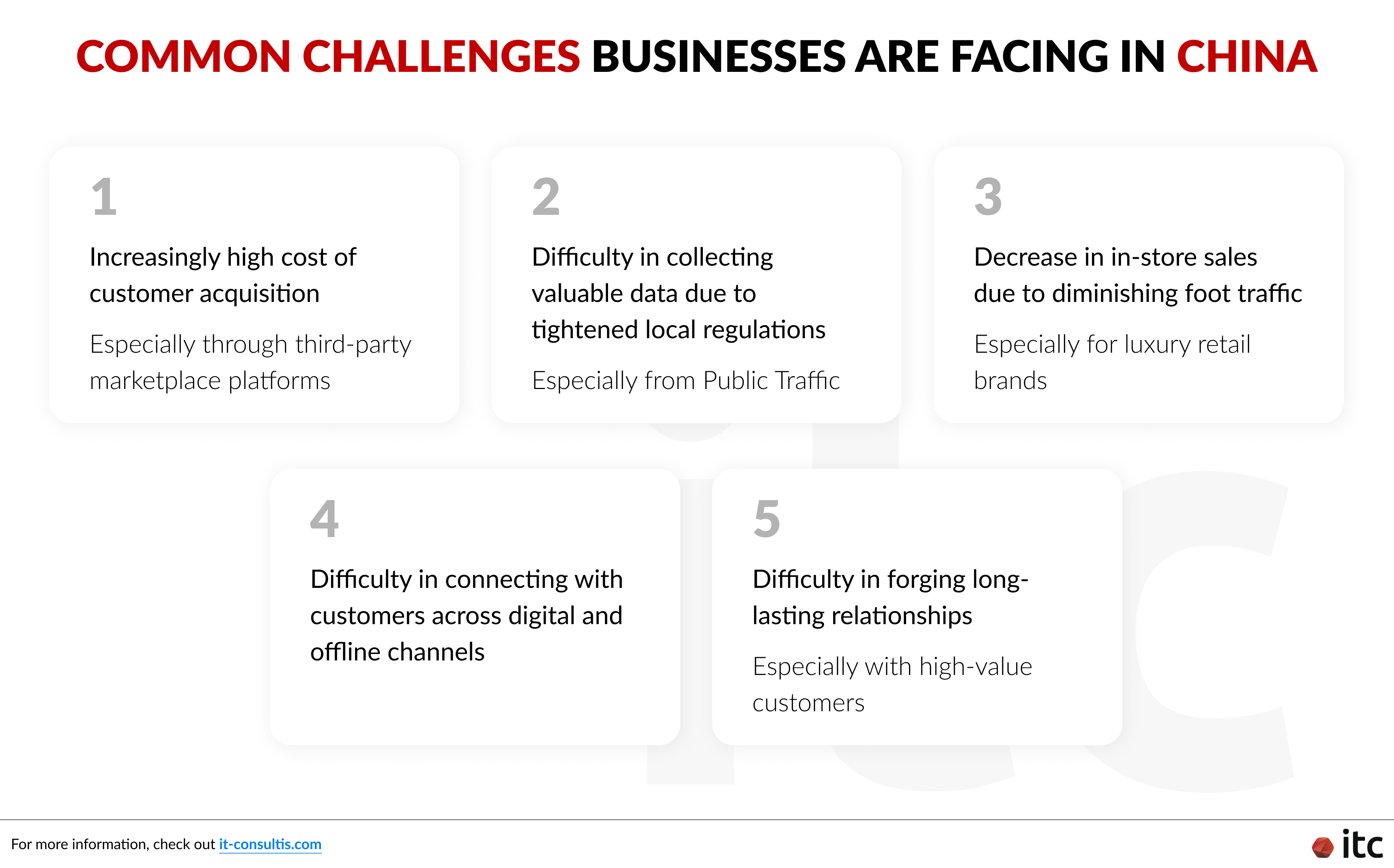
China remained the world’s largest online retail market for a 13th consecutive year in 2025, with online retail sales reaching RMB 15.97 trillion, up 8.6% year over year.
That scale creates significant opportunity, but also intensifies competition for customers’ attention. Oliver Wyman estimated that customer acquisition costs across China’s e-commerce platforms had risen three- to fivefold over the five years preceding its 2024 analysis.
Third-party marketplaces such as Tmall and JD.com offer access to large audiences, but visibility on a platform does not automatically create a direct customer relationship or build long-term loyalty.
Interactions across marketplaces, messaging channels, and offline stores can also be difficult to connect, making consistent service harder to deliver as customers move between touchpoints.
Brands need ways to build more direct, relevant relationships across these channels while handling customer information transparently and in line with applicable privacy requirements, including China’s Personal Information Protection Law (PIPL).
Clienteling is one important approach: it helps brands tailor messaging and service around individual customers’ needs and connect digital engagement with in-store experiences.
What to Know about Clienteling in China
Clienteling is the practice of tailoring brand experiences and connecting with customers on an individual level using data collected based on their behaviors and preferences.
It is a critical aspect of building brand loyalty and nurturing long-term relationships with top customers in China’s competitive market, contributing to:
- Establishing a direct connection and building a long-term relationship with the customers
- Delivering exceptionally tailored services and content to the target
- Complementing engagement in physical retail and online channels
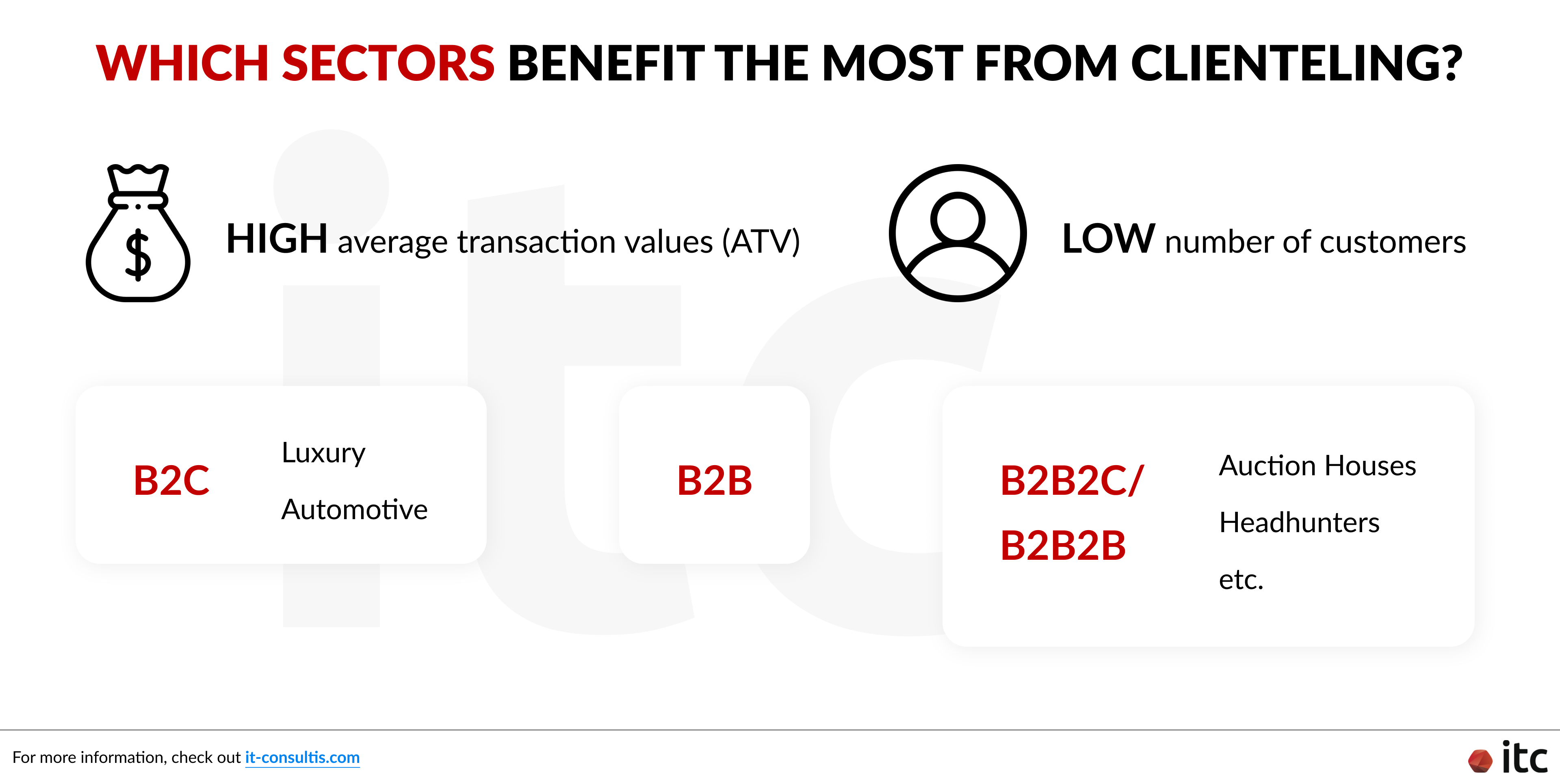
This is especially valuable for businesses with a high average transaction value and a low number of customers, including:
However, there is always room for improvement.
In China, many Sales Associates (SAs), Client Advisors (CAs), and Customer Service (CS) staff are using their personal social accounts on the popular messaging and social media app WeChat for clienteling communication.
This has raised a number of issues (more details will be explored in the WeCom vs WeChat section), including:
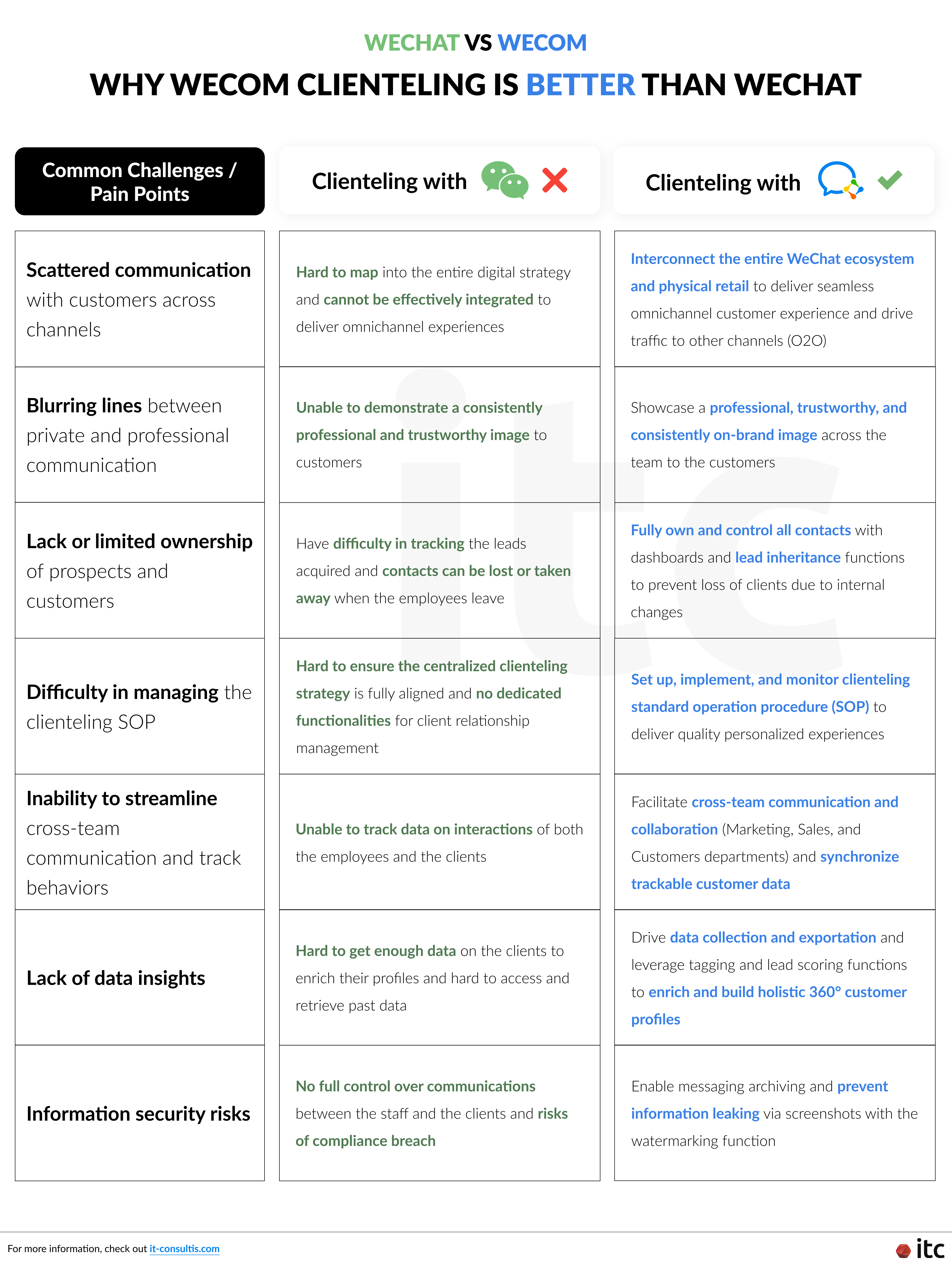
- Scattered communication with customers across channels
- Blurring lines between private and professional communication
- Lack or limited ownership of prospects and customers for the brand
- Difficulty in managing the clienteling standard operation procedure (SOP)
- Inability to streamline cross-team communications and track behaviors
- Lack of data insights
- Information security risks
To address these challenges, investment in a dedicated clienteling tool integrated with the WeChat ecosystem like WeCom (WeChat Work) can be a game-changer for businesses to up their clienteling game in China!
In the next section, we will explore how exactly WeCom can help businesses overcome the challenges of clienteling in China.
Clienteling with WeCom – What is WeCom (WeChat Work)?
WeCom (WeChat Work) as a Professional Clienteling Solution
WeCom (formerly known as WeChat Work) is an enterprise communication platform developed by Tencent.
Unlike the standard WeChat app, which is primarily designed for personal use, WeCom is tailored to the needs of enterprise users. It provides a dedicated platform for businesses to streamline customer engagement efforts, manage internal communications, and coordinate team activities.
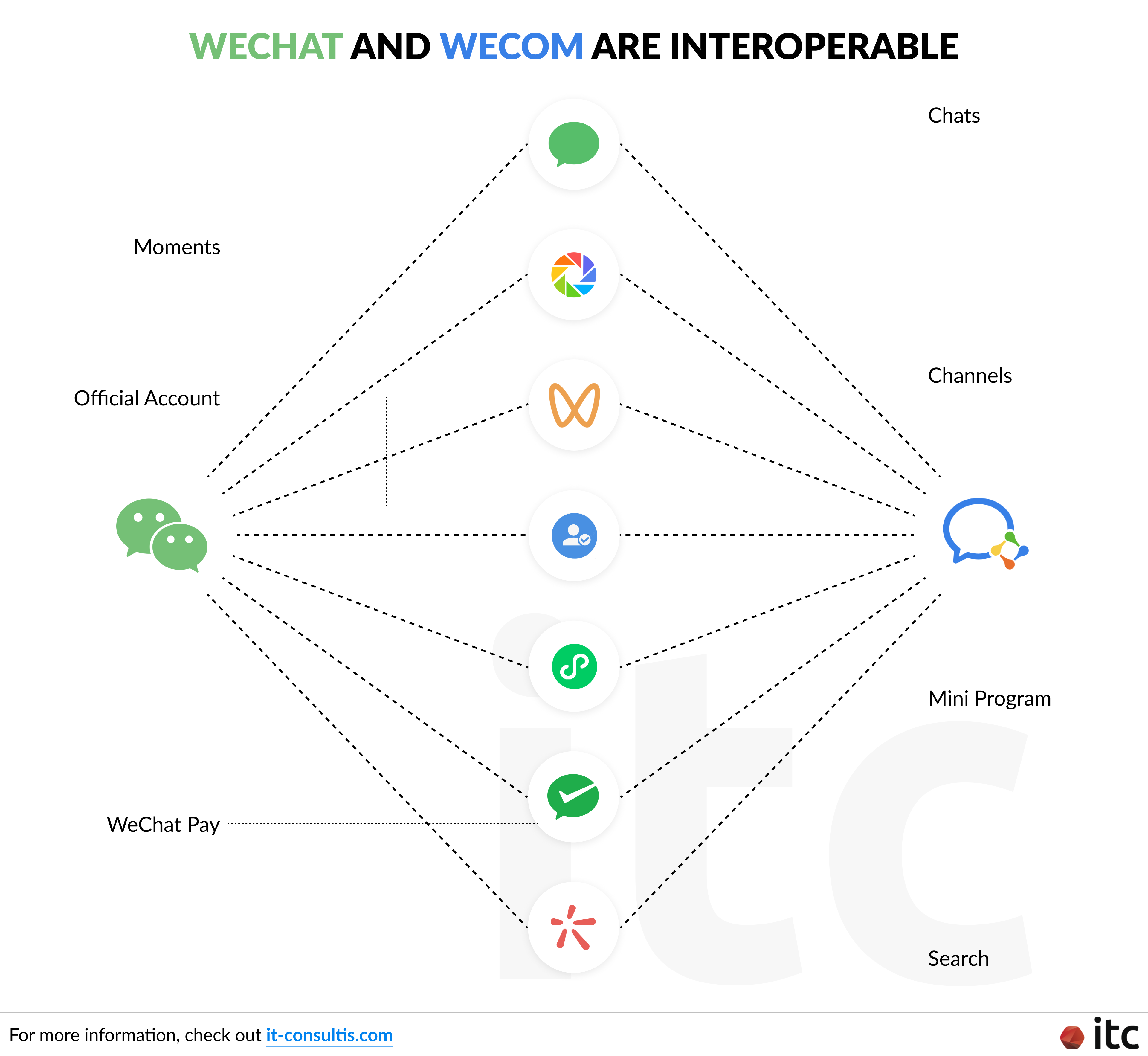
One of the most significant advantages of WeCom is its robust clienteling capabilities. In particular, Sales Associates, Client Advisors, and Customer Service staff can use their WeCom accounts to engage with clients’ WeChat accounts, thanks to the interoperability between WeCom and WeChat.
By leveraging holistic data to inform their communication and outreach efforts, brands can send targeted, relevant messaging from a professional platform that resonates with customers and build a deep and long-term relationship with their most high-value clients.
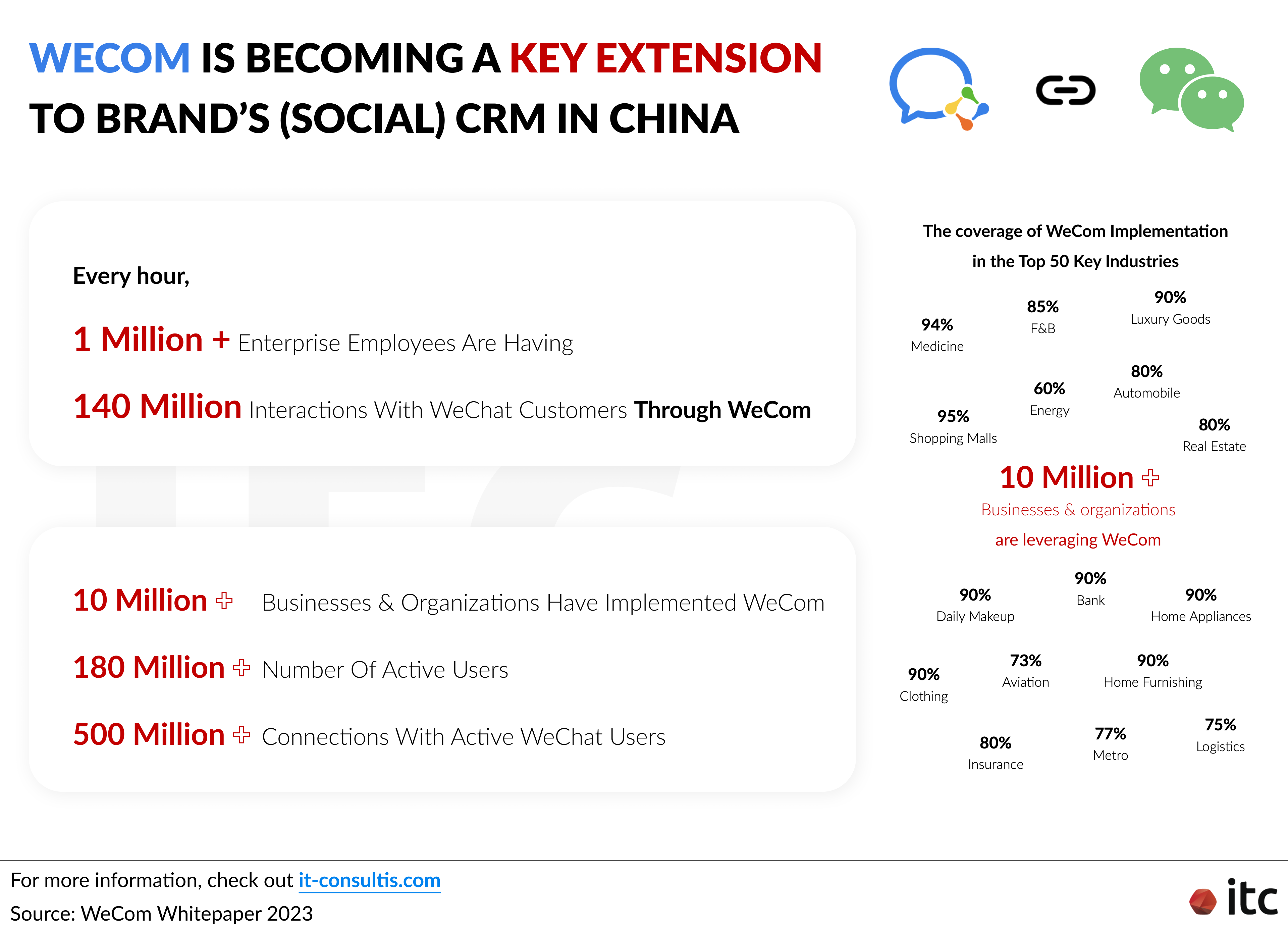
In recent years, WeCom (WeChat Work) has become a key extension to brands’ approach to Private Traffic management – a crucial piece of businesses’ digital transformation roadmap in China, with more and more companies getting on board.
According to the WeCom Whitepaper 2023 by Tencent Advertising Team:
WeChat vs WeCom: What is the Difference between WeCom and WeChat?
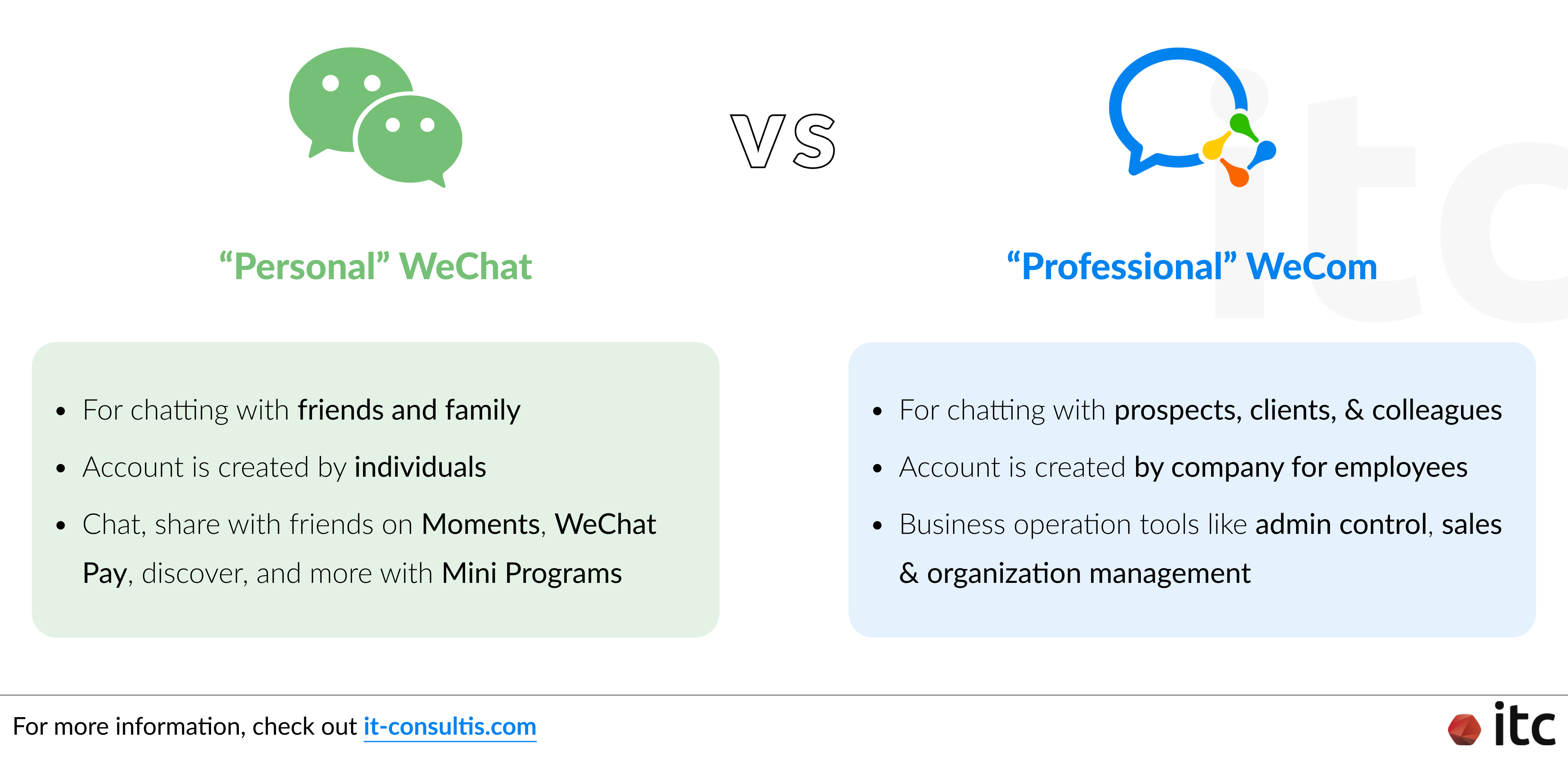
As previously mentioned, WeCom is a professional extension of WeChat, allowing companies to create branded accounts for their employees to chat with prospects, clients, and the internal team.
In addition to chatting, the business and employees also have access to business operation tools, including admin control and sales and operations management (More details on various WeCom (WeChat Work) functions and capabilities can be found in the next sections).
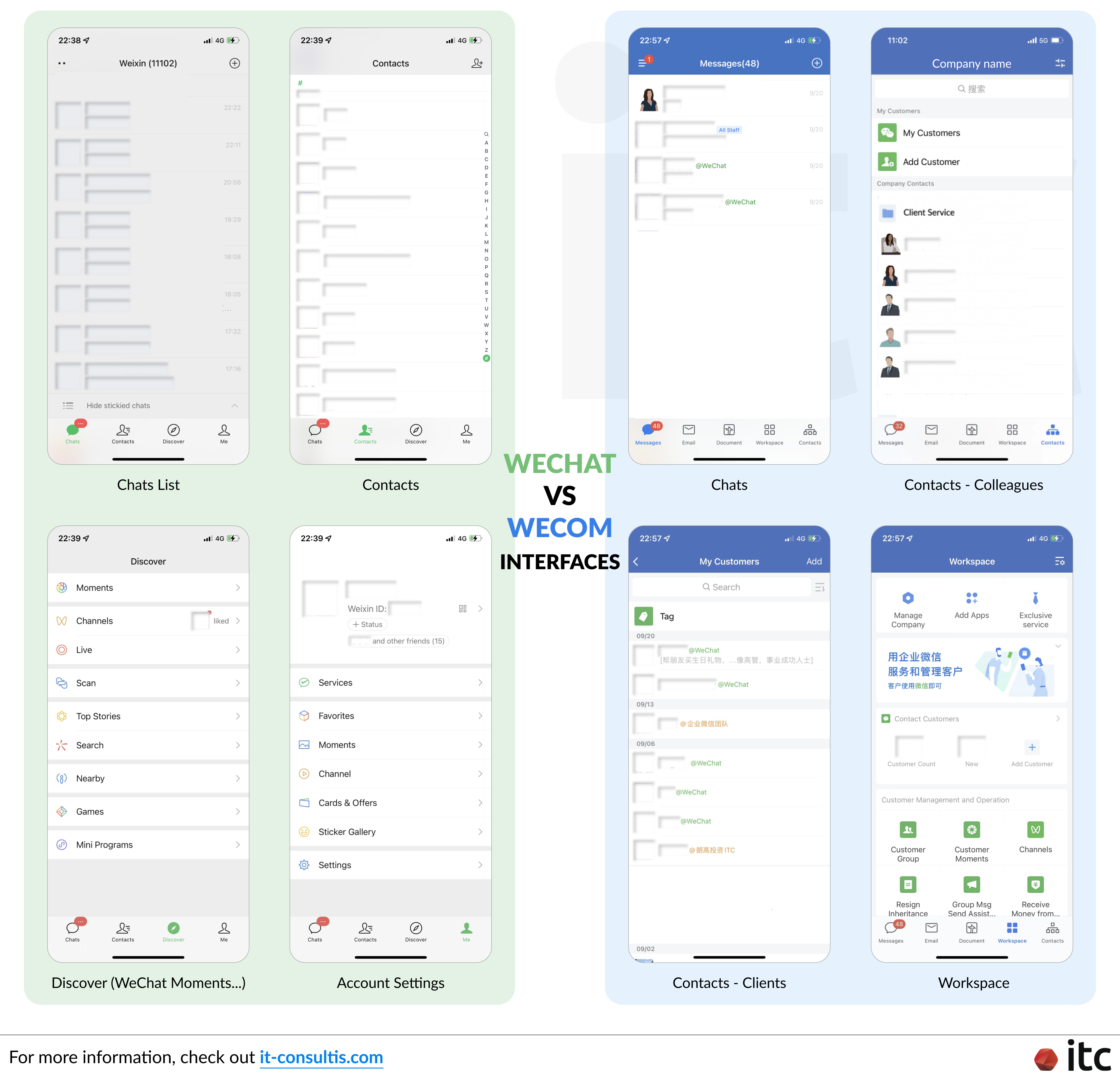
- Primary use: WeChat is mainly for personal communication. WeCom is designed for company-managed work and customer communication.
- Account setup: Individuals create WeChat accounts. Companies create and manage WeCom accounts for employees.
- Tools: WeChat offers personal chats, Moments, WeChat Pay, and Mini Programs. WeCom adds business administration and customer-management tools, while allowing employees to communicate with WeChat users.
How to Use WeCom
Start with one priority workflow, configure the people and entry points it needs, then test the experience before expanding. Check which features are available for your company’s account and admin setup before building a process around them.
1. Set Up the Workspace and Permissions
Confirm the company account is ready, add the employees who will use WeCom, and assign administrator and customer-contact permissions to the right people.
Start with one team, such as sales, customer service, or retail, and make sure each person knows which work conversations belong in WeCom.
2. Create a Customer Contact Entry Point
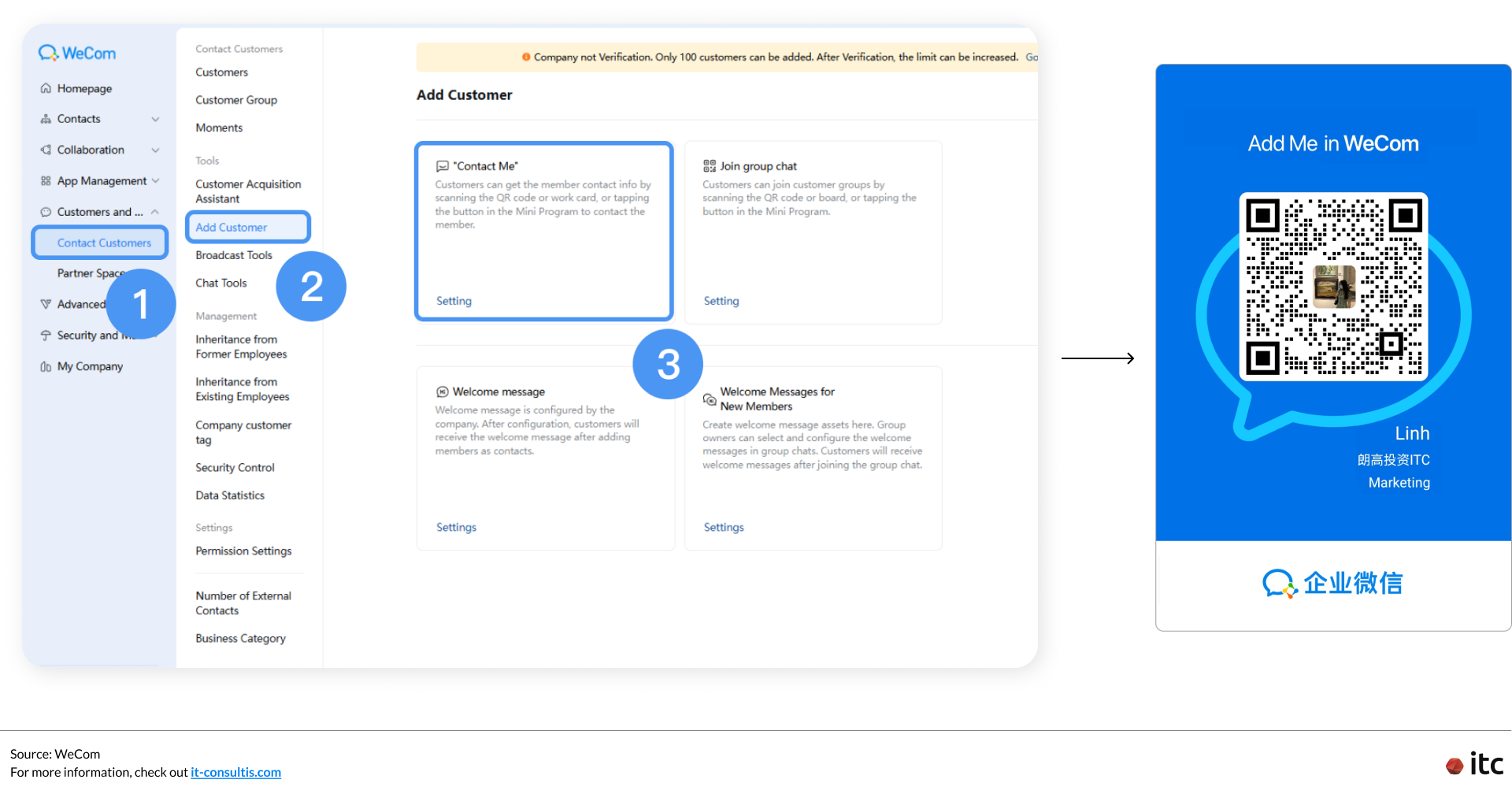
In the WeCom Admin Console, open Customers and Partners > Contact Customers > Add Customer > Contact Me.
Choose a QR code, work card, or Mini Program contact option, then assign it to an employee or team.
Place the QR code or Mini Program entry point where customers will encounter it, such as a store, website, or service journey.
Follow WeCom’s current instructions for adding customers and configuring “Contact Me”.
3. Test the Customer Journey
Before launch, scan the QR code or use the Mini Program entry point with a test account.
Confirm that the customer reaches the intended employee or team, the profile and welcome message are appropriate, and the conversation can be routed to the right person if follow-up is needed.
Fix any gaps before sharing the entry point more widely.
4. Set a Follow-up Routine
Build a standard operating procedure (SOP) outlining who responds first, expected response times, and how the next action is recorded.
Use the tag library, if needed, to segment customers and tailor follow-up service.
If the team plans to use Moments, define what employees can share and how often; see our guide to using WeCom Moments for direct marketing in China.
5. Define Ownership, Handover, and Data Handling
Ownership: Clarify who is responsible for each type of customer relationship, especially high-value or long-term accounts.
Handover: Write down how conversations move to a new owner when roles change, so no customer gets dropped.
Data handling: Collect, tag, and sync only the data you need for a clear purpose. If WeCom data syncs to a CRM (e.g., Salesforce on Alibaba Cloud), decide which fields to sync and who can access them. To stay compliant with China’s PIPL, give the required notices, establish a legal basis, and limit access to the people who need it.
A phased rollout is more effective than enabling every feature at once.
How Can WeCom Help?
With the robust clienteling features, WeCom (WeChat Work) can help alleviate or completely remove the common challenges SAs, CAs, and CS staff face when leveraging WeChat for communication with customers.
To sum up, by leveraging WeCom, brands can now:
- Interconnect the entire WeChat ecosystem and physical retail to deliver seamless and personalized omnichannel customer experiences and drive traffic to other channels (O2O)
- Showcase a professional, trustworthy, and consistently on-brand image across the team to the customers
- Fully own and control all contacts with dashboards and lead inheritance functions to prevent loss of clients due to internal changes
- Set up, implement, and monitor clienteling standard operating procedure (SOP) to deliver quality personalized experiences
- Drive data collection and exportation and leverage direct tagging and lead scoring functions to enrich and build holistic 360° customer profiles
- Facilitate cross-team communication and collaboration (Marketing, Sales, and Customers departments) and synchronize trackable customer data (including integration capability with the brand’s CRM system)
- Enable messaging archiving and prevent information leaking via screenshots with the watermarking function
For more details, check out our break-down of the 7 key benefits of WeCom (WeChat Work) that are prompting more and more companies to get onboard!
Is WeCom Safe for Business Use?
Yes — WeCom is generally a safer and more manageable option for business communication than relying on personal WeChat accounts alone. As an enterprise platform, it gives brands more control over employee access, customer relationships, and communication governance.
One of WeCom’s biggest advantages is its business account structure. Instead of tying customer conversations only to individual personal accounts, it helps companies manage communication in a more organized, company-owned environment.
That can improve continuity when employees leave or change roles.
WeCom also supports stronger admin controls, oversight, and brand protection than consumer messaging tools. For businesses using clienteling or customer service in China, this makes it easier to manage teams, reduce operational risk, and keep communication more consistent.
That said, WeCom’s safety also depends on how the business sets it up and governs usage. Clear permissions, good offboarding processes, and strong internal policies all matter.
In practice, WeCom offers a safer foundation for professional communication — but businesses still need to use it responsibly.
Key Takeaways
Here are the 6 key takeaways about WeCom (WeChat Work) for brands operating in China to keep in mind:
- WeCom is a professional and corporate version of WeChat that is strongly tied to the WeChat ecosystem.
- WeCom addresses WeChat’s weakness in CRM and helps protect brands’ ownership of their customer contact databases.
- WeCom streamlines the management of branding, marketing, and lead generation to keep the staff well-aligned with the brand’s strategy.
- Brands can leverage WeCom clienteling to provide highly tailored customer service, improve engagement, and build long-term personal relationships with the top customers, ultimately boosting customer satisfaction and loyalty.
- With direct tagging through WeCom, it complements the indirect profile capture by Marketing Automation platforms to enrich and build more holistic customer profiles.
- The WeCom platform can also be integrated with the brand’s CRM system to achieve data synchronization and help resolve data silo issues.
Overall, WeCom clienteling is a powerful strategy to complement brands’ acceleration of digital transformation roadmap in China.


