Yes. Salesforce is available in mainland China through Salesforce on Alibaba Cloud.
Salesforce’s guidance distinguishes between the contracting customer’s location and each user’s location:
- Customers based in mainland China or Macau may not use Salesforce’s global services; Salesforce on Alibaba Cloud is the local offering to evaluate.
- Customers based elsewhere may not let users in mainland China or Macau access Salesforce’s global services; evaluate Salesforce on Alibaba Cloud for those users.
- Hong Kong has separate purchasing options.
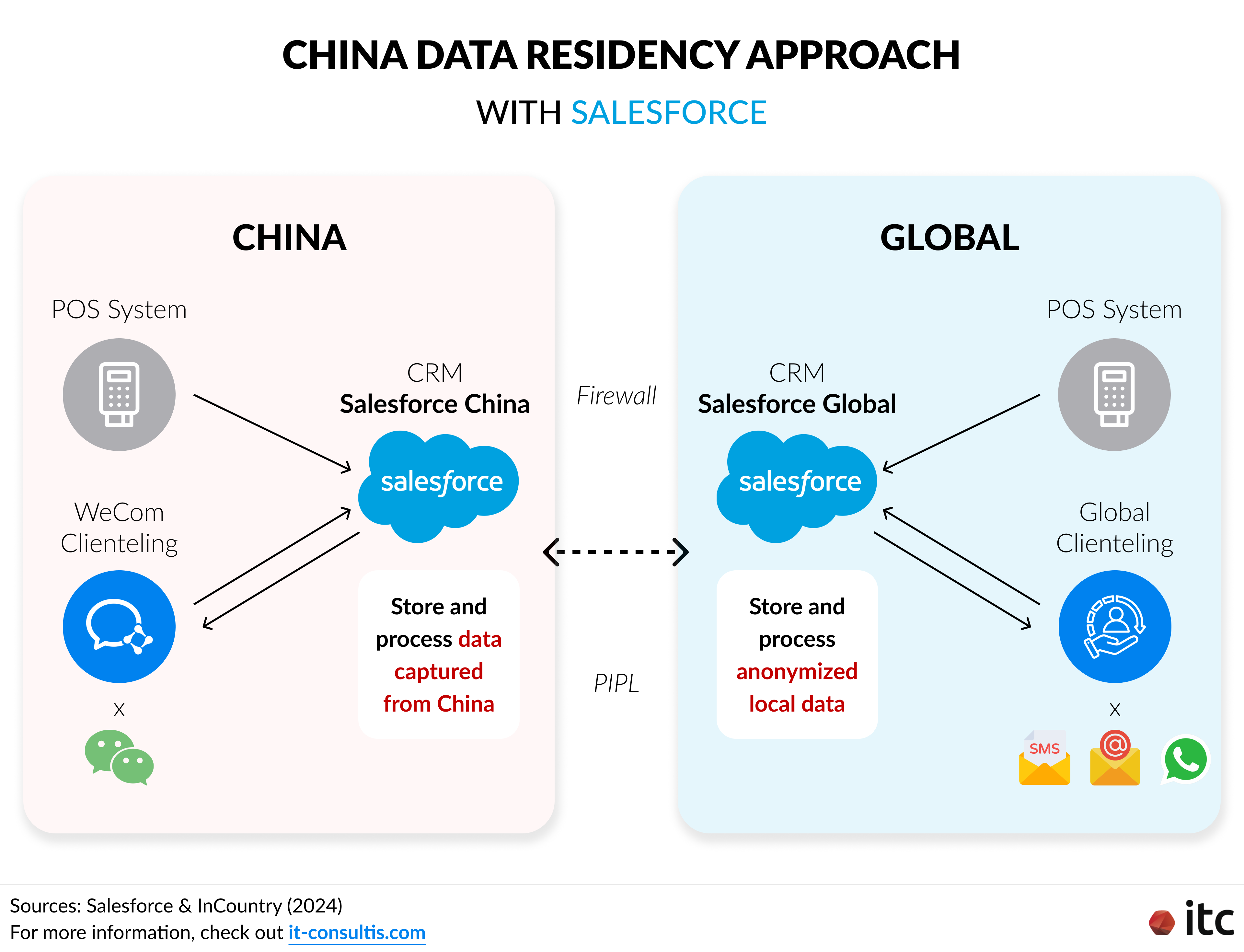
For brands collecting personal information in China, PIPL and related rules can affect where data is stored and how it is transferred.
This guide explores the China CRM landscape, Salesforce on Alibaba Cloud’s products and capabilities, and the key decisions for shaping a Salesforce strategy in China.
Executive Summary:
1. Salesforce on Alibaba Cloud is a distinct Salesforce environment for mainland China. It is not a global org hosted closer to China.
2. China CRM design can involve local social and messaging channels, market-specific workflows, data governance, and cross-region access considerations.
3. Sales Cloud, Service Cloud, and Salesforce Platform provide the core CRM foundation. Connected Experiences Gateway (CXG) extends supported connections and experiences for local channels.
4. Product scope differs from global Salesforce and changes by release. Validate each required product, feature, integration, and license against current official documentation.
5. Local hosting and integrations are architecture capabilities, not guarantees of regulatory compliance, performance, or business results. Assess them against user location, workflow, data flow, and operating requirements.
Table of Contents
What to Know About the China Market: Challenges and Opportunities for Customer Relationship Management (CRM)
China’s scale and fast-evolving digital economy create significant opportunities for global brands.
But the market’s customer behaviors, digital platforms, and regulatory environment differ from those in many other markets.
For brands operating in China or engaging Chinese audiences, that means assessing whether their CRM approach can support local customer journeys, applicable data obligations, and reliable access for the teams serving those customers.
Complex Data Regulations
China’s data framework includes the Cybersecurity Law, the Data Security Law, and the Personal Information Protection Law (PIPL).
For brands collecting or processing personal information related to China, the CRM setup should make it possible to understand where data is collected, stored, accessed, and transferred, and to review those flows against applicable requirements.
The 2024 cross-border data-flow provisions set out relevant transfer rules and exemptions. Requirements depend on the organization, data, and processing context; local hosting alone does not establish compliance.
Distinctive Market Dynamics
Interactions between brands and customers in China differ fundamentally from those in other countries and regions.
China’s digital ecosystem includes major platform companies such as Baidu, Alibaba, Tencent, and ByteDance.
Over time, these companies and newer players have expanded beyond their original categories and developed into “super-apps”.
These platforms offer a wide range of services, including social networking, e-commerce, entertainment, search, payments, and more, shaping how customers discover and interact with brands.
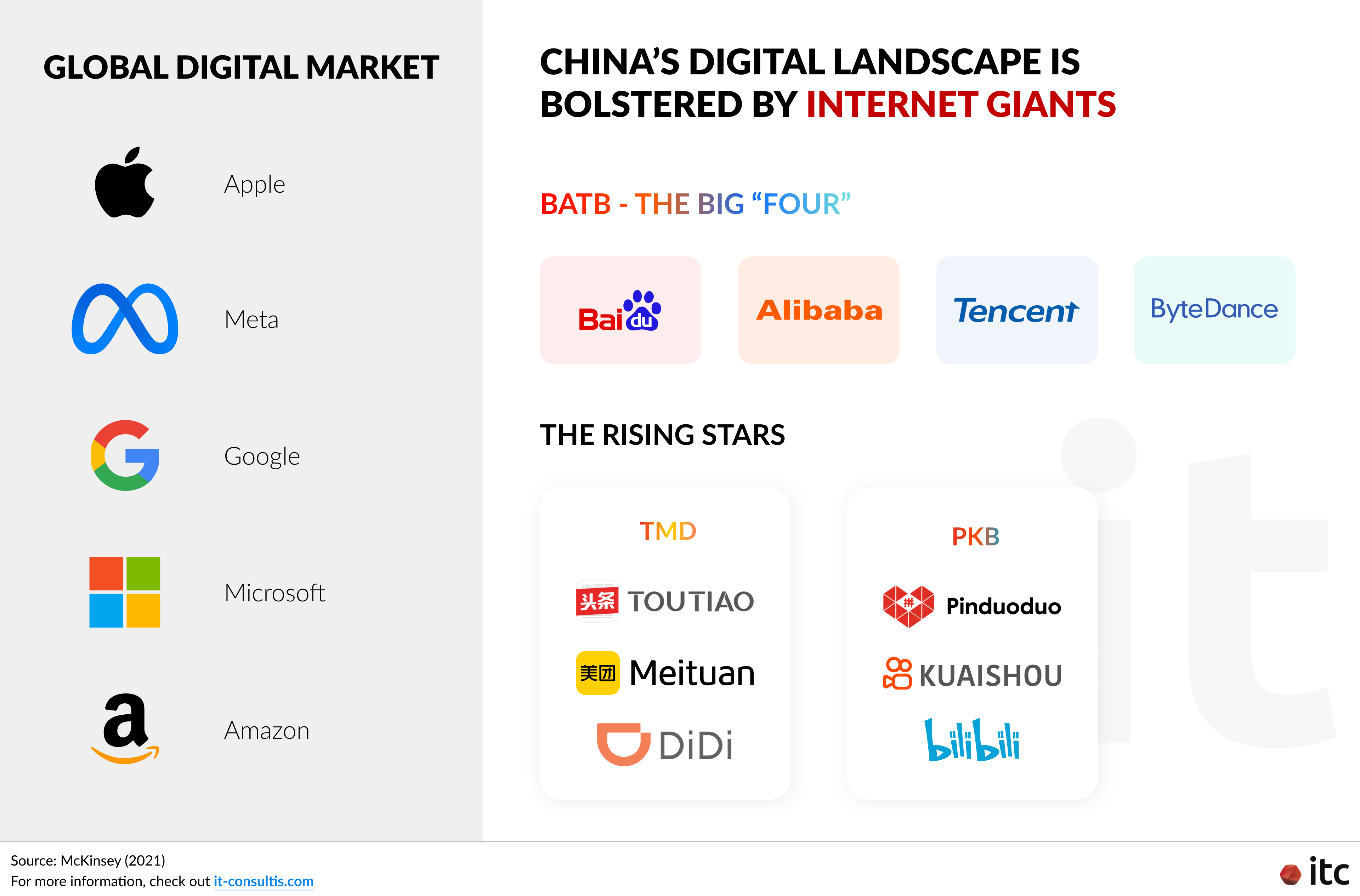
For brands engaging Chinese audiences, a CRM approach should account for the local channels and customer interactions that matter to their business, rather than assume that a global channel mix will translate unchanged.
For more information, McKinsey’s overview of China’s digital ecosystem provides useful context.
Performance Considerations
Cross-region network access can affect response times for teams in China.
Brands operating across markets should test how their CRM works from the locations and networks their teams actually use, then assess whether the setup provides reliable access for local operations. Hosting location alone does not guarantee performance.
Together, these regulatory, market, and technical conditions help explain why Salesforce and Alibaba Cloud introduced a localized CRM offering for mainland China.
Their 2023 announcement of Salesforce on Alibaba Cloud described the offering as a direct response to evolving market needs, data residency requirements, and the need for deeper integration with China’s local digital ecosystem.
The next section explores what Salesforce on Alibaba Cloud includes.
What Salesforce on Alibaba Cloud Is and Why It Exists
Salesforce on Alibaba Cloud is a distinct Salesforce environment hosted on Alibaba Cloud infrastructure for the mainland China market.
The partnership brings Salesforce CRM products together with China-specific capabilities and local cloud infrastructure.
It is not a global Salesforce organization placed closer to China. The local and global environments have different product availability and service arrangements.
Alibaba Cloud’s Summer ’26 comparison states that data in the Salesforce China instance is not replicated to Salesforce’s global data centers. Any exchange between local and global systems needs separate design, governance, and review.
Salesforce China Core Products and Capabilities
The core offering centers on familiar CRM functions, with local capabilities available for specific channel and commerce needs. Exact editions, modules, licensing, and feature scope should be confirmed against current product documentation.
Hosted by Alibaba Cloud and operating on its infrastructure, these solutions empower enterprises of all kinds to fully harness the Salesforce CRM (Customer Relationship Management) platform for their Chinese customers — the core of the 360 strategy.
These products provide businesses in China with a wide array of automation and workflow tools to enhance their sales and service processes.
Salesforce Platform China
The Cloud Platform is a low-code application development platform that expands the capabilities of CRM.
Using an easy drag-and-drop interface, brands can create, test, and deploy applications to automate business processes, enhancing efficiency across workflows, users, departments, or industries.
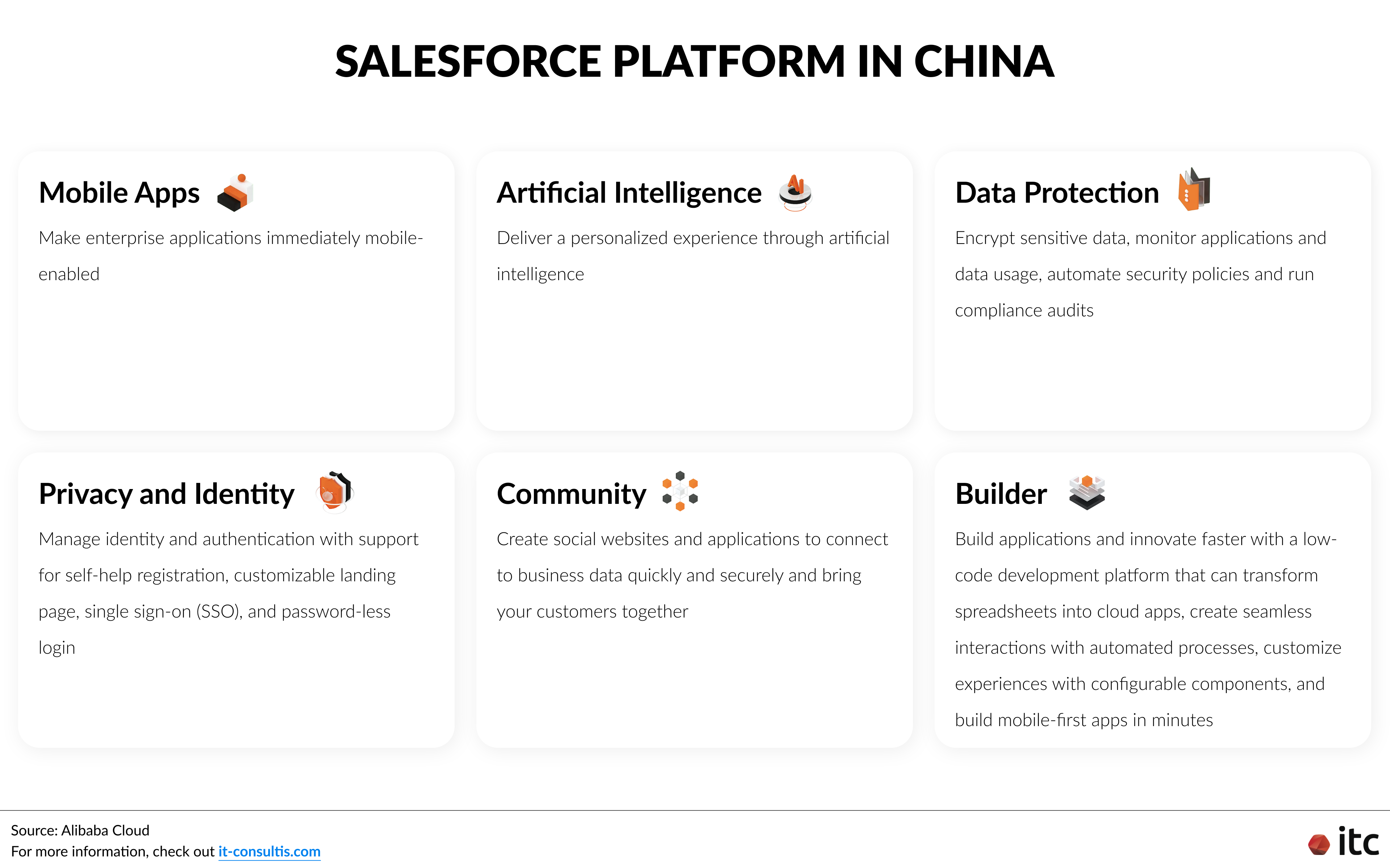
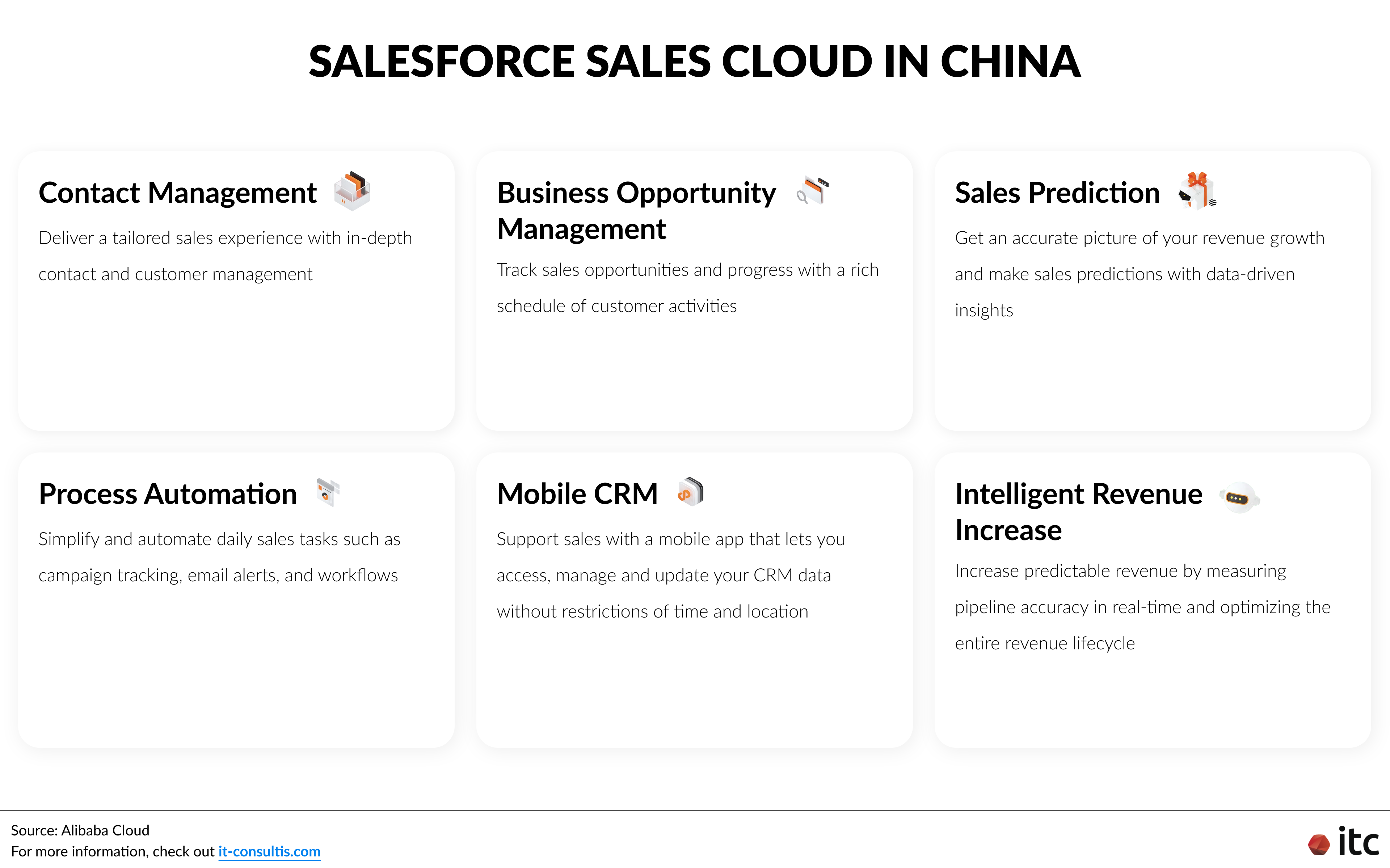
Salesforce Sales Cloud China
Salesforce Sales Cloud is a sales management software (sales growth platform) designed to empower sales teams.
It facilitates sales lead identification, customer relationship management, sales progress tracking, and process automation to expedite deal closures and drive revenue.
Salesforce Service Cloud China
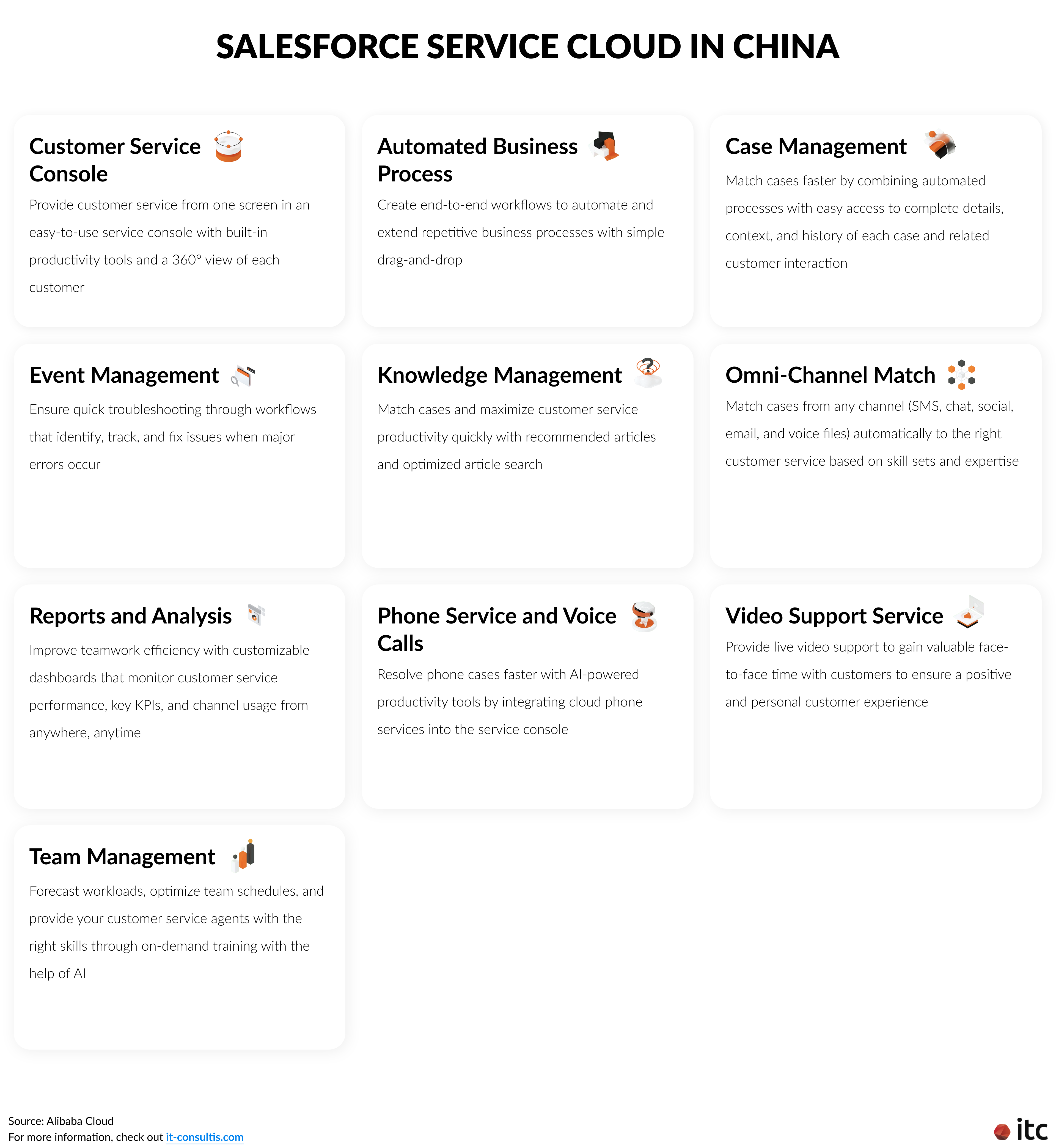
Service Cloud is a customer service platform that revolutionizes how service teams deliver value at every customer touchpoint.
It encompasses customer experience, engagement, processes, automation, service operations systems, pre-built integrated applications, ticket management, knowledge base, and queue management.
Connected Experiences Gateway (CXG)
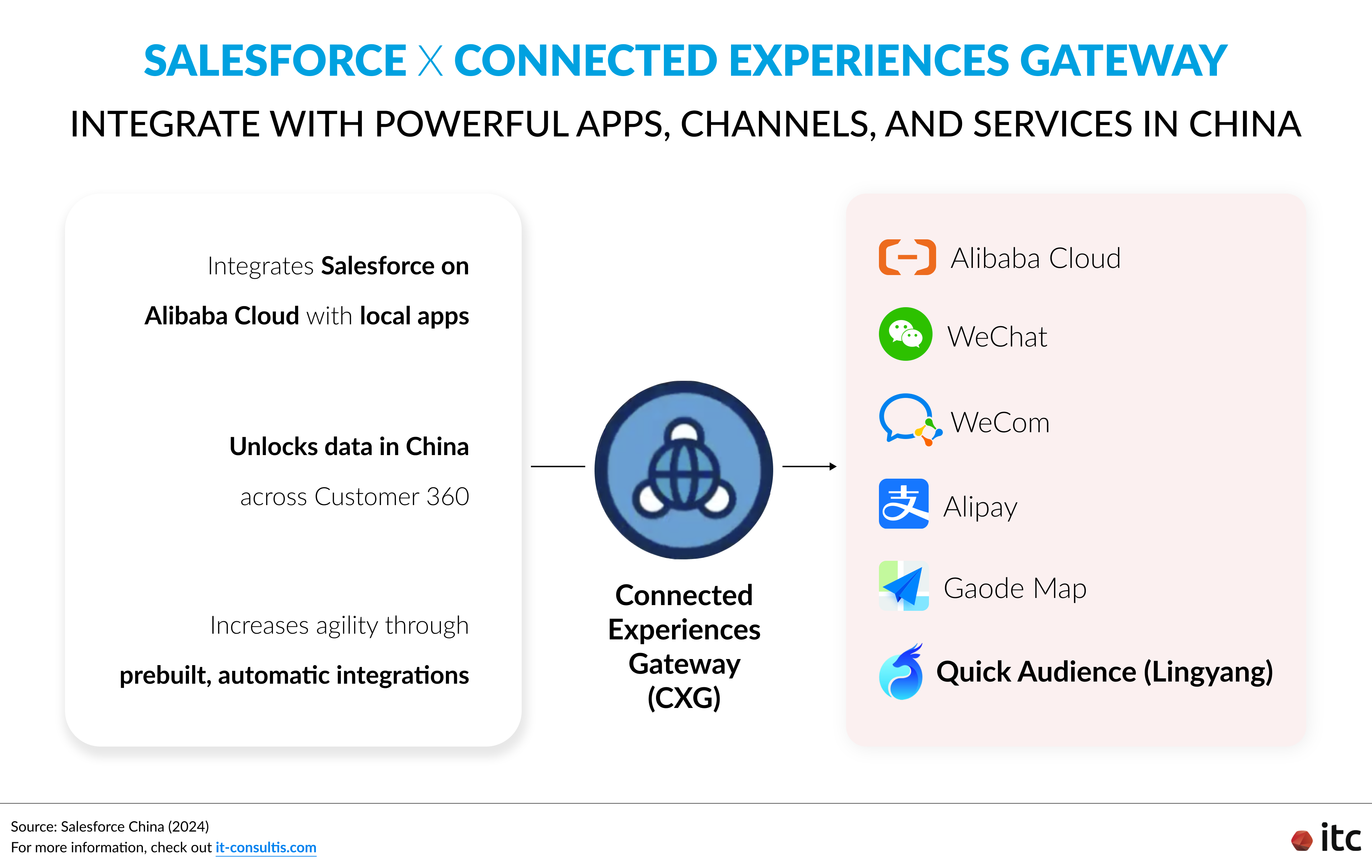
Connected Experiences Gateway (CXG) is a China-focused extension that adds local digital-channel and marketing automation capabilities to Salesforce on Alibaba Cloud.
It works alongside the core CRM products, connecting them with supported local apps and services so customer interactions from those channels can be brought into relevant sales and service workflows.
Alibaba Cloud describes two core CXG components:
- Social Integration: Connects Salesforce China CRM with local apps
- Social Commerce: Supports storefronts on local channels
Salesforce also describes connections for platforms such as WeChat and WeCom, helping teams manage supported interactions through Salesforce workflows. For more information on how to approach this, check out the WeChat and Salesforce and WeCom and Salesforce integration guide.
Depending on the products selected, CXG can also connect with related services such as SMS, mapping (i.e., Amap), and AI. See Alibaba Cloud’s CXG overview for the documented scope.
The specific channels and workflows available depend on the CXG products, configuration, and entitlements selected, so confirm they support the intended use case before designing around them.
Practical Benefits to Evaluate
Salesforce on Alibaba Cloud can support China operations across sales, marketing, and service, depending on the products, CXG capabilities, integrations, and configuration selected.
- Sales team coordination: Sales Cloud supports pipeline and customer-management workflows. Where the required CXG and WeCom integration is supported and configured, teams can bring relevant clienteling interactions into their sales processes.
- Marketing coordination: Teams can assess how Salesforce China and compatible Chinese marketing tools can use available customer and campaign data to inform audience engagement. Confirm the products, data connections, and functions required for the intended workflow.
- Service team context: Service Cloud supports case and service workflows. Supported local-channel integrations can help teams connect customer interactions with service processes, subject to the products and setup in use.
The key is to validate each workflow against current product availability and integration scope, rather than promise real-time data, higher engagement, or faster conversion by default.
Additional Capabilities: AI, Analytics, and Industry Clouds
Beyond core CRM, Salesforce on Alibaba Cloud can be extended with AI, analytics, and industry-specific solutions to support a wide range of use cases.
Keep in mind that AI feature availability on Salesforce on Alibaba Cloud differs from the global edition. As documented for Summer ’26, Prompt Builder and CXG AI are available, Agentforce has significant limitations, and Data Cloud and CRM Analytics are unavailable.
However, availability can change by release and licensing, so verify the current China edition before planning around a feature.
AI: Prompt Builder and CXG AI
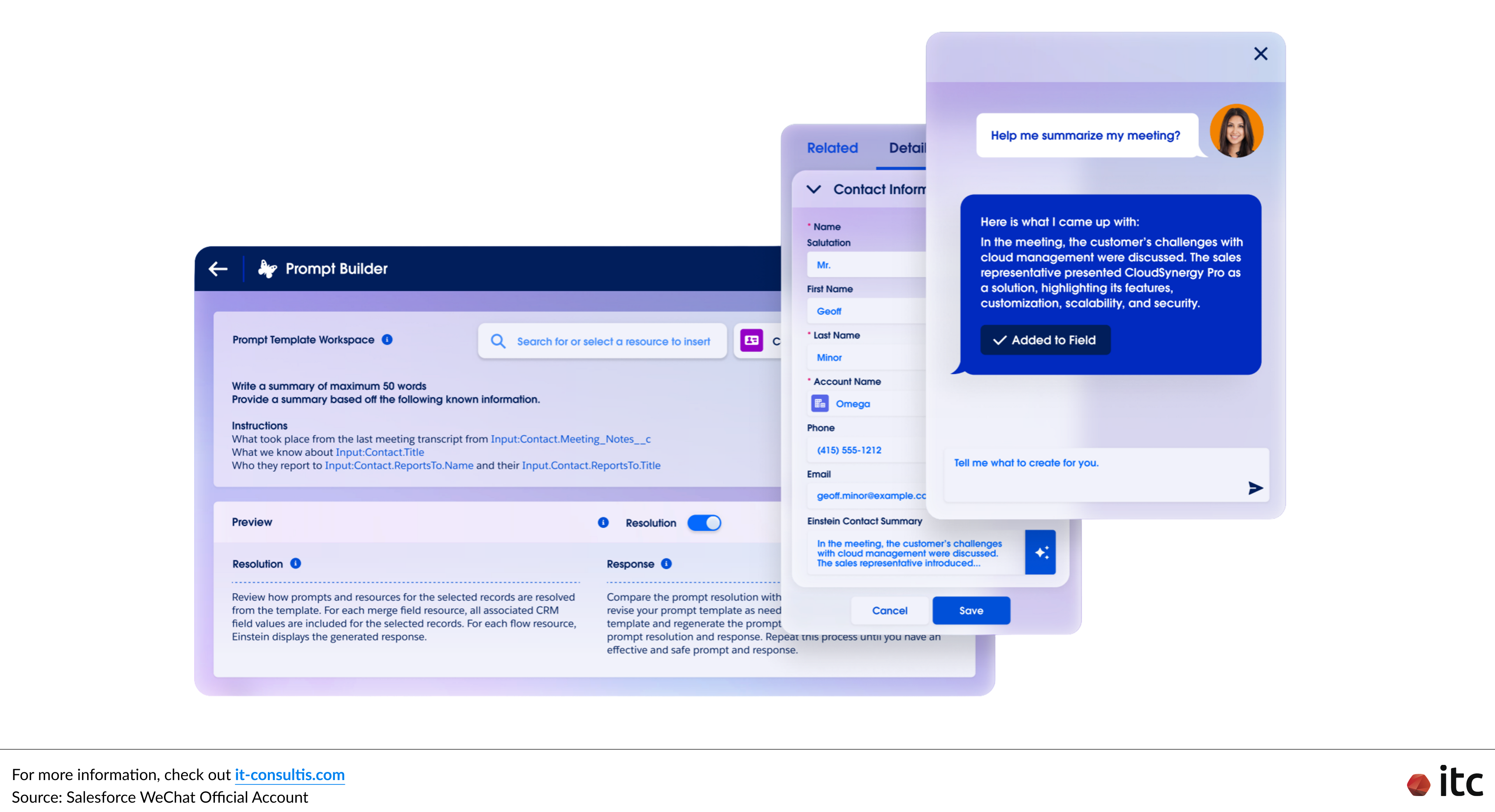
Prompt Builder connects Salesforce on Alibaba Cloud to Alibaba Cloud Model Studio via the CXG AI Connector, enabling teams to use configured prompts to generate or summarize content directly within CRM workflows.
CXG RAG can further enrich prompts by pulling relevant information from an enterprise knowledge base.
For more information, see the CXG AI and Prompt Builder documentation and IT Consultis (ITC)’s AI in Salesforce on Alibaba Cloud CRM guide.
Ensure that all personal or sensitive information is handled in accordance with your organization’s data policies.
AI & Analytics: Quick BI
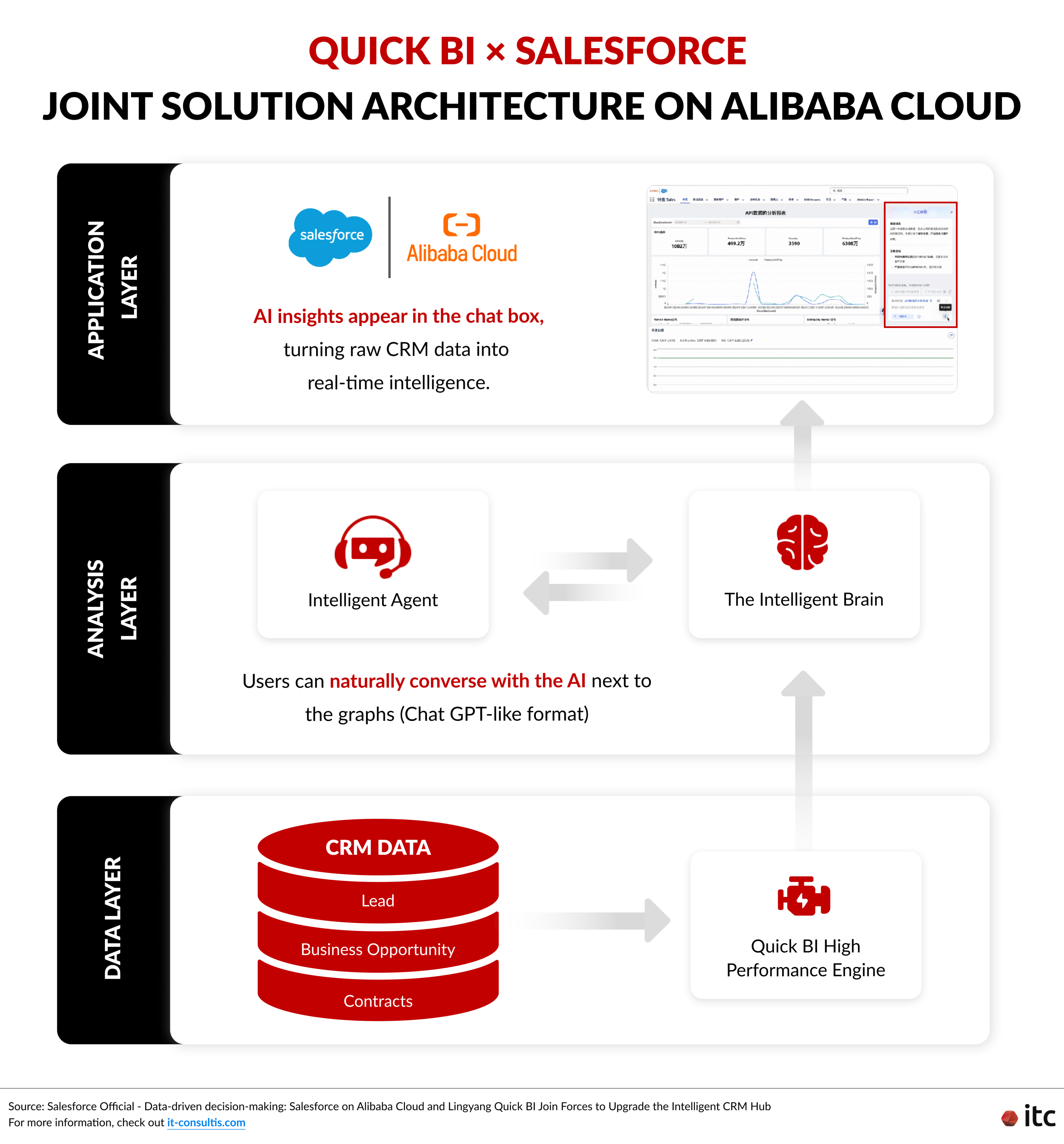
Quick BI is Alibaba Cloud’s business intelligence platform for data analysis and dashboard creation. With the right integration architecture, Quick BI dashboards can be surfaced in Salesforce alongside Salesforce dashboards, providing an additional reporting and decision-support layer alongside your CRM data.
The connection method, data synchronization or refresh frequency, permissions, and cross-environment data boundaries depend on your organization’s architecture. See IT Consultis’ Salesforce × Quick BI integration guide for details.
Industry Clouds
Automotive Cloud is purpose-built for automotive OEMs and dealers, consolidating vehicle, driver, sales, and service data into workflows that support end-to-end customer and vehicle lifecycle management.
For more information, explore the Automotive Cloud overview.
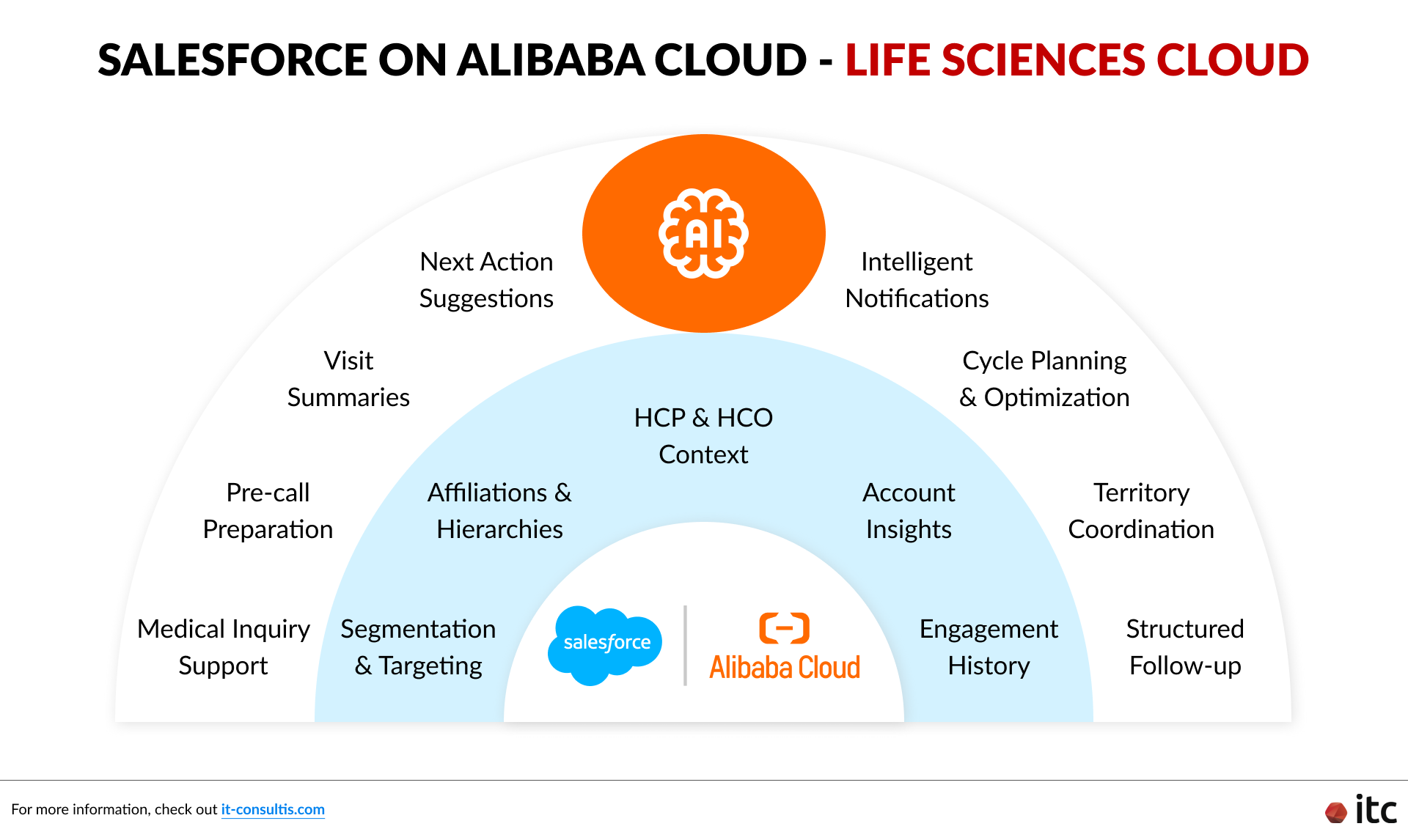
Life Sciences Cloud is designed for pharmaceutical, medical device, and biotechnology companies, offering capabilities such as healthcare professional (HCP) and healthcare organization (HCO) account management and field-visit planning — helping teams streamline customer engagement and field activity.
See the Life Sciences Cloud documentation and our guide to Salesforce Life Sciences Cloud in China.
Note: Product scope and availability vary by release, edition, and configuration. Always verify requirements against current official documentation before purchase or implementation.
How to Incorporate Salesforce on Alibaba Cloud CRM into Your China Strategy
Use a cross-functional assessment to determine whether the local offering fits, what it should support, and how it relates to the organization’s systems and teams.
1. Map customer and user locations. Confirm the contracting customer’s location and where CRM users are based. Keep Hong Kong’s separate purchasing options distinct, and validate eligibility against Salesforce’s current guidance.
2. Define the China business outcomes and workflows. Identify which teams need CRM, which customer journeys matter, and what sales, service, commerce, or reporting work the platform must support. Separate required capabilities from desirable ones.
3. Check product and feature fit. Map each requirement to the current China products, editions, CXG modules, and documented integrations. Record differences and gaps before building workflows around unavailable features. Confirm the target tenant’s current instance release and check the newest applicable China feature comparison before making decisions.
4. Design data flows and accountability. Specify which records each environment needs, what information would cross an environment boundary, how access and reporting work, and who approves and operates each connection. Review applicable privacy and cross-border obligations with qualified advisers. For more information, check out our guide to migration to Salesforce on Alibaba Cloud.
5. Plan ownership and rollout. Agree on responsibilities across China and global teams for configuration, integration support, data stewardship, reporting, and user adoption. Pilot the highest-priority workflows with representative users, then expand based on validated requirements and lessons.
For example, a multinational with teams outside mainland China and Macau and teams in those regions could assess global Salesforce for eligible teams and Salesforce on Alibaba Cloud for local needs.
Before any connection, define which records need to cross the boundary, the purpose and direction of the exchange, the controls, and accountable owners. This is a scenario to test against requirements, not a default two-environment blueprint.
Read the Salesforce China localization framework for more details on what to standardize and localize.
Conclusion
Salesforce on Alibaba Cloud gives organizations a distinct local Salesforce environment to evaluate for mainland China operations. Its core CRM products and documented CXG capabilities can support local workflows, while the feature differences, licensing, data flows, and operating model need deliberate review.
A requirements-led assessment helps teams validate product fit, identify essential connections, and define a realistic operating model before committing to a rollout.
IT Consultis helps international and Chinese organizations translate China CRM requirements into a practical architecture and delivery plan.
That work can include mapping business workflows to the local product scope, planning CXG and other integration needs, clarifying local-to-global data boundaries, and defining ownership and rollout sequencing.
Legal and privacy determinations remain with the organization and its qualified advisers.