
As China’s digital landscape continues to evolve, Xiaohongshu (RedNote) has cemented its status as a powerhouse for brand discovery, social commerce, and authentic engagement — especially among Gen Z and Millennial consumers.
With the rise of Xiaohongshu Mini Programs (MPs), brands now have a new tool to deliver seamless, interactive experiences directly within the app.
But is launching a Xiaohongshu Mini Program the right move for your brand? And if so, what does it take to develop one successfully? This guide explores both the strategic considerations and practical lessons for Xiaohongshu Mini Program development.
Executive Summary:
1. Xiaohongshu Mini Programs are lightweight, app-like features that enable brands to deliver interactive shopping and engagement experiences directly within the Xiaohongshu platform.
2. The platform’s core audience makes it a prime channel for brands targeting Gen Z and Millennial consumers in China.
3. Brands can choose between rapid SaaS-based deployment or fully customized development, each with distinct trade-offs in speed, flexibility, and integration.
4. While Xiaohongshu MPs offer powerful opportunities for social commerce and data-driven marketing, brands should be aware of technical limitations, evolving documentation, and the need for custom integration work.
5. Success on Xiaohongshu requires a tailored strategy, technical expertise, and ongoing adaptation to the platform’s fast-changing ecosystem.
Table of contents
What is a Xiaohongshu Mini Program?
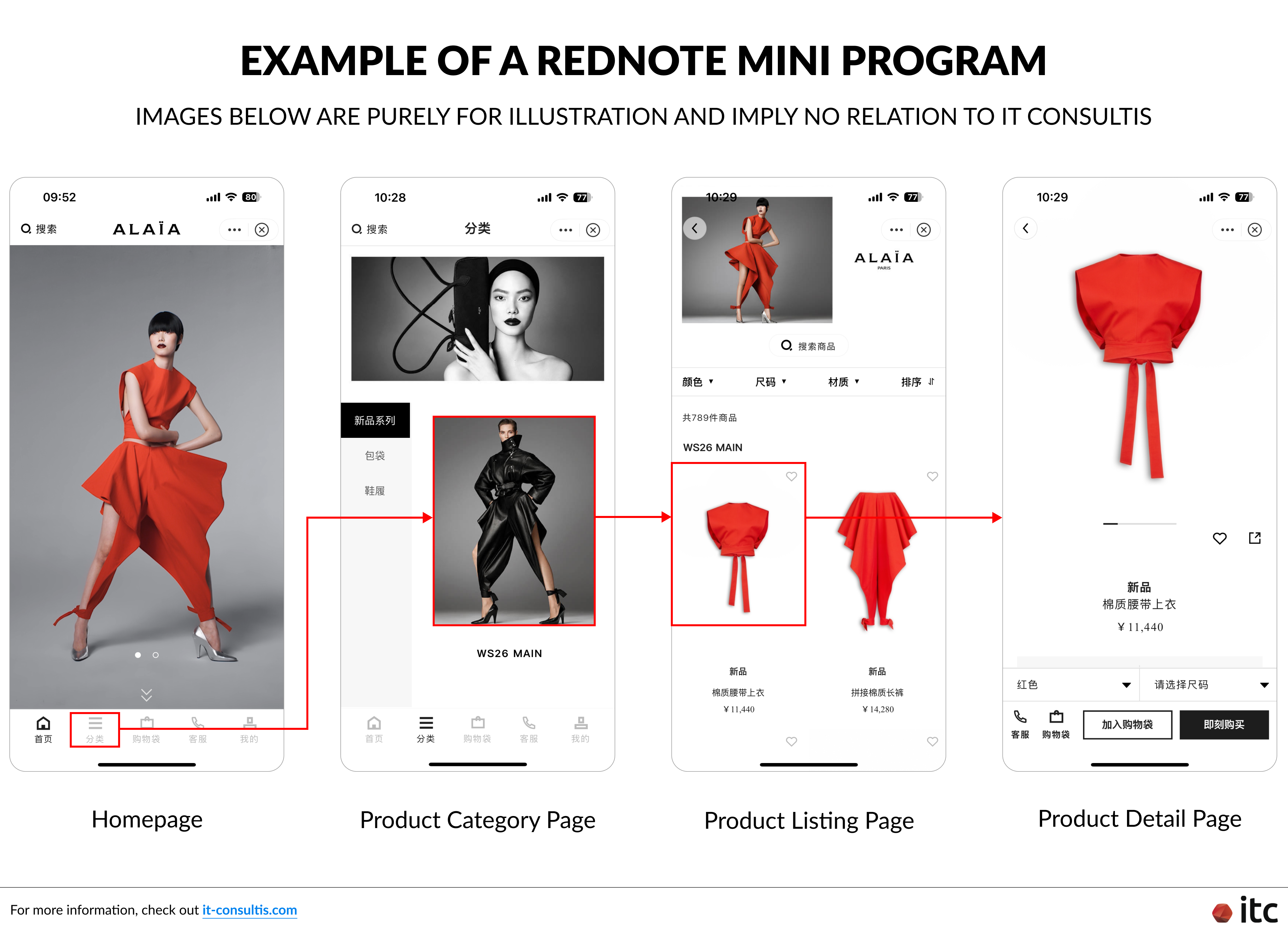
A Xiaohongshu Mini Program (or RedNote Mini Program) is a lightweight, app-like feature embedded directly within the Xiaohongshu platform.
These mini-applications allow users to access interactive brand experiences — such as shopping, virtual try-ons, loyalty programs, and more — without ever leaving the Xiaohongshu app or downloading anything extra.
Mini Programs are seamlessly integrated into the Xiaohongshu user journey. For example, a user might discover a product through a Note or influencer recommendation, then instantly enter a brand’s Mini Program to browse and purchase — all within a few taps.
Xiaohongshu Mini Program vs WeChat Mini Program
WeChat Mini Programs are already a staple of China’s digital ecosystem, used by over 1 billion users for everything from e-commerce, loyalty, experiential campaigns, to travel bookings.
Xiaohongshu Mini Programs are similar to WeChat’s in concept:
- Both are embedded, app-like experiences providing dedicated brand experiences
- Both are accessible through various touchpoints, including:
- Xiaohongshu Official Account (vs WeChat Official Account)
- Xiaohongshu Notes (vs WeChat Official Account articles)
- Quick-access sidebar (vs WeChat’s Recently Used Mini Program)
- Livestreams (vs WeChat Channels livestreams)
- User-user and Key Opinion Sales-user chat (vs WeChat and WeCom chat)
- Advertising banners
- Both can be integrated with business systems such as OMS, POS, WMS, SAP, ERP, CDP, and CRM, though Xiaohongshu integrations may require custom solutions and are subject to platform limitations.
- Both platforms can enable brands to capture valuable data for remarketing, though on Xiaohongshu, data access and utilization may be more limited and often require additional technical effort due to platform restrictions.
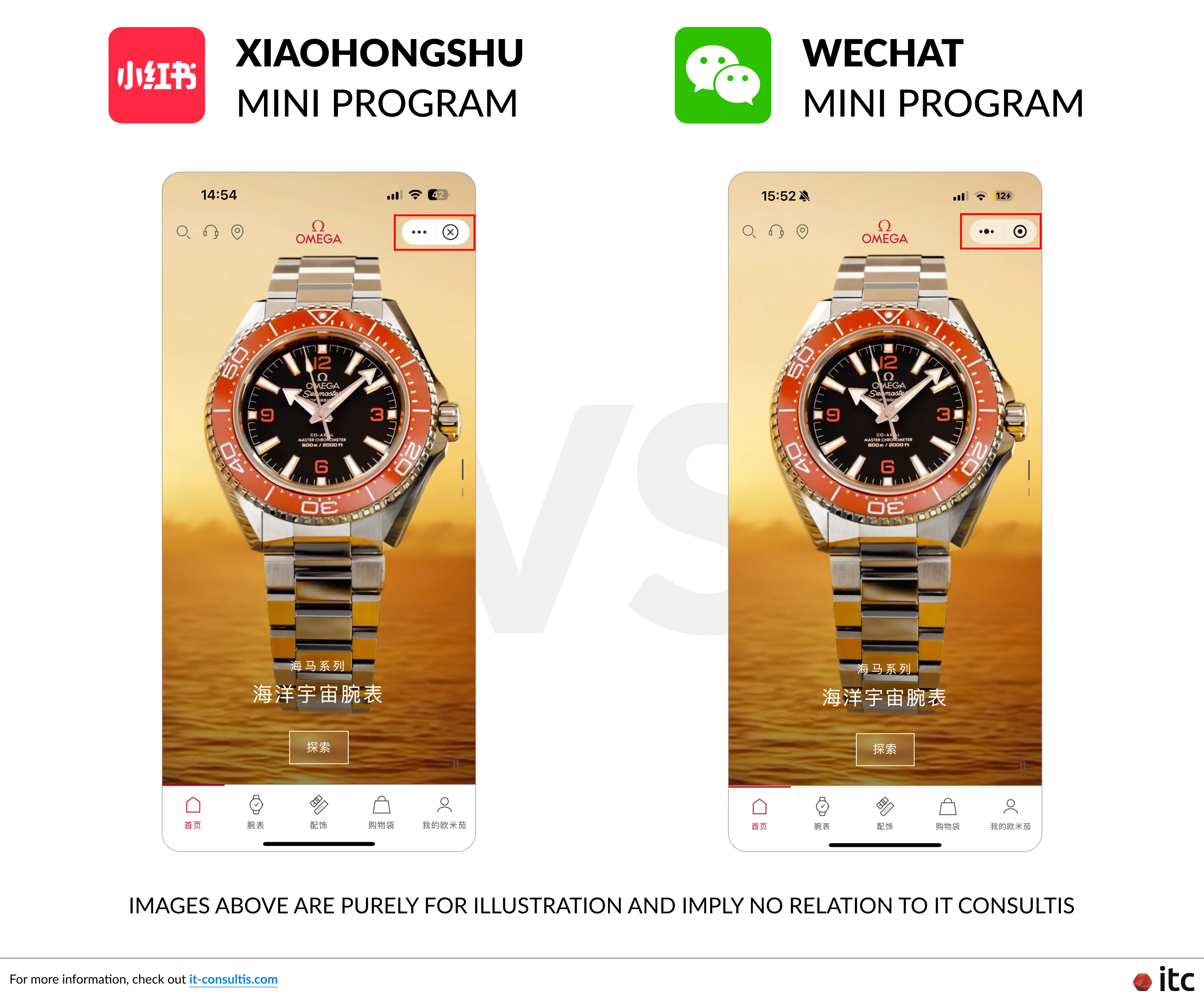
However, there are still some key differences:
- Audience: WeChat is ubiquitous across all age groups and demographics in China, while Xiaohongshu’s core audience is younger, urban, and especially influential in the luxury, beauty, and lifestyle sectors.
- Content Integration: Xiaohongshu Mini Programs are tightly woven into the platform’s ecosystem of user-generated content, reviews, and social sharing. This means brands can leverage authentic storytelling and community engagement alongside their Mini Program features.
- Technical Maturity & Integration: While both platforms support seamless in-app purchases, Xiaohongshu Mini Programs are much newer and less mature than WeChat’s. Brands may encounter more technical hurdles. Developing on Xiaohongshu often requires custom solutions and close collaboration with experienced developers. These technical considerations — and how to navigate them — are discussed in detail in the following sections.
Should Your Brand Launch a RedNote Mini Program?
Key Benefits
Direct Access to Gen Z and Millennial Shoppers
Xiaohongshu has rapidly become a powerhouse for brand discovery, social commerce, and authentic engagement in China.
With over 300 million monthly active users — and 90% under the age of 35 — the platform’s digitally savvy, trendsetting demographic is highly influential in shaping luxury and lifestyle consumption.
These young, affluent consumers value authenticity and community, making Xiaohongshu a trusted destination for product discovery and brand inspiration.
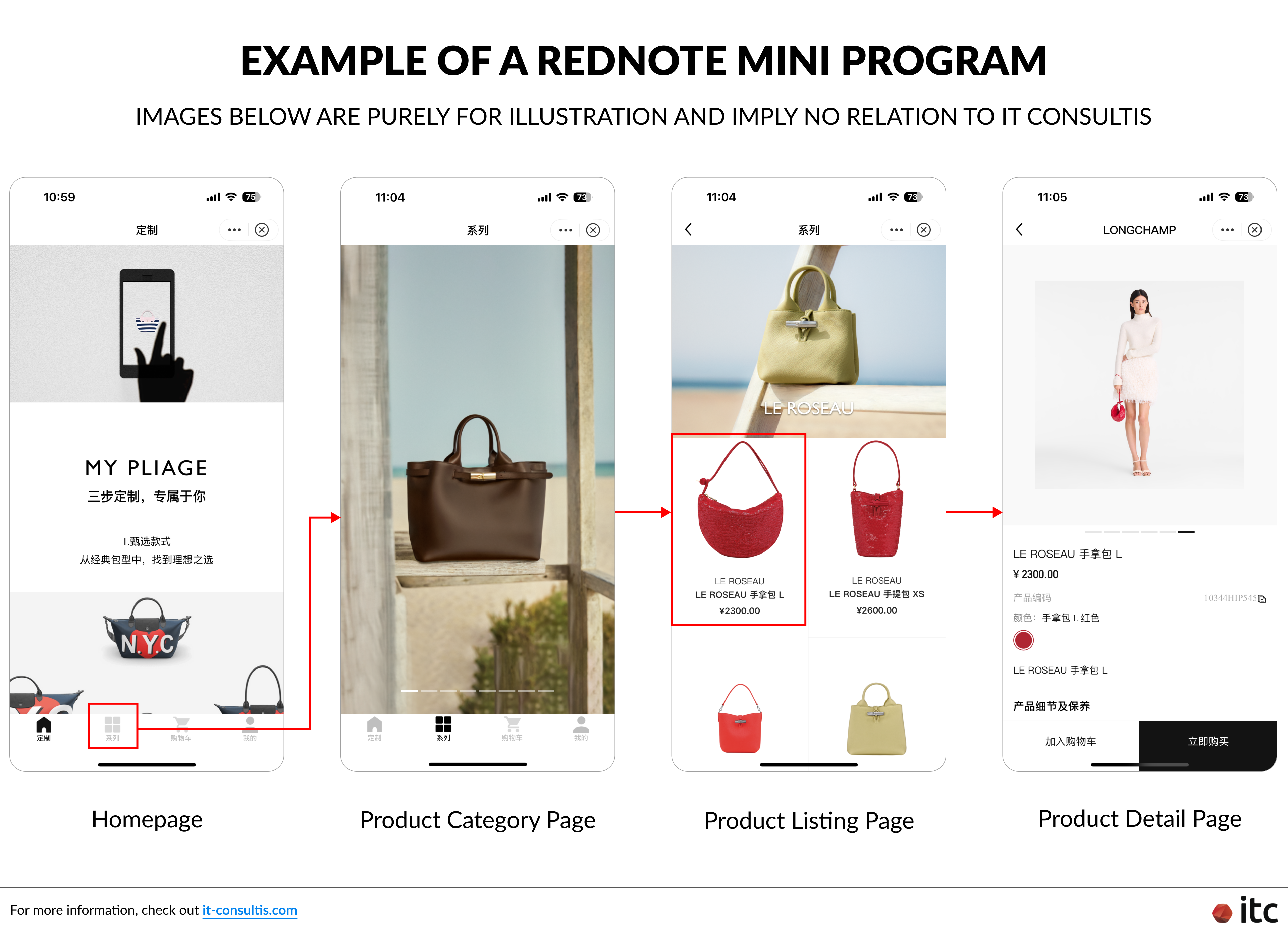
Leading brands like Dior, Celine, and Omega have leveraged RedNote Mini Programs to deliver exclusive content and seamless shopping experiences.
Seamless Social Commerce
With Xiaohongshu’s “see now, buy now” ecosystem, users can move from inspiration to purchase in just a few taps. This frictionless journey is especially effective for impulse buys and limited-edition drops.
Data-Driven Insights
Xiaohongshu Mini Programs can provide brands with access to rich analytics (including transaction, demographic, browsing, and source data), enabling them to track user behavior, optimize campaigns, and personalize offers.
Potential Challenges
While the opportunities are compelling, launching a Xiaohongshu Mini Program is not without its hurdles:
- Technical Complexity: Xiaohongshu MPs are still a relatively new feature, with limited documentation and support compared to WeChat MPs. Brands may face challenges with underdeveloped libraries, complex payment integrations, UI constraints, and ongoing maintenance.
- Resource Investment: Developing and maintaining a Mini Program requires dedicated resources — both technical and creative — to ensure a high-quality, on-brand experience.
- Audience Fit: Xiaohongshu’s core users skew young and urban. Brands targeting older demographics or B2B audiences may see less impact.
Is It Right for Your Brand?
Consider launching a Xiaohongshu Mini Program if:
- Your target audience includes Gen Z and Millennial consumers in China.
- You want to build deeper engagement through interactive, content-driven experiences.
- Your brand is ready to invest in ongoing digital innovation and content creation.
- You seek to capture and nurture traffic for long-term loyalty.
If your brand is still building basic awareness in China or lacks the resources for continuous digital engagement, it may be wise to focus first on foundational channels (such as Xiaohongshu Official Accounts and influencer partnerships) before investing in a Mini Program.
How to Approach Xiaohongshu Mini Program Development
Developing a Xiaohongshu Mini Program is, in many ways, similar to building a WeChat Mini Program. Brands can choose from two main approaches, each with its own advantages and trade-offs:
1. SaaS Solution Providers (e.g., Youzan, Weidian)
The fastest and most accessible route is to use a third-party SaaS platform such as Youzan or Weidian. These providers offer ready-made Mini Program templates and e-commerce features that can be quickly deployed with minimal technical effort.
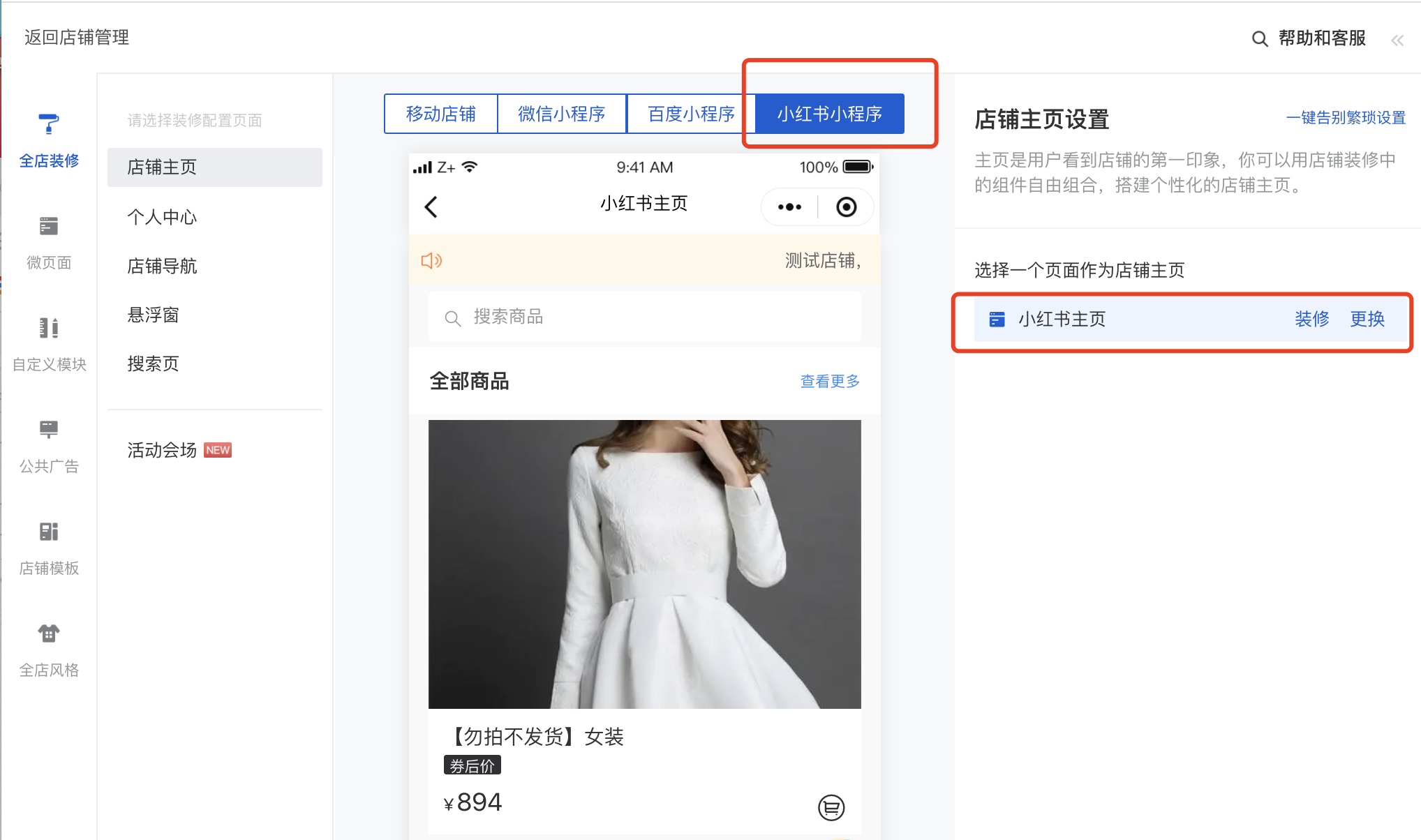
This approach is ideal for brands that want to launch rapidly, have limited development resources, or require standard e-commerce functionality. However, customization options and integration flexibility may be limited compared to other methods.
2. Fully Customized Development
For brands with complex requirements or advanced integration needs, fully customized development is the most flexible option.
- The front-end is still built for Xiaohongshu, but the back-end is entirely custom and can be hosted outside Xiaohongshu’s ecosystem. This approach can:
- Integration can include advanced features: ERP, CRM, OMS, loyalty engines, and other enterprise systems.
- This method provides maximum flexibility for business logic, data flows, and user experience, but also requires more technical expertise and resources.
It is best suited for brands seeking a truly unique, scalable solution with advanced system integration.
Important Considerations
While Xiaohongshu Mini Programs offer exciting opportunities, brands should be aware that the platform’s technical ecosystem is still evolving.
Integration with external systems (such as ERP, CRM, or advanced analytics) may require custom development and close collaboration with experienced partners. Documentation and technical support may also be more limited compared to more established platforms like WeChat.
We recommend conducting a thorough technical assessment and working with a team familiar with Xiaohongshu’s latest capabilities and constraints to ensure a smooth and successful launch.
Conclusion
Xiaohongshu Mini Programs represent a powerful opportunity for brands to engage China’s next generation of consumers. By combining authentic storytelling, interactive technology, and seamless commerce, brands can create memorable experiences that drive both engagement and sales.
Choosing the right development approach — whether SaaS, native, or fully customized — depends on your brand’s objectives, technical capabilities, and the level of personalization you seek. With the right strategic and technical support, your brand can fully leverage Xiaohongshu’s potential for long-term success.
At IT Consultis, we are guiding brands to unlock full-funnel growth on Xiaohongshu, including building custom Xiaohongshu Mini Programs to drive deeper engagement and accelerate conversion at every stage of the funnel.


