
Chinese outbound travel is undergoing a strong and sustained recovery, once again positioning Chinese travelers as one of the most important customer segments for global hospitality brands.
This article explains the digital journey of Chinese travelers, why Western playbooks fail in China, and the key capabilities global hospitality brands need to compete effectively.
Executive Summary:
1. Chinese outbound travel is rapidly recovering, with trips projected to reach 155 million by 2025, making Chinese travelers a key segment for global hospitality brands.
2. Many global hospitality brands struggle to attract Chinese travelers due to a limited understanding of China’s digital ecosystem, regulatory constraints, fragmented data, and inconsistent engagement strategies.
3. Chinese travelers follow a unique digital journey, heavily shaped by super-apps like WeChat, Douyin, Xiaohongshu, and WeCom, across pre-trip, in-trip, and post-trip stages.
4. Success requires establishing a verified presence on Chinese platforms, seamless mobile payment integration, and leveraging CRM/CDP-driven personalization to deliver relevant offers and measurable revenue impact.
5. Brands that adapt to China’s super-app ecosystems can unlock engagement, monetization, and long-term loyalty, while those that don’t risk being invisible during critical travel moments.
Table of contents
Why Chinese Travelers Matter For Global Hospitality
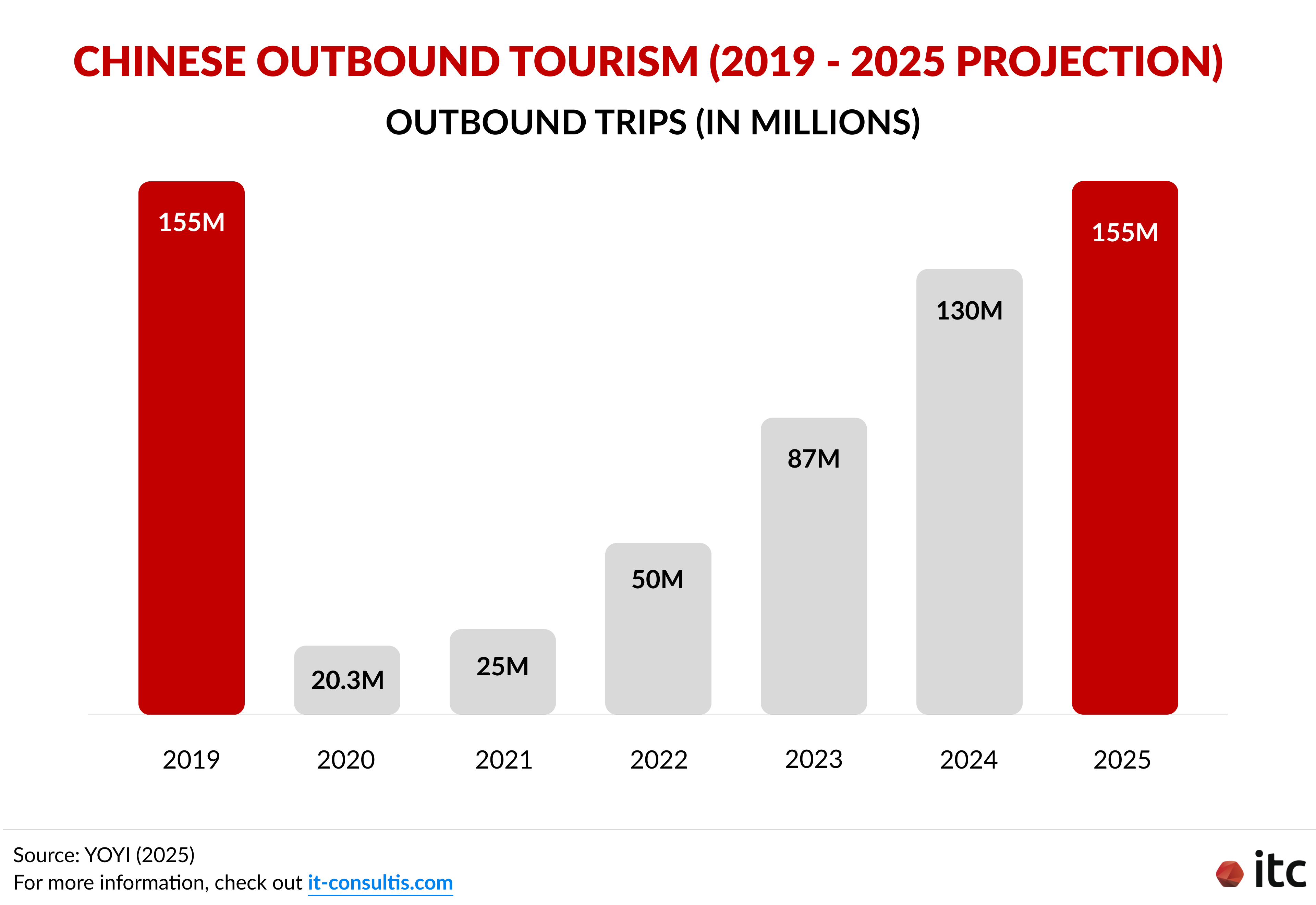
By 2025, Chinese outbound trips are projected to reach approximately 155 million, returning to pre-COVID levels. Notably, 64% of these travelers are under 30, representing digital natives who expect curated, mobile-first, and social media-driven experiences. Additionally, 79% of Chinese travelers research shopping options before they even arrive at their destination.
This recovery is already visible across major regional destinations:
- In Macau, more than 21 million arrivals from mainland China were recorded between Q1 and Q3 2025, accounting for roughly 72% of total visitors.
- In Hong Kong, mainland Chinese travelers represented around 75% of total arrivals in October 2025, with approximately 3.45 million visits in a single month.
- Japan continues to count Chinese travelers among its largest and most commercially significant inbound visitor groups, particularly for retail, dining, and premium experiences.
- South Korea recorded a 31 percent year-on-year increase in Chinese tourist volume in July 2025 alone.
Similar recovery patterns are emerging across APAC and globally, where Chinese travelers are steadily regaining their position as a core driver of tourism revenue.
The real challenge now for global hospitality brands is ensuring they are digitally equipped to engage these returning Chinese travelers effectively.
Common Challenges in Attracting Chinese Travelers
Despite strong interest in the Chinese market, most global hospitality brands struggle to adapt because Western digital playbooks rarely translate into China’s unique environment — one shaped by super-apps, private traffic, and fully digital, mobile-first journeys.
As a result, many operators are not structured around the real Chinese traveler journey, leading to missed opportunities for engagement and growth.
Challenge 1: Limited Understanding of China’s Digital Ecosystem
Many brands underestimate just how unique and complex China’s digital landscape is, defaulting to newsletters, global websites, apps, or SMS that Chinese travelers rarely use.
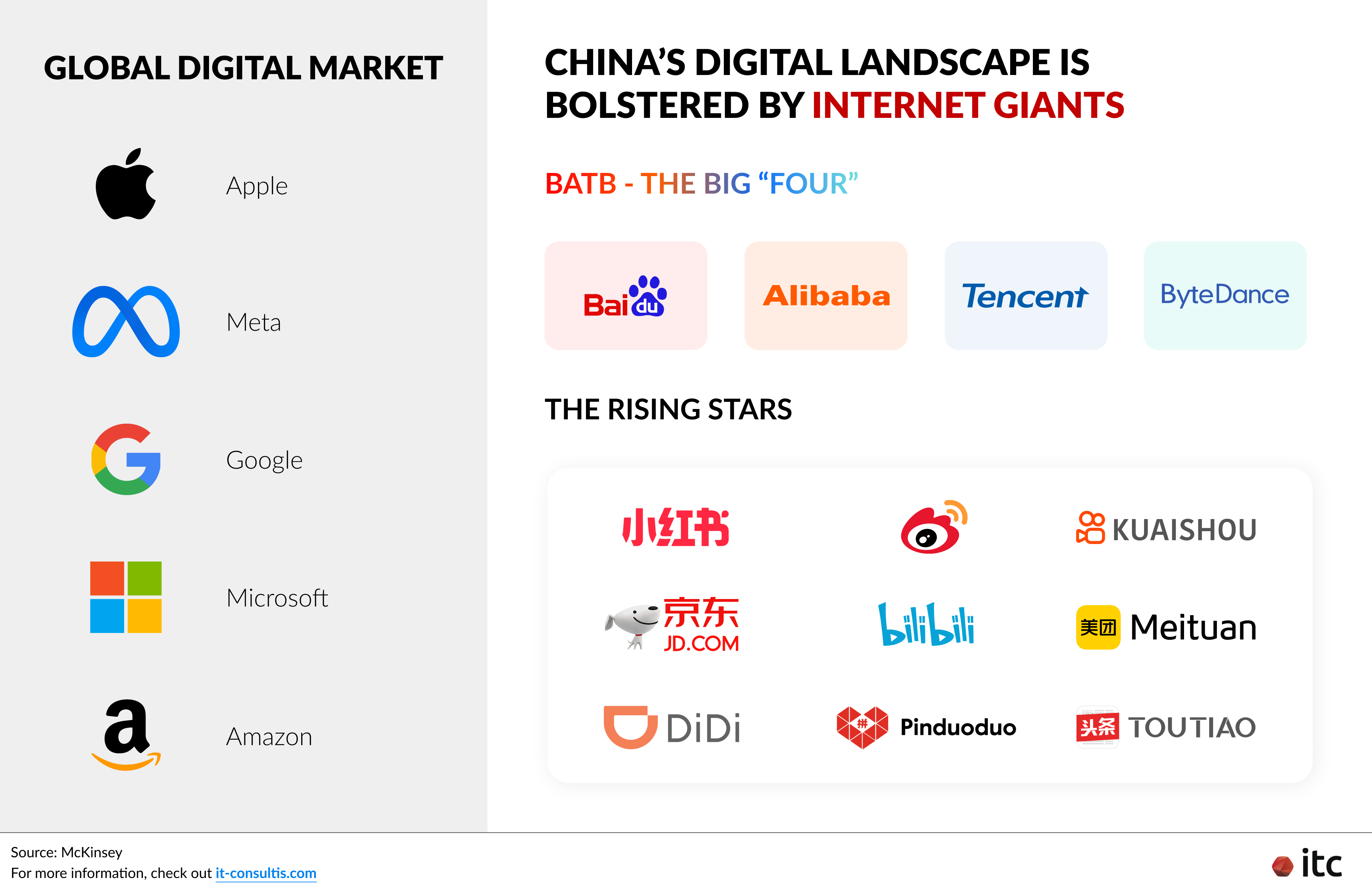
Instead, China’s digital economy is largely shaped by four technology giants — commonly referred to as BATB (Baidu, Alibaba, Tencent, and ByteDance) — which have built an ecosystem dominated by local super-apps and platforms.
Among these, WeChat, developed by Tencent, sits at the center of this ecosystem.
WeChat alone had around 1.38 billion monthly active users in 2024, with users spending nearly 80 minutes per day on the platform. Notably, 43.6% of first-time Chinese travelers used platforms like WeChat Pay while traveling and shopping abroad, highlighting the importance of these familiar digital tools for global hospitality brands.
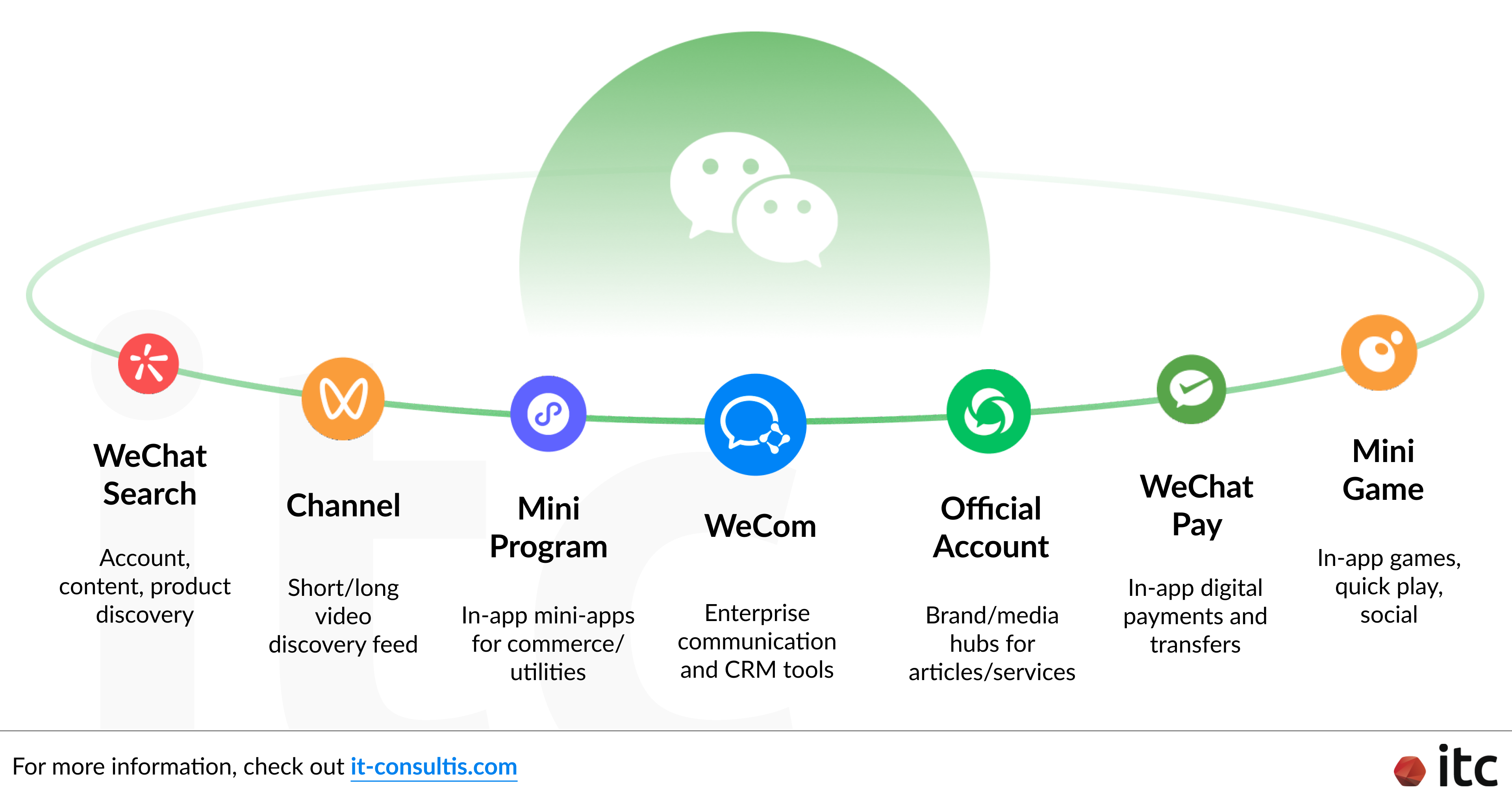
This makes WeChat not just a messaging app, but an all-in-one ecosystem for social networking, payments, content, and services through Official Accounts, Mini Programs, and enterprise communication via WeCom.
Together with Tencent’s WeChat ecosystem, other leading local super apps and digital platforms form the backbone of China’s digital ecosystem, especially Xiaohongshu/RedNote for the hospitality sector.
Xiaohongshu (RedNote) serves as a key channel for brand discovery, travel inspiration, and social engagement, particularly among Gen Z and Millennials. With Xiaohongshu Mini Programs, particularly, hospitality brands can deliver seamless, interactive experiences directly within the app.
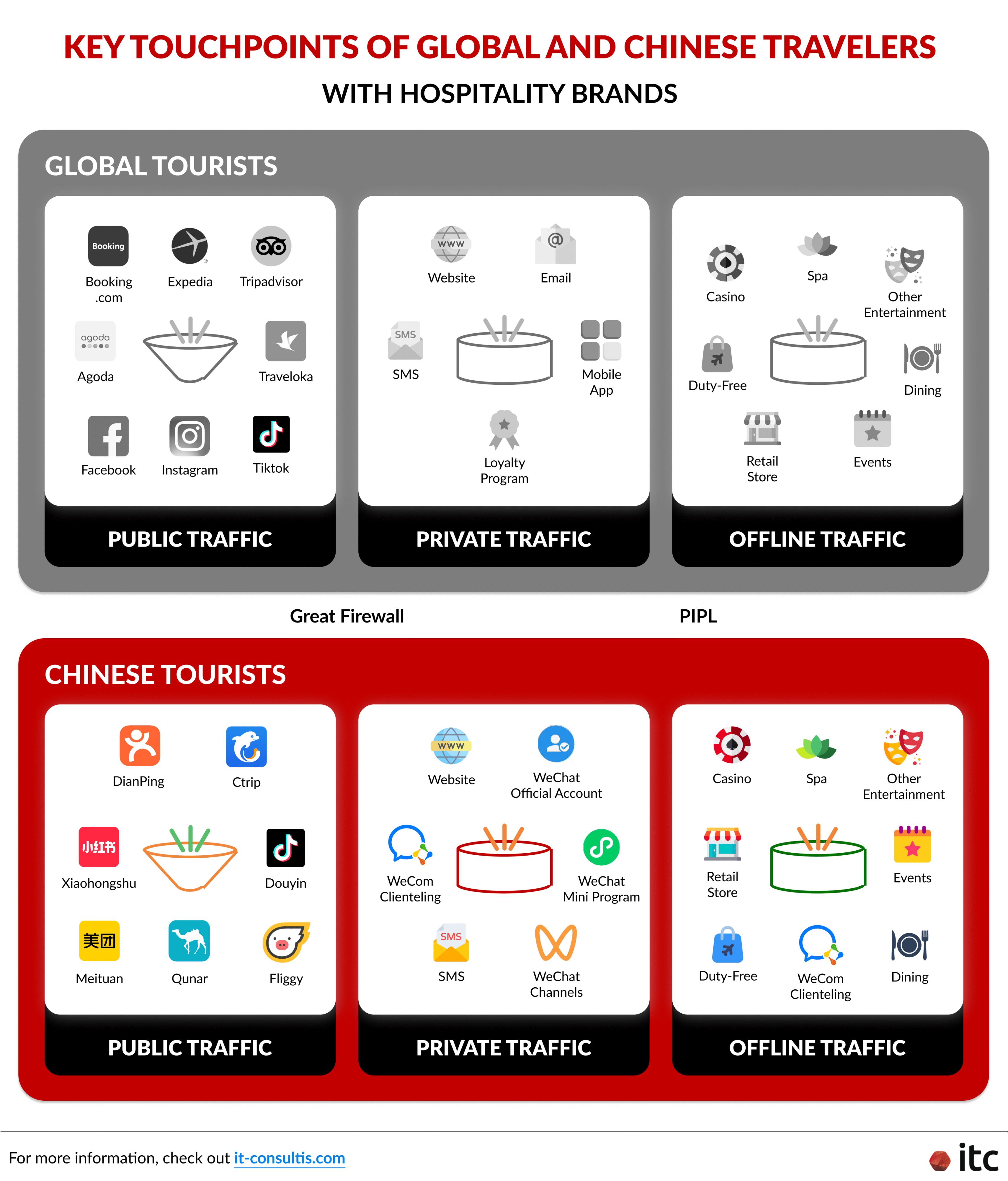
Without a clear understanding of which digital touchpoints truly matter to Chinese travelers, brands risk spreading their resources too thin — resulting in scattered investments and limited impact across the entire traveler journey.
Challenge 2: Complex Regulatory and Compliance Environment
China’s strict data privacy laws, especially the Personal Information Protection Law (PIPL) enacted in 2021, set rigorous requirements for how organizations collect, store, and process personal information obtained from China. Compliance with these regulations is mandatory, and failure to meet them can result in fines, legal risks, or reputational damage.
These rules make data collection and especially cross-border data transfers challenging for global hospitality brands, often slowing decision-making and limiting the ability to personalize customer experiences.
Ensuring compliance while executing effective data-driven marketing in China requires careful planning and local expertise.
Challenge 3: Extremely Siloed Data
Data is frequently fragmented across multiple platforms and vendor-managed systems, making it difficult for global hospitality brands to build a unified view of each consumer.
This lack of integration hinders strategic decision-making and limits the ability to deliver personalized, seamless experiences throughout the traveler journey.
Challenge 4: Lack of Consistent Engagement Strategy
Many organizations lack a unified engagement strategy across pre-trip, in-trip, and post-trip stages, leading to:
- Fragmented experiences across the traveler’s journey
- Inconsistent messaging and infrequent touchpoints
- Missed revenue opportunities
The Unique Digital Journey of Chinese Travelers
Understanding the passenger journey of Chinese travelers is crucial for global hospitality brands aiming to engage this influential market. Their journey is distinct from other international travelers, shaped by unique digital behaviors and expectations at every stage of travel.
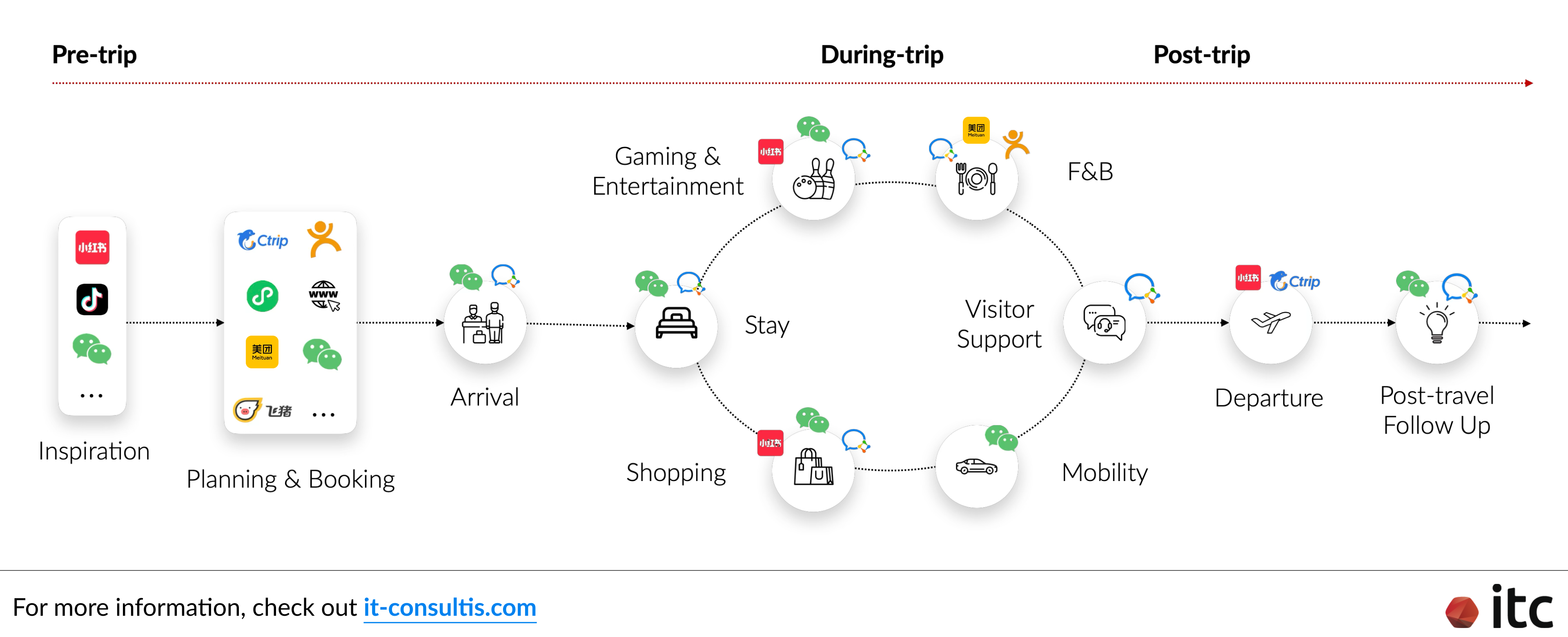
Pre-Trip: Inspiration and Planning
Travel inspiration begins primarily on Chinese social platforms:
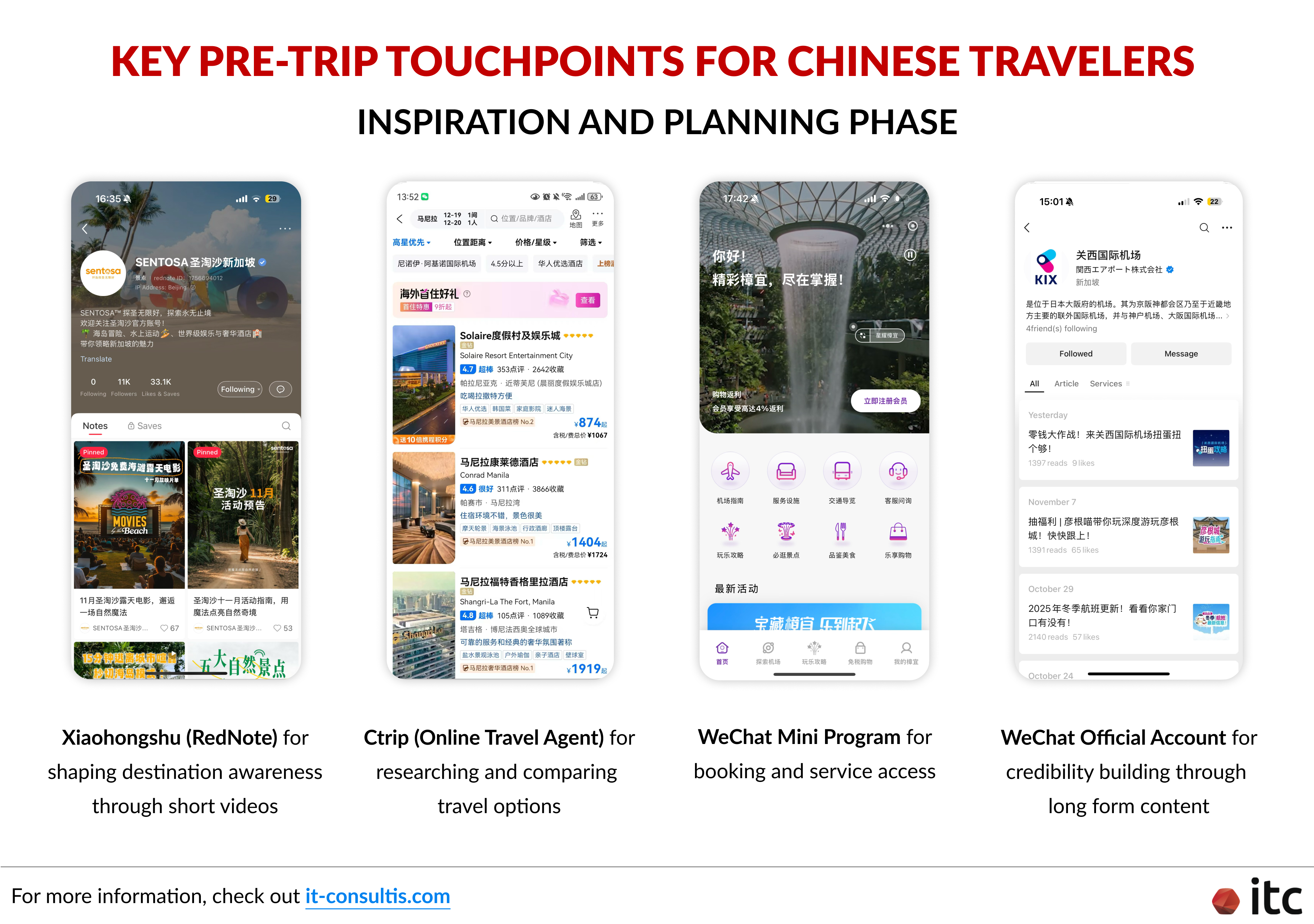
- Douyin & Xiaohongshu (RedNote): Play a central role in shaping destination awareness, brand perception, and trust through short videos, influencer content, and peer-generated reviews.
- WeChat Official Account: Serve as authoritative brand touchpoints, reinforcing credibility through long-form content, destination information, and brand storytelling.
- WeChat Mini Program: Enable in-app browsing, booking, and service access without redirecting users to external websites, reducing friction in the conversion process.
- WeChat Channels: Deliver short-form videos to users within WeChat, increasing brand awareness through algorithm-driven content.
- Local Online Travel Agents (OTAs – such as Ctrip, Meituan, and Fliggy): Offer familiar platforms for researching, comparing, and booking travel options, often integrated with social and payment features.
Planning and booking usually happen within these ecosystems instead of on hotel or travel websites, as Chinese travelers are strongly influenced by convenience and familiarity.
In-Trip: Personalized Experiences and Promotions
During the trip, key digital touchpoints include:
- Douyin & Xiaohongshu (RedNote): Remain highly influential during the stay, particularly for discovering local experiences, restaurants, and retail.
- QR codes: Instantly connect travelers to WeChat Official Accounts, Mini Programs, or WeCom for information and services, whether scanned online or from offline touchpoints, without requiring extra app downloads.
- WeCom: Provide direct access to customer service, concierge support, and personalized offers, enabling real-time upsell and cross-sell opportunities.
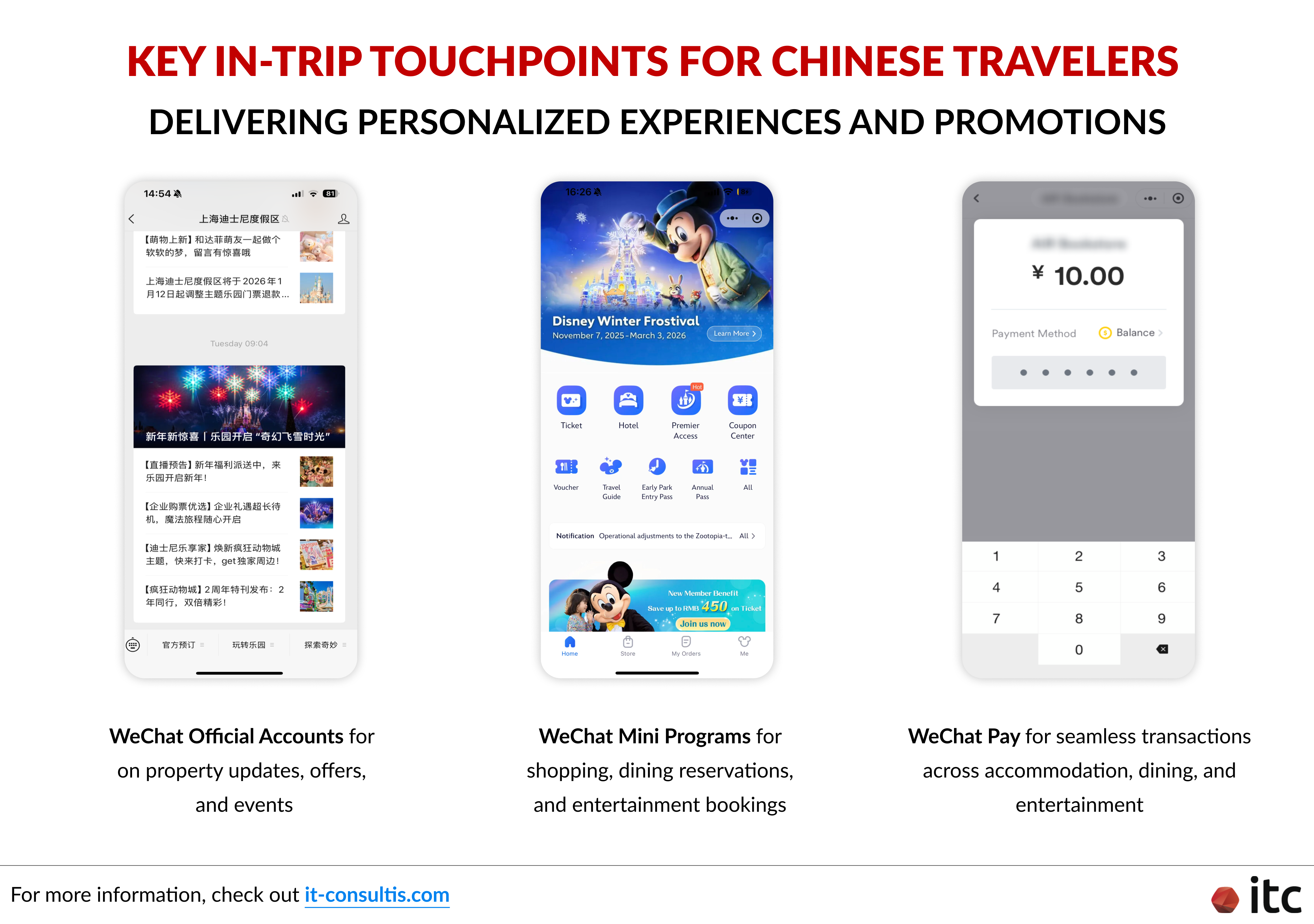
- WeChat Official Account: Enable timely push notifications for on-property updates, offers, events, and service reminders.
- WeChat Mini Program: Provide access to property services, dining reservations, entertainment bookings, shopping, promotions, and destination information within a single interface.
- WeChat Channels: Continue to influence in-trip discovery by surfacing nearby dining, shopping, and experience content while travelers are on location.
- Mobile payments (such as Alipay, WeChat Pay): Ensure seamless transactions for accommodation, dining, entertainment, retail, and transportation.
Post-Trip: Retention and Long-Term Value
Post-trip engagement continues beyond checkout, but for Chinese travelers, it is sustained primarily through China’s digital ecosystem rather than newsletters or app notifications:
- WeChat Official Account: Support ongoing brand communication through content updates, destination storytelling, and campaign announcements.
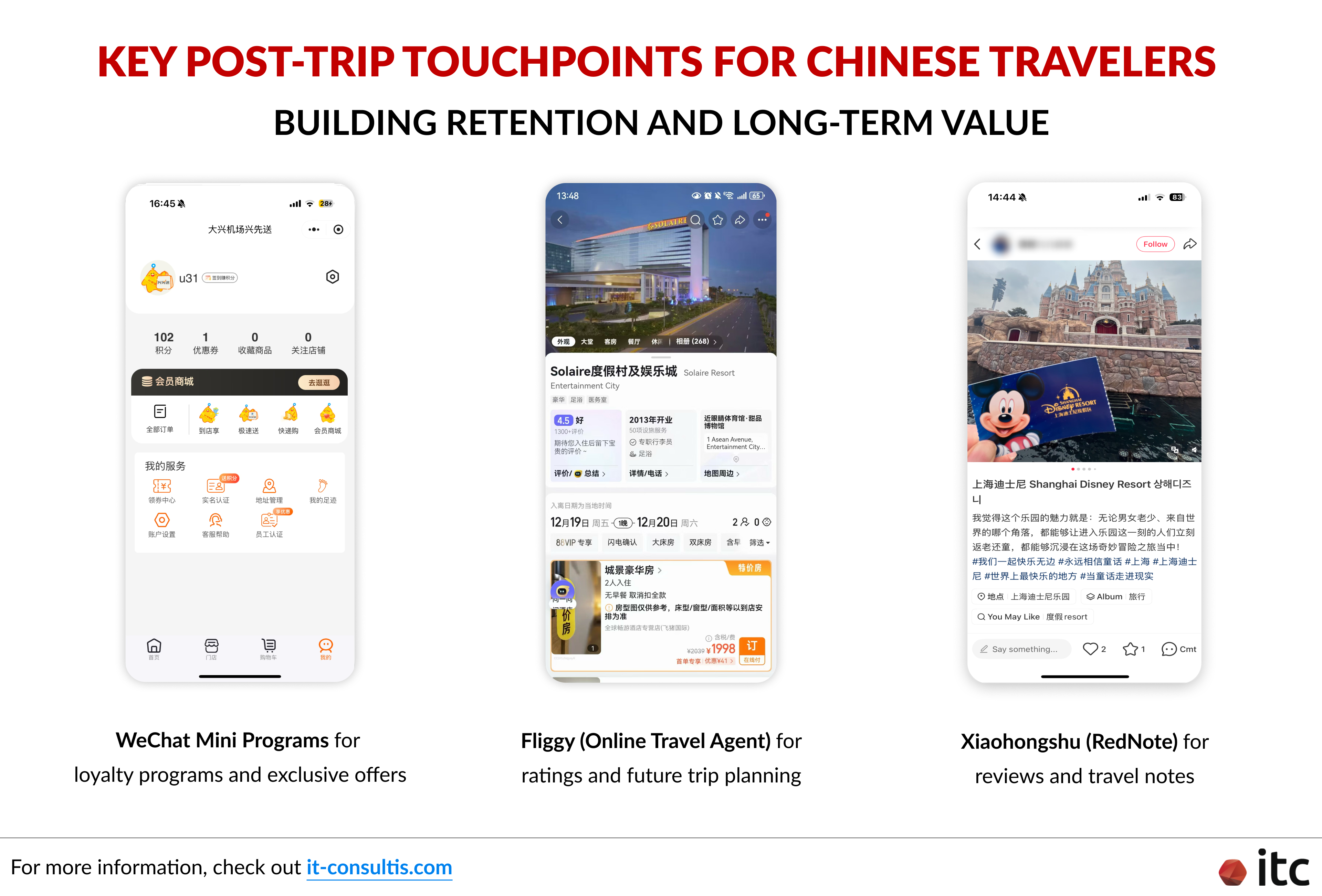
- WeChat Mini Program: Facilitate loyalty programs and exclusive offers to encourage repeat visits and engagement.
- WeCom: Maintain direct relationships with past guests through sales associates, delivering personalized follow-ups and service continuity to encourage repeat visits.
- Xiaohongshu: Play a critical role in post-trip advocacy and influence, as travelers share reviews, travel notes, and recommendations that shape future demand and peer consideration.
- Local OTAs: Remain important for post-trip reviews, ratings, and future trip planning, influencing brand reputation and repeat booking behavior.
What Global Hospitality Brands Should Do to Win Chinese Travelers
To succeed, hospitality leaders must:
- Establish a Strategic Presence on Key Chinese Platforms: Secure Official Accounts, Mini Programs, and presence on leading social platforms.
- Enable Seamless Mobile Payment Integration: Accept Alipay, WeChat Pay, and other local payment methods.
- Leverage CRM, CDP, and Marketing Automation for Personalization: Integrate data across platforms and automate marketing workflows to deliver relevant offers and measurable revenue impact.
- Develop a Unified Engagement Strategy: Orchestrate consistent, lifecycle-based engagement across pre-trip, in-trip, and post-trip stages.
To Wrap Up
As Chinese travelers return to global destinations with distinct digital expectations, hospitality brands that embrace China’s super-app ecosystems and enable this unique journey will unlock engagement, monetization, and loyalty at scale— while those who fail to adapt risk remaining invisible at critical moments.
At IT Consultis (ITC), as a certified Tencent, WeCom, WeChat Pay, and Alipay partner, we guide global and local hospitality groups through China’s complex digital landscape. Our support spans private-domain operations on WeChat, WeChat and Xiaohongshu Mini Program development, and the integration of advanced payment solutions such as WeChat Pay.
Our approach combines training workshops, in-depth digital audits, and end-to-end transformation programs to help brands engage Chinese travelers effectively and build long-term loyalty.


