A Website Revamp for ESSCA International Business School

ESSCA
ESSCA's website was not mobile responsive, which was a disadvantage and did not convey a proper brand image. The second challenge that ESSCA was facing was a disseminated content management system. These websites were centralized under the same back-end system, but some features were different across them.


In this IT Consultis case study, we will show you the revamp of the ESSCA website with the integration of the CMS API and React.js inside Docker.
About The Client: ESSCA
Founded in 1909, ESSCA is an internationally renowned French grande écoles. It offers a wide portfolio of diploma-level programs and degrees in business and management.
For over a century, ESSCA has proven its academic excellence and international perspective with many impressive numbers and prestigious accreditations. This includes being among the global top 1% of management schools triple-accredited by AACSB, AMBA, and EQUIS.
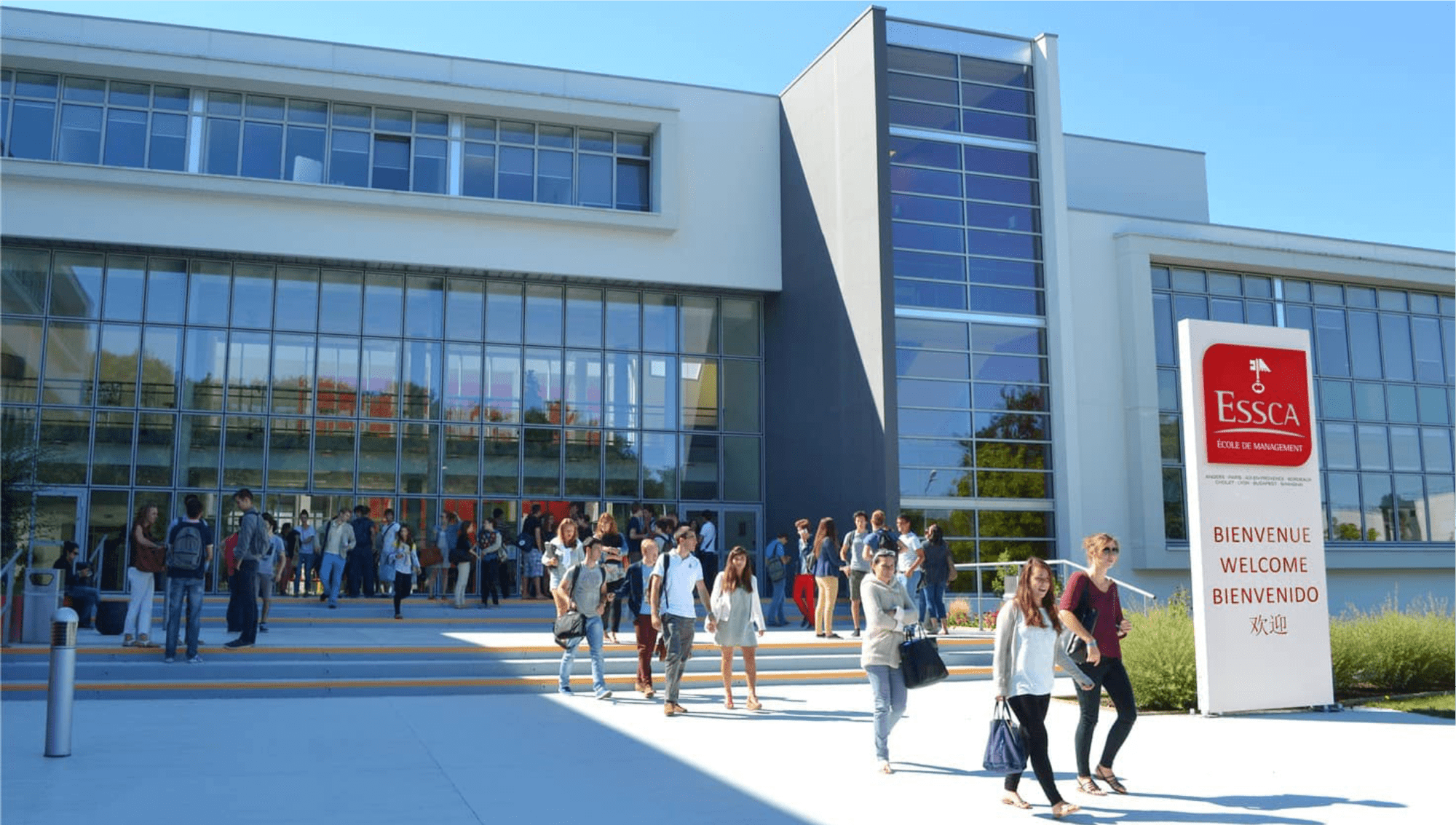
In addition, to enhance its global expansion, ESSCA has now opened 8 different campuses to accept students from all over the world. As a result, the school welcomes a huge amount of web traffic every day from its current students, faculty, and partners to millions of potential stakeholders worldwide.
It is essential for ESSCA to take great care of its website, from branding, copywriting, and design to the content management system. The website has to properly convey ESSCA’s image while providing a seamless experience to users from different locations.
Objectives
According to Noel-Levitz, Inc., “1 in 4 students reported removing a school from their prospective list because of a bad experience on that school’s website.”
This finding points out that a well-designed website is extremely important for every university, especially those that welcome a large number of students from different countries, such as the ESSCA School of Management.
However, over the years, the school’s website had aged and, naturally, did not keep up with the latest design trends.
One of the biggest issues with the website was its poor mobile responsiveness. As more and more users now prefer to go online via mobile devices, ESSCA needed to ensure that its website was fully mobile responsive to enhance the user experience and properly convey the brand image.
The second challenge that ESSCA was facing was a dispersed content management system.
The school had a lot of related websites, each of which covered similar topics. Although these websites were centralized under the same backend system, some of the features were very different. This cost ESSCA a lot of time and effort to manage such a huge amount of content.
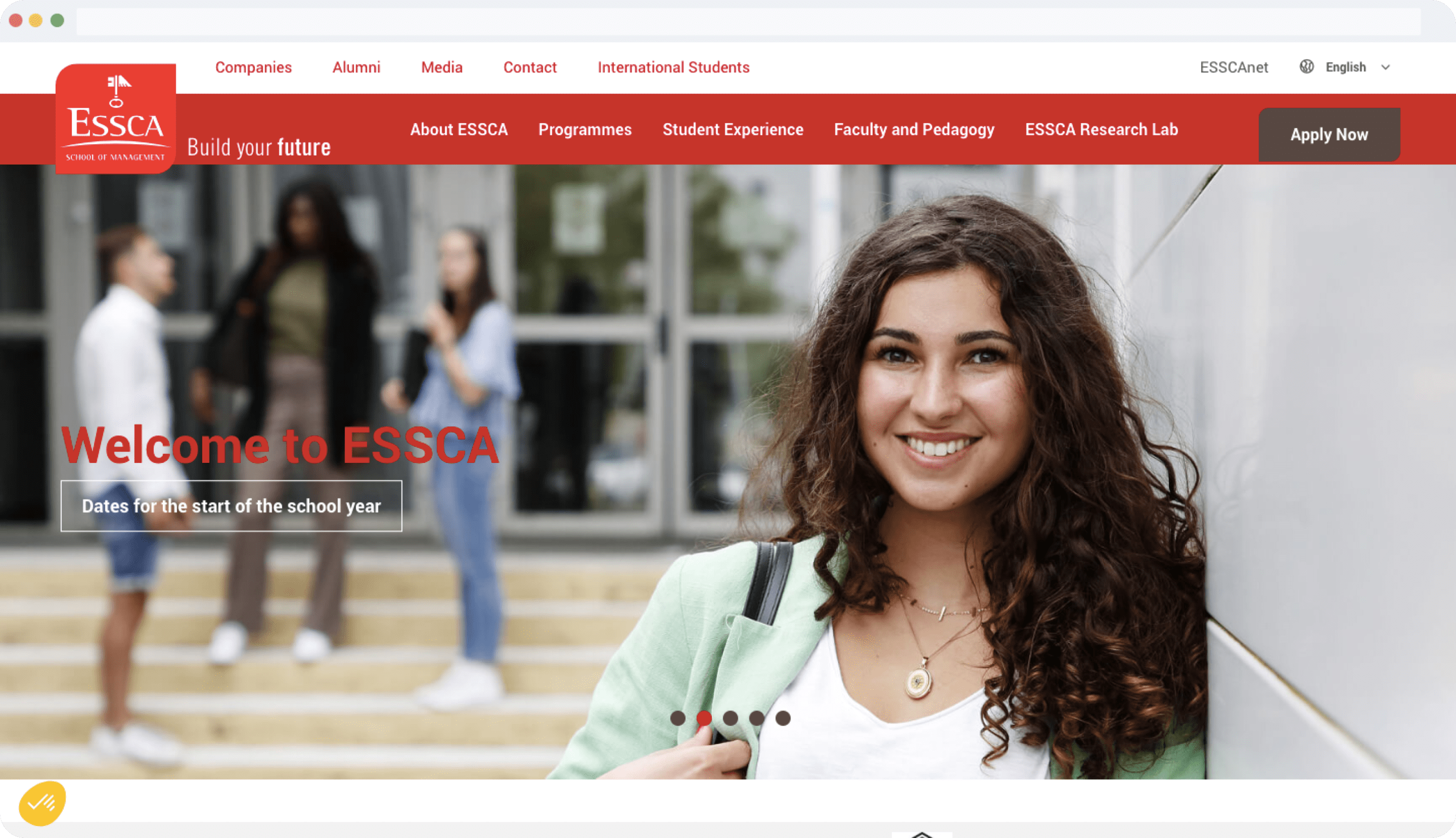
Ultimately, the world-renowned French management school set the following objectives to optimize its website:
- Revamping the whole design following the latest design trends and ensuring its mobile responsiveness
- Unifying all related websites under the same backend system with the same features
- Simplifying the back office
- Improving the frontend performance
- Simplifying the content organization
Solutions for ESSCA
Web Design Revamp
To deliver an optimized UI/UX, ESSCA undertook a complete redesign of its website, refreshing 100% of the site while preserving the original red and light brown color palette to maintain brand identity.
The most significant improvement was the full utilization of space, resulting in a more intuitive and comprehensive user flow.
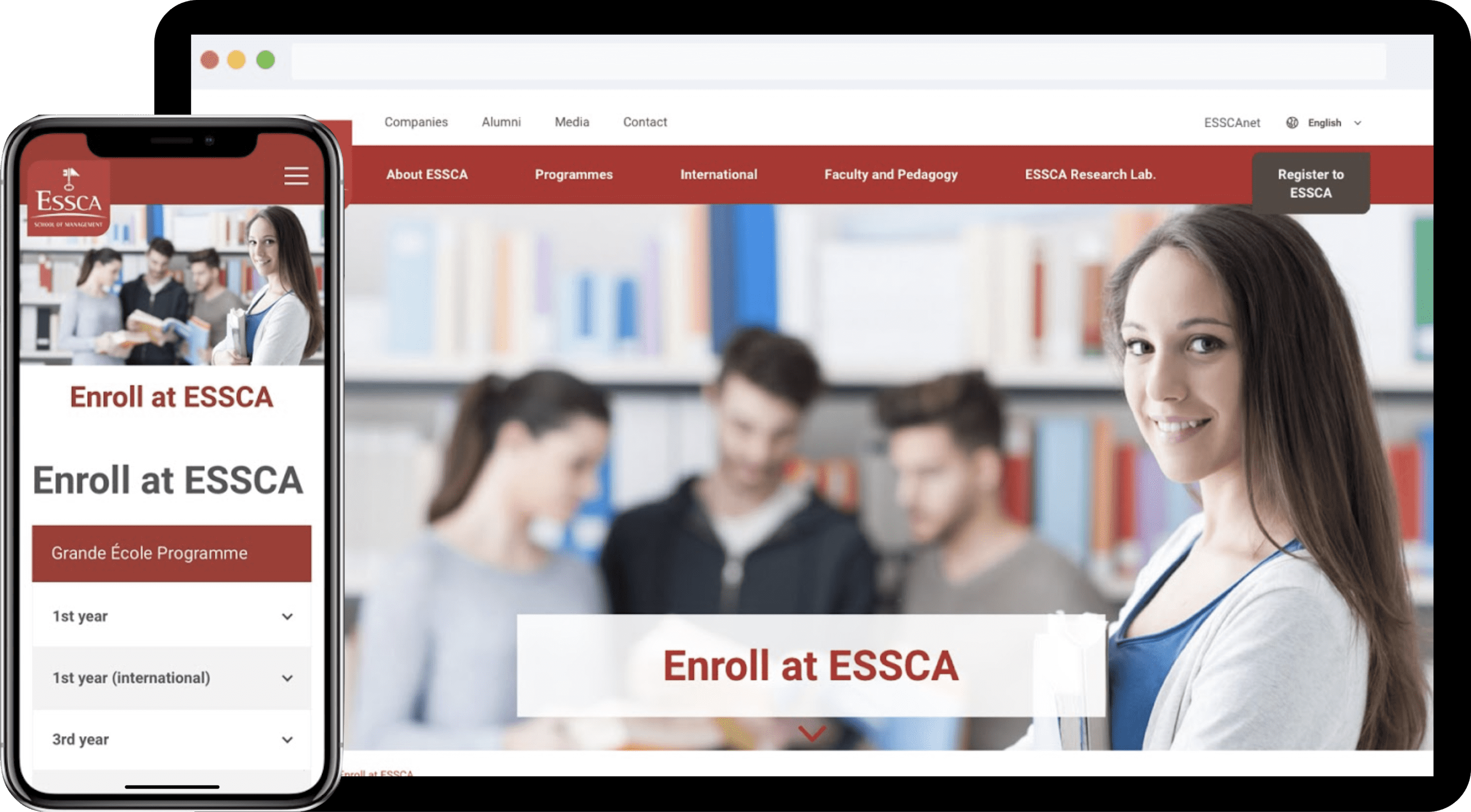
Every element was updated to reflect the latest flat design trends, from the navigation menu to the call-to-action buttons, giving the website a modern and sophisticated look.
At the top of the page, a streamlined Main Menu highlights ESSCA’s most important pages. We strategically positioned the three primary CTAs — Register with ESSCA, Discover, and Our Programs — to guide users directly to key content.
Moreover, the carefully designed front-end effects also contributed to a seamless movement between tabs.
For the main content area, we introduced innovative layouts inspired by a university pinboard. Users can easily navigate between different pinboards — each representing a category — without leaving the homepage. Each pin offers a preview, and clicking it takes users to the full content.
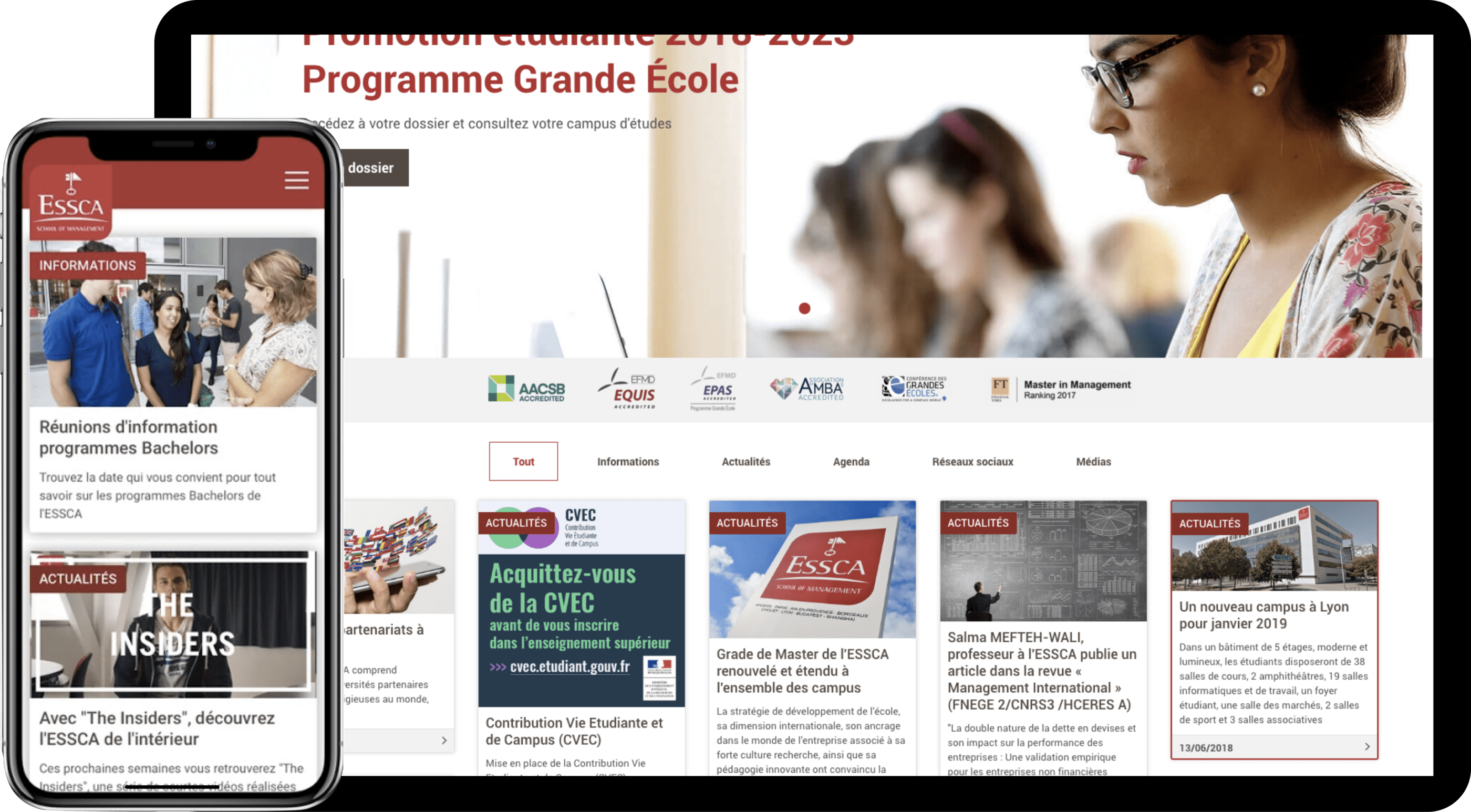
To further elevate the user experience, we integrated visually appealing front-end effects such as toggles, image zoom-ins, and engaging animations when loading new pages.
Finally, the website is fully mobile responsive, ensuring a consistent and enjoyable experience across all devices.
Performance Improvement & Technologies
Previously, ESSCA managed multiple websites covering similar topics, which made content administration challenging and often left users confused when searching for information.
To address this, all content management was consolidated into a single back office, streamlining both administration and the user experience.
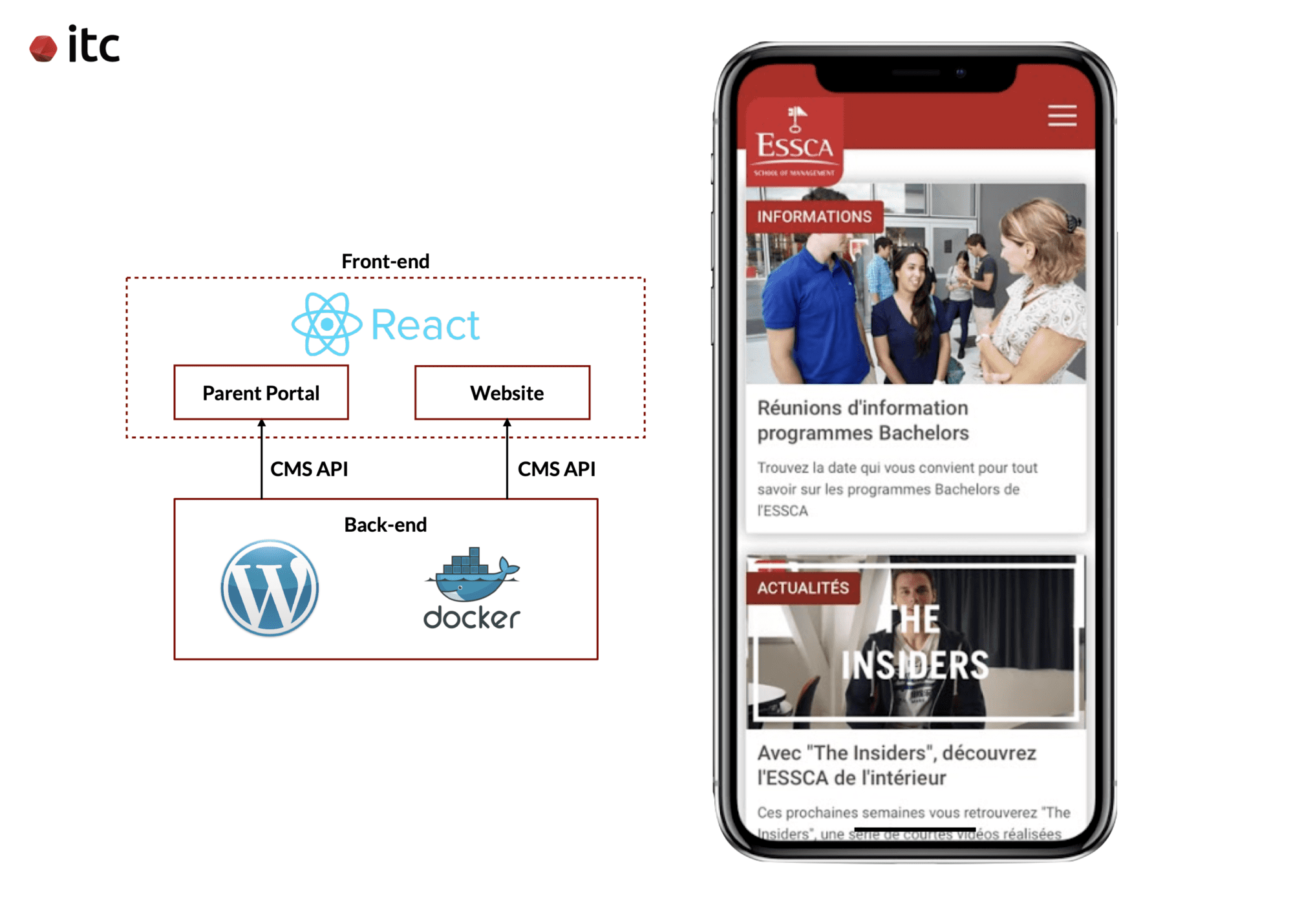
For the frontend, React.js was selected for its component-based architecture, which allows for optimal modification of dynamic elements and ensures high reusability — making long-term maintenance more efficient.
For the backend, a headless approach was adopted using WordPress’ headless technology. Leveraging the CMS API, data could be seamlessly transmitted from the backend to the React.js frontend.
Aurelien, a backend developer, shared his experience during the project:
“The integration between the CMS API and React occasionally presented challenges and required close collaboration between front-end and back-end developers to find the best solutions.
Whenever the WordPress API didn’t cover a specific need, custom endpoints were created to deliver data in the required format for React.”
Another key technology implemented was Docker, an open platform that enables DevOps teams to build, ship, and run distributed applications efficiently.
Docker was used to prevent conflicts between different environments — local, staging, and production — ensuring standardization and productivity through a process of Continuous Integration (CI).
Thanks to the seamless integration of the CMS and React.js within Docker, all related content was unified into a single website. Despite the large volume of information, the layout remained clean and easy to navigate, making content management much simpler for the ESSCA team.
Portal for Parents
A dedicated portal was developed to give parents secure access to important information about their children, such as academic programs, school regulations, and academic records. Access to this portal is restricted to parents, who log in with their unique username and password.
Although the portal is hosted on a third-party platform, it maintains the same visual identity as the main ESSCA website and is managed through the same back-end system.
By offering a customized page for parents, current families can easily find the information they need without being overwhelmed by the main site’s content. Additionally, this portal serves as a valuable resource for prospective parents researching future programs for their children.
Results
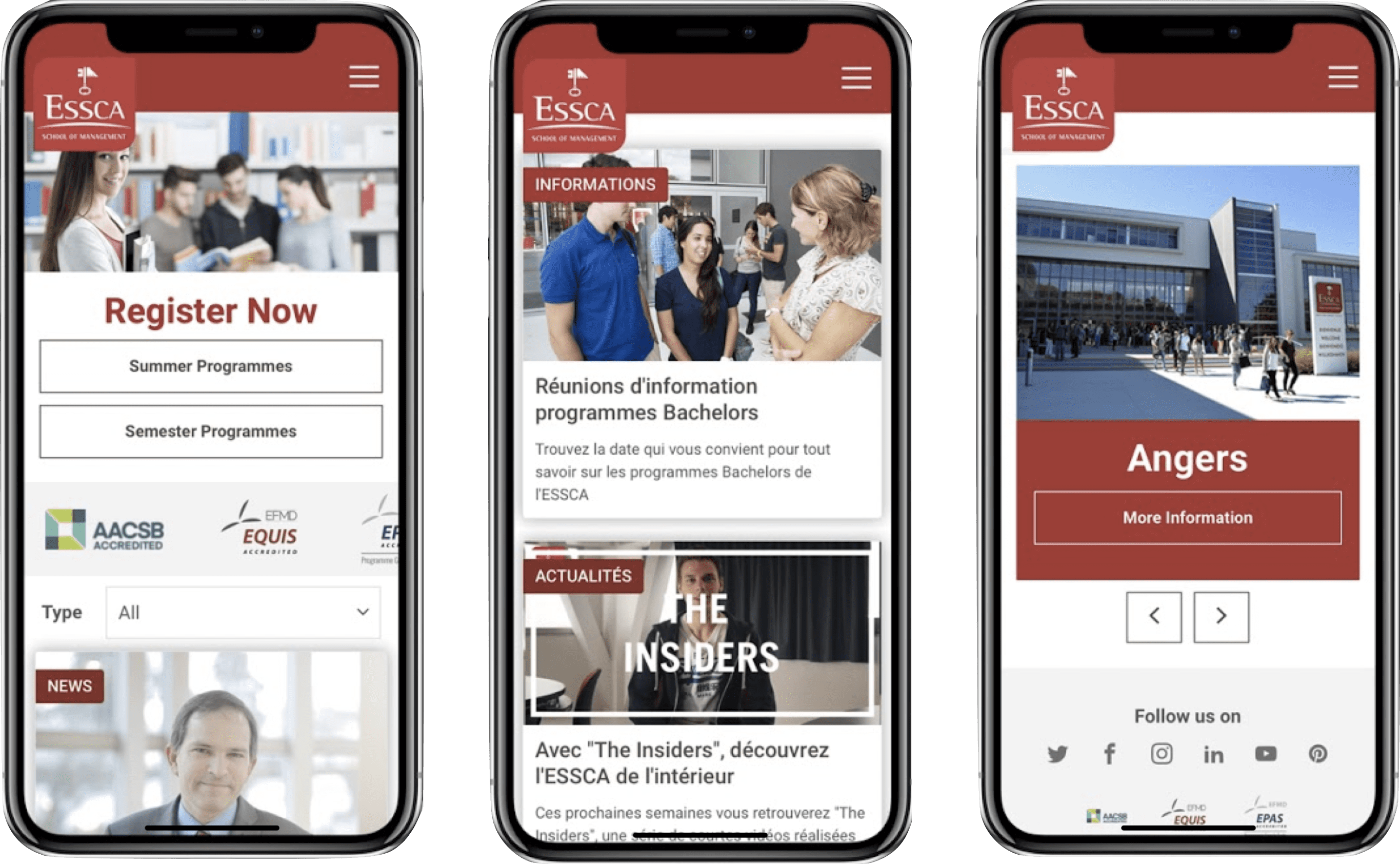
The implementation of modern web technologies enabled a complete revamp of ESSCA’s website, leading to:
- A contemporary and professional design
- Optimized front-end performance
- A centralized and easily manageable back-end system
- Seamless user experience across both desktop and mobile devices
- Convenient access for parents through a dedicated portal
With these enhancements, ESSCA has improved satisfaction among current students and increased its appeal to prospective students.


