
Many international brands underestimate the complexity of a successful China digital strategy, assuming that a translated website is enough for China market entry.
This article unpacks why a Chinese-language website alone is not enough for international brands to succeed in China, and what it truly takes to build credibility in the local digital ecosystem.
Executive Summary:
1. A Chinese-language website alone is not a sufficient China strategy; local users rely on a distinct digital ecosystem led by platforms like WeChat, RedNote, Weibo, and Douyin.
2. Websites hosted outside mainland China often suffer from slow speeds, content blocking, or inaccessibility, undermining user trust and brand credibility.
3. Automatic translation and non-specialist Chinese localization signal low investment and a lack of cultural understanding, which can alienate Chinese audiences.
4. A Chinese website can still play a valuable role — as a bridge to local platforms and a channel for discoverability — when properly localized, technically adapted, and integrated into a broader digital ecosystem.
5. Brands that succeed in China invest in native-quality content, local partnerships, and a multi-channel approach, leveraging expert guidance to build credibility and drive results.
Table of Contents
The “Chinese Website = China Strategy” Illusion
Many international brands still believe that launching a Chinese-language version of their website means they are “ready for China”.
Translate the pages, add a language selector, maybe hire a freelancer for the copy — job done. However, in practice, this approach almost always fails.
A Chinese website alone does not equal a China strategy. In fact, for many Chinese users, a standalone website is not even the starting point.
Relying solely on a translated website is a common pitfall in China market entry and rarely forms the foundation of an effective China digital strategy. Brands that take this approach often remain invisible, mistrusted, or simply irrelevant to their target audience in China.
To understand why, you need to look at how Chinese users actually search for, evaluate, and trust brands.
How Chinese Users Actually Search and Build Trust
WeChat Official Accounts as the Real Homepage
For many Chinese consumers and business decision-makers, a brand’s WeChat Official Account (OA) functions as its real homepage.
A WeChat Official Account is a verified business or organization profile within the WeChat ecosystem, created by Tencent.
By 2023, OAs have reportedly garnered 360 million users. Moreover, over 100 million daily active users use WeChat Search to discover Official Accounts and brand content.
They enable brands to communicate, engage, and provide services directly to users through content publishing, customer interaction, and integrated features like WeChat Mini Programs.
For many Chinese consumers, following a brand’s Official Account is the primary way to access information, receive updates, and build trust with the company.
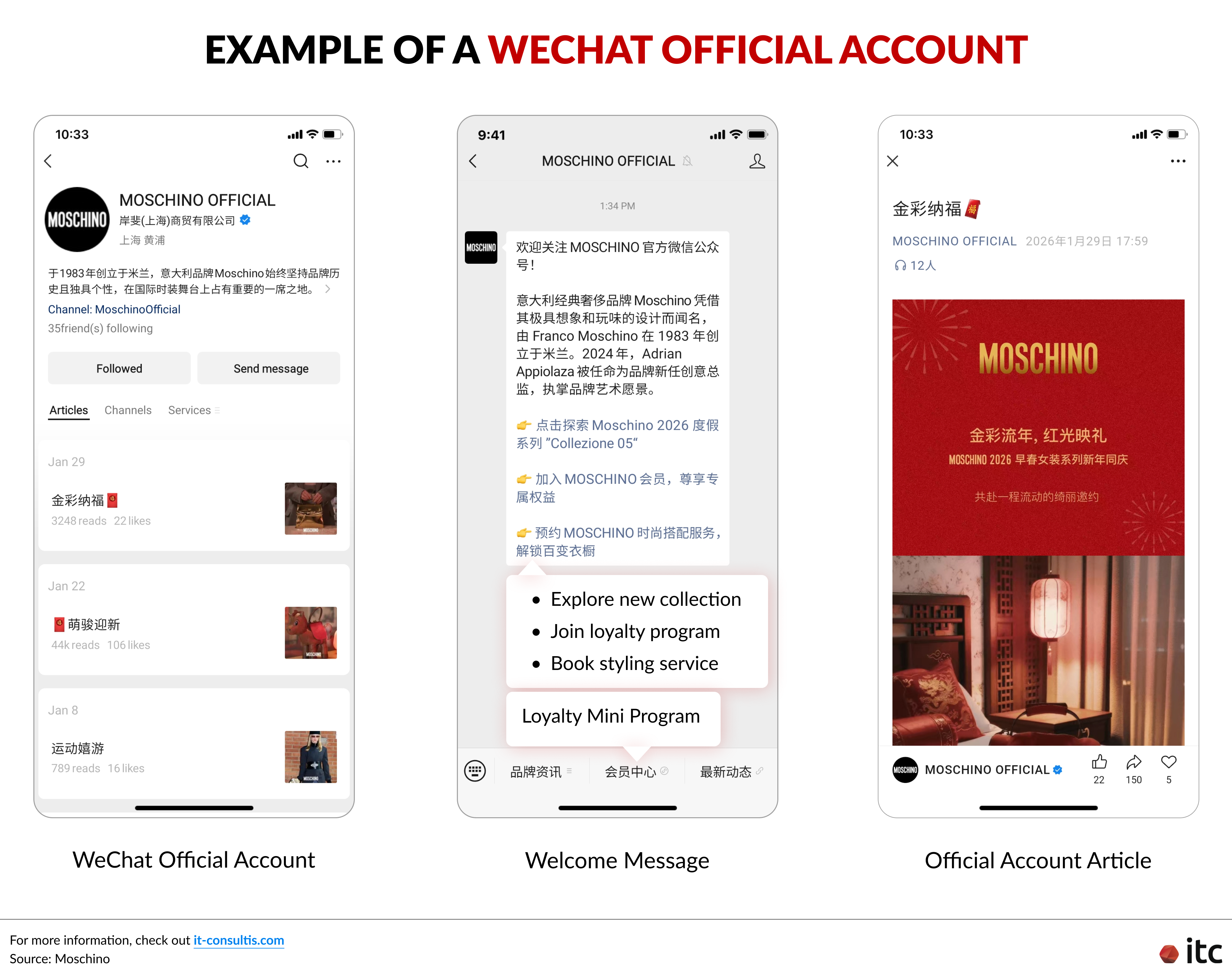
Instead of googling a company and browsing its website, users will typically:
- Search for the OA directly on WeChat
- Ask contacts to share an Official Account
- Scan an Official Account QR code on a presentation, business card, or brochure
Once inside the WeChat Official Account, users expect to find:
- A clear and up-to-date brand presentation
- Regular, well-written content that feels native (Over
- Navigation menus linking to services, contact points, or WeChat Mini Programs (MPs)
- Signs that the account is active and officially managed
If a brand does not have an official WeChat presence, many Chinese users will quietly conclude: “This company is not serious about China.”
The Role of RedNote, Weibo, and Douyin
Beyond WeChat, brand discovery and validation happen across a broader ecosystem:
1. RedNote (Xiaohongshu or Little Red Book)
RedNote is a prominent Chinese social networking and e-commerce platform where users share product reviews, travel experiences, and lifestyle content. As of 2025, it boasts over 300 million monthly active users, with 90% of them under the age of 35.
Xiaohongshu seamlessly integrates social media with online shopping and holds significant influence among young, urban consumers who value authentic peer recommendations.
2. Weibo
Sina Weibo is one of China’s largest social media platforms, combining features of microblogging and social networking. By 2025, Weibo boasts nearly 600 million monthly active users, with over 260 million logging in daily.
It enables users to post, share, and interact with content in real time, making it a key channel for brand visibility, news dissemination, and public engagement.
3. Douyin (Chinese TikTok)
This is China’s leading short-video platform, developed by ByteDance. Douyin is the Chinese counterpart to TikTok, but operates independently within China.
It allows users to create and share engaging short videos, driving mass awareness, viral trends, and social commerce across the country.
By 2025, Douyin is projected to reach over 830 million monthly active users, with users spending an average of nearly two hours per day on the app.
Douyin is also a powerhouse for e-commerce: In 2024, it drove 3.5 trillion RMB in gross merchandise value (GMV), with live streaming accounting for 40% of all transactions. This makes Douyin not only a cultural phenomenon but also a critical driver of digital commerce in China.
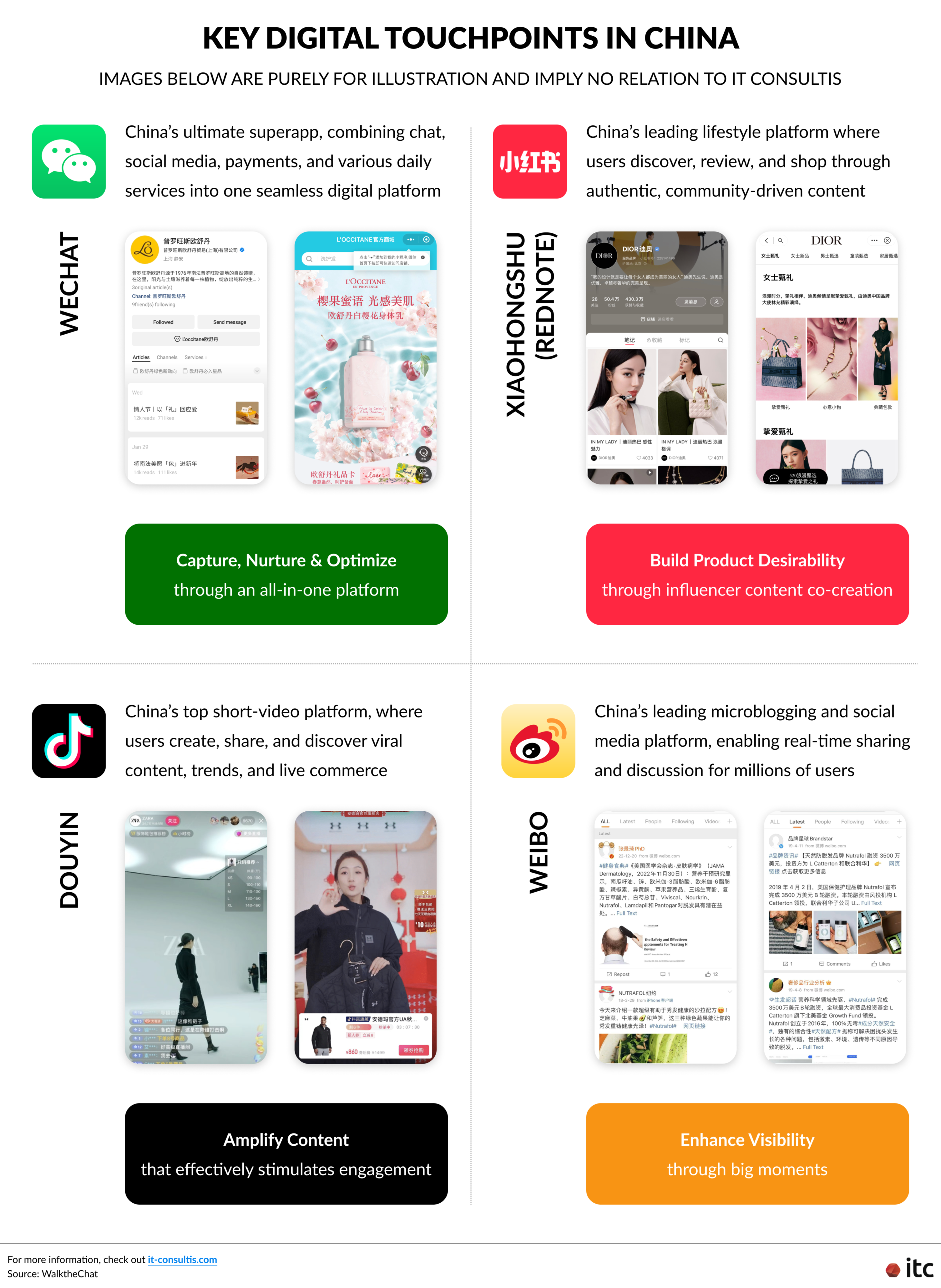
These platforms often matter more than a website, especially in the early trust-building phase.
A website without any visible footprint on Chinese platforms feels disconnected — almost suspicious. Chinese users will ask themselves: “If this brand is truly active in China, why can’t I find it where everyone else is?”
A robust China digital strategy requires brands to go beyond websites and invest in local platforms, content, and partnerships to ensure a successful China market entry.
Legitimacy Signals That Matter
Chinese users actively look for:
- An Official Account badge
- Consistent brand naming across platforms
- Chinese-language content that feels native, not machine translated
- Clear signs of local presence or representation
Trust is built socially and contextually, not just through polished corporate pages.
How to Approach Chinese Website Localization
The Technical Reality of Overseas Websites Inside China
Even with high-quality Chinese content, many brands underestimate a critical challenge: website performance within mainland China.
Websites hosted outside China frequently experience:
- Extremely slow loading speeds
- Partial or inconsistent content display
- In some cases, complete inaccessibility due to network restrictions or routing issues
For users, if a site loads slowly or fails to display properly, frustration sets in almost instantly. Most visitors will abandon the site without a second thought, and the brand loses credibility before its message is even seen.
Few users will take the time to troubleshoot or try again — they’ll simply move on to a competitor that feels more accessible and trustworthy.
This silent barrier is a key reason why many “China-ready” websites fail, often without brands realizing the root cause.
To overcome these challenges, brands should:
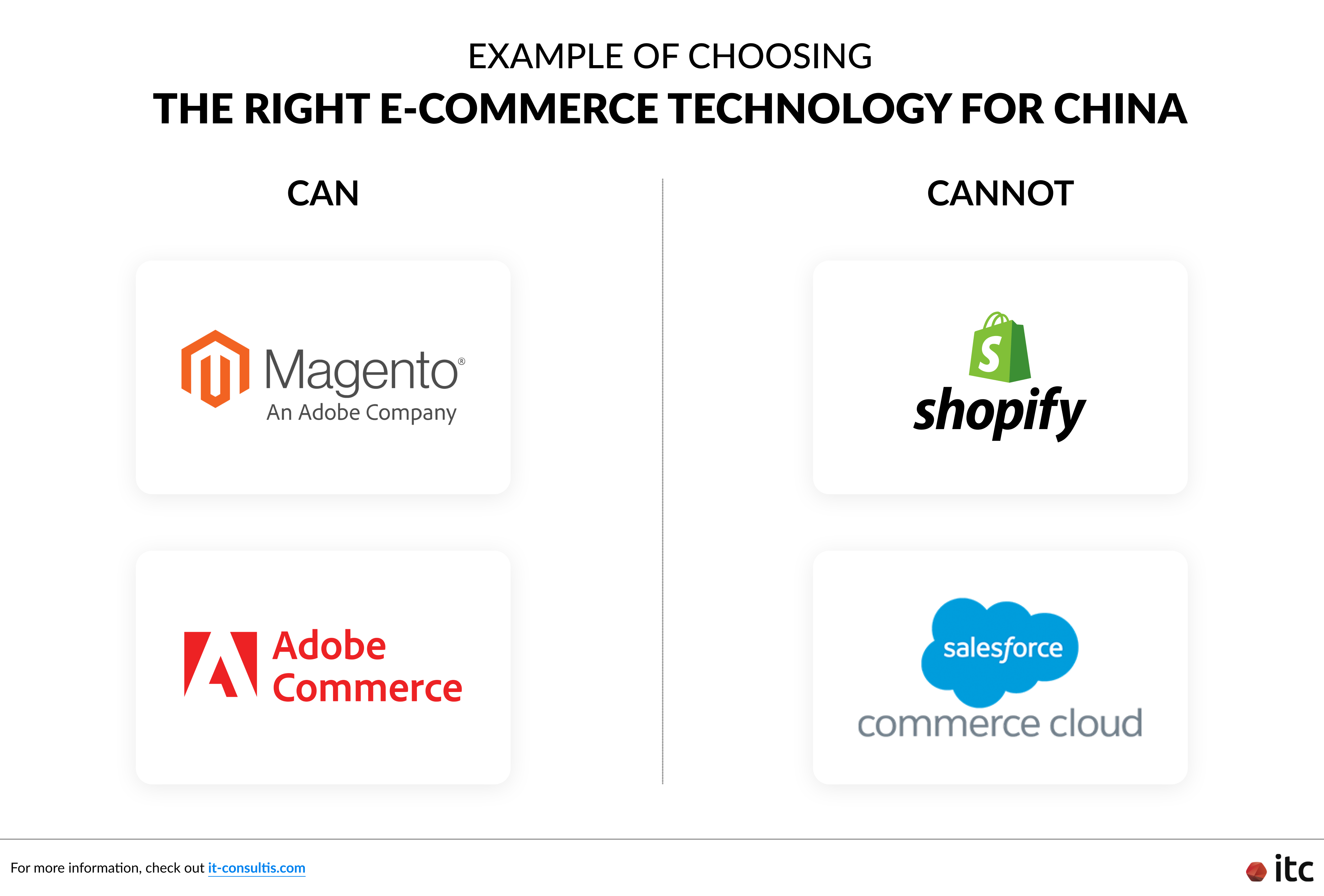
- Choose technology stacks proven to work in China
- Host their websites on servers located within mainland China
- Complete the required Internet Content Provider (ICP) filing for legal compliance and optimal performance
This ensures fast, reliable access and builds trust with Chinese users from the very first click.
The Trap of Automatic Translation and Cultural Nuance
Language is another critical fault line. Many brands rely on automatic translation tools or non-specialist translators. While the result may appear grammatically correct, there’s a risk of inadvertently signaling:
- A lack of cultural understanding
- Minimal investment in quality
- A brand that does not genuinely connect with its audience
If Chinese is treated as “just another language” to be processed by a machine or a generic translator, it sends a clear message that the market is not a true priority — and Chinese consumers will notice.
Here’s the best practice: Work with professional translators or agencies who are native-level Chinese speakers and deeply understand local culture, idioms, and consumer expectations.
Investing in culturally nuanced, high-quality Chinese localization demonstrates respect for your audience and builds authentic trust in the market.
When a Chinese Website Still Makes Sense – As a Bridge, Not the Destination
This does not mean a Chinese website is useless. It can still play a valuable role — as long as it is one touchpoint in a broader ecosystem, not the centre of your China strategy.
Take, for example, one of Europe’s largest airports: the organization launched a localized Chinese website, hosted within China for optimal performance, but intentionally kept it simple:
- The site offers essential information in Chinese that travelers truly need.
- Its primary role is to redirect users to the airport’s Chinese social media accounts, where richer, more frequently updated content is available.
In other words, the website acts as a bridge: a familiar entry point for some users that quickly guides them toward the platforms where engagement and storytelling truly happen.
This approach is echoed in the luxury sector: according to the WeChat Luxury Index 2024, over 70% of leading brands’ official Chinese websites link directly to their WeChat Official Account, using the website as a gateway rather than the main destination.
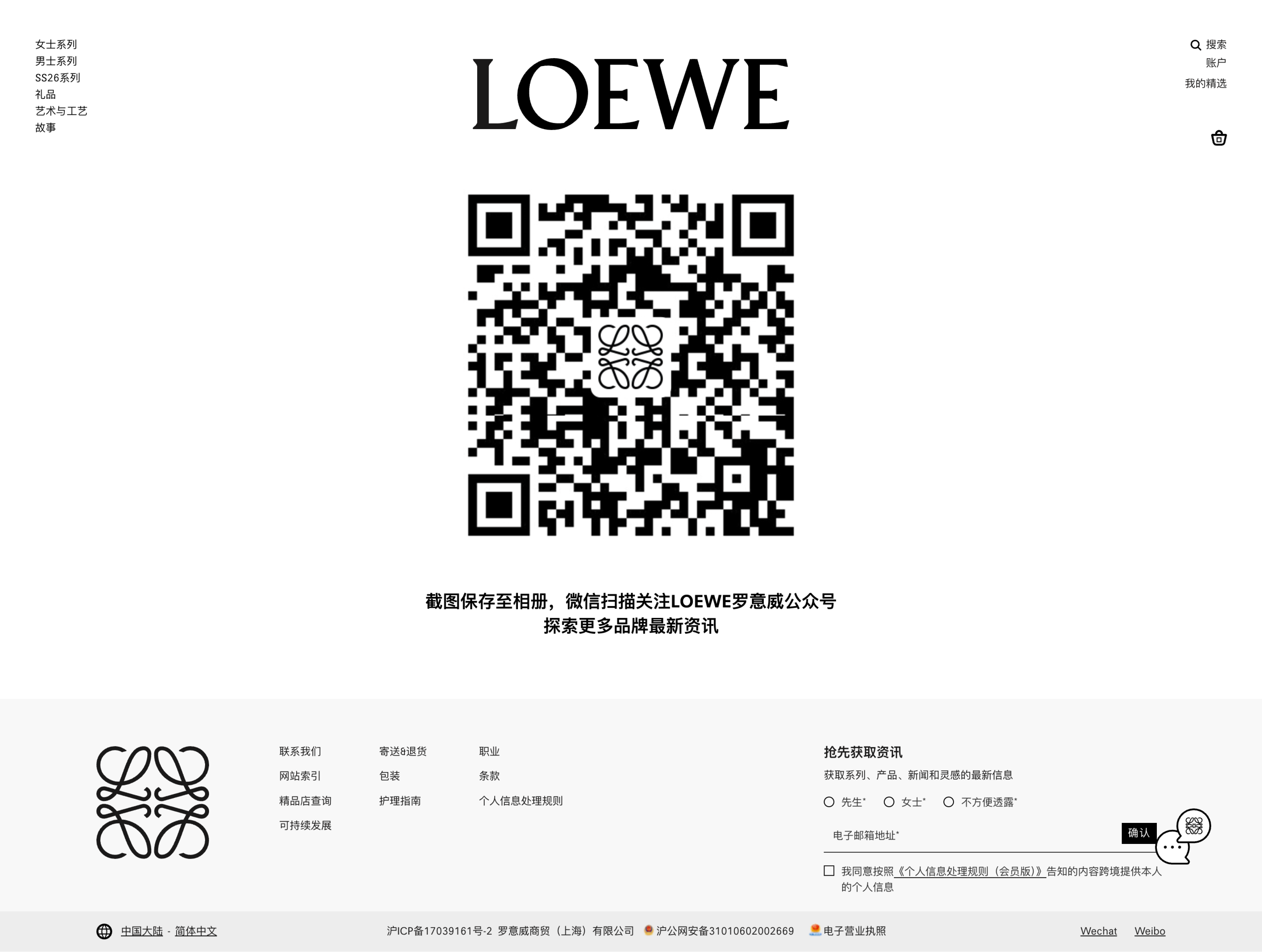
It’s also important to note that the role of a Chinese website can vary depending on your brand’s size and recognition.
For global giants like Louis Vuitton, Apple, Mercedes, Unilever, or other highly established brands, a strong, well-localized website in China remains a critical asset for reinforcing brand authority, supporting complex customer journeys, and meeting the expectations of both consumers and partners.
In these cases, the website is not just a bridge, but one of the key pillars of the overall Chinese digital strategy.
For smaller or less established brands, however, prioritizing local platforms and ecosystem integration may deliver faster and more cost-effective results.
It’s important to note that for B2B organizations, where desktop usage remains high, and brand discovery often begins with a web search, a well-localized Chinese website remains a crucial channel for discoverability, credibility, and lead generation, particularly through appearances in search engines (i.e., Baidu) and AI results (i.e., Deepseek).
Considerations When Localizing an E-Commerce Website for China
If your Chinese website is meant to support e‑commerce, relying on a standalone, overseas-hosted site is even more risky.
Chinese users are used to buying through local platforms and payment systems such as WeChat Pay and Alipay, often embedded within ecosystems like Tmall, JD.com, WeChat Mini Programs, or Xiaohongshu Mini Programs.
A classic e‑commerce website, even translated into Chinese, will often feel unfamiliar, inconvenient, or even untrustworthy if it:
- Does not offer the usual Chinese payment methods
- Is not integrated into the platforms where users already discover and compare products
- Sends users to a slow, foreign-looking checkout flow
For many brands, a better approach is to treat the website as a supporting touchpoint, while moving the actual purchase journey into Chinese-native platforms like e-Commerce WeChat Mini Programs, where payment methods, user expectations, and trust signals are already in place.
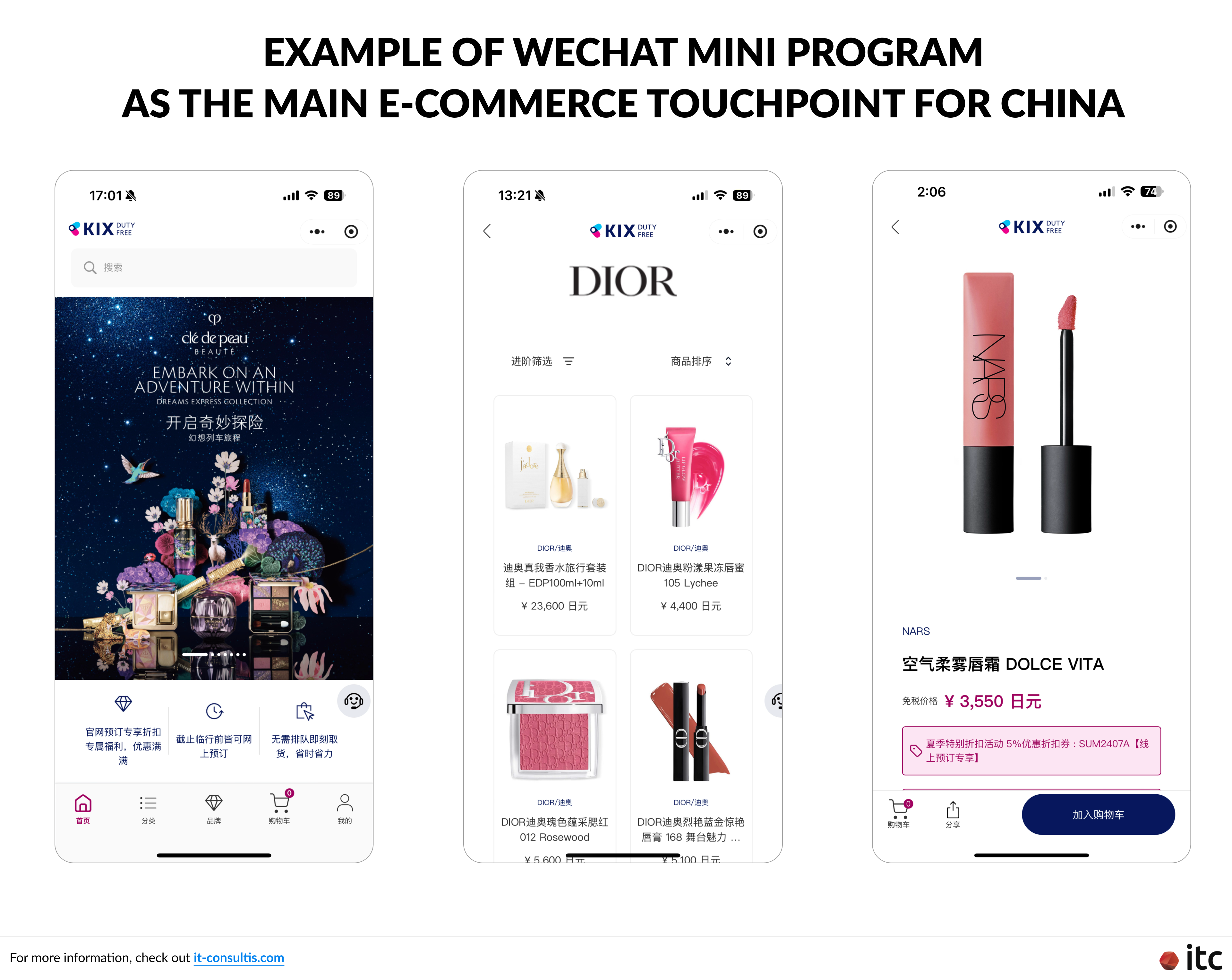
From Translated Website to Local Ecosystem in China: What Global Brands Should Build Instead
A more realistic and effective approach usually combines:
- A WeChat Official Account that acts as your operational homepage in China.
- Presence on relevant platforms such as RedNote, Weibo, and Douyin, depending on your category and positioning.
- Native-quality Chinese content that reflects local culture, not just translated slogans.
- A clear local contact or representation so Chinese users know who they are dealing with.
- A technical setup (hosting, performance, security) that ensures your touchpoints are fast and reliable inside mainland China.
- For e‑commerce brands, integration with Chinese payment systems and platforms where users already feel comfortable transacting.
In this model, the Chinese website — if you choose to keep or build one — becomes:
- A supporting asset rather than the centrepiece.
- A place to host key information and legal content.
- A bridge that routes users toward the channels where they actually read, interact, and buy.
To Wrap Up
China represents roughly one-fifth of the world’s population, but it is not “just another market” you can reach by adding a language option to your existing website.
It is a distinct digital ecosystem, with its own platforms, behaviours, trust signals, and payment systems. Brands that treat it as a simple translation exercise risk remaining invisible at best — or damaging their reputation at worst.
A Chinese website can still have a role to play. But it should be properly localized and technically adapted to China, and embedded in a wider ecosystem of channels, content, and partnerships that are truly designed for Chinese users.
For international IT, marketing, and communication leaders, the real question is not: “Do we have a Chinese website?”
It is: “Do we have the right ecosystem, channels, and local partners to be credible in China?” — whether your China digital strategy and market entry plan are designed for long-term growth.
When you start from the right question and work with professionals who understand the landscape, a translated Chinese website can become a useful piece of a much stronger, truly China-ready strategy.
IT Consultis (ITC) is an award-winning digital transformation consultancy dedicated to guiding global brands navigate the complexities of localization for China.
We can help you build short- and long-term digital playbooks to win in China, including through:
1. Social Media, Community Management, & Content Marketing (WeChat, RedNote, Weibo, Douyin)
2. Marketing Automation & Social CRM Consulting and Operations
3. WeCom & RedNote Clienteling and Retail Digital Transformation
4. Salesforce CRM, CDP, & Data Capture Strategy Consulting and Implementation
5. WeChat & RedNote Mini Program Design and Development
6. Chinese Website Localization
7. E-Commerce & Loyalty Strategy and Development
8. System Integrations, APIs & Infrastructure Management
9. Digital Transformation Talent Augmentation


