
In this article, we share key insights from the second volume of ITC Insights whitepaper — a strategic guide helping global and Chinese leaders bridge the gap between global expectations and local realities to drive digital transformation, integrate the right technologies, and deliver meaningful customer experiences in China.
As part of ITC Insights, Aurelien Rigart, Managing Director & Co-Founder of IT Consultis (ITC), sat down with Nishtha Mehta, a corporate innovation and transitions coach with over 22 years of experience across China, India, and international markets, to discuss how decision-makers can lead innovation while driving operational efficiency.
This conversation highlighted several key points on balancing operational efficiency with innovation in China.
Watch the Full Podcast Episode on YouTube:
Watch the Full Podcast Episode on WeChat Channels:

Executive Summary
1. With the heightened demand for personalization, Chinese consumers increasingly expect to co-create culturally relevant brand experiences, reshaping how brands engage and build lasting loyalty.
2. Technologies like generative AI (GenAI) enable companies to scale creativity and operational efficiency while complementing human insight and preserving brand authenticity.
3. Leading innovation goes beyond technology — executives must make bold decisions and take action amid uncertainty, embracing experimentation and iterative progress.
4.Collaboration across functions and incorporating diverse perspectives — from frontline teams to external experts — accelerates transformation and prevents organizational silos.
5. Combining technology with human-centered approaches ensures operational efficiency while delivering emotionally resonant customer experiences.
Table of contents
How Consumers Are Driving Co-Creation and Personalized Experiences
In China’s hyper-personalized market, especially among Gen Z, consumers are no longer content with one-size-fits-all offerings. They expect experiences that are emotionally resonant, culturally meaningful, and tailored to their individual preferences.
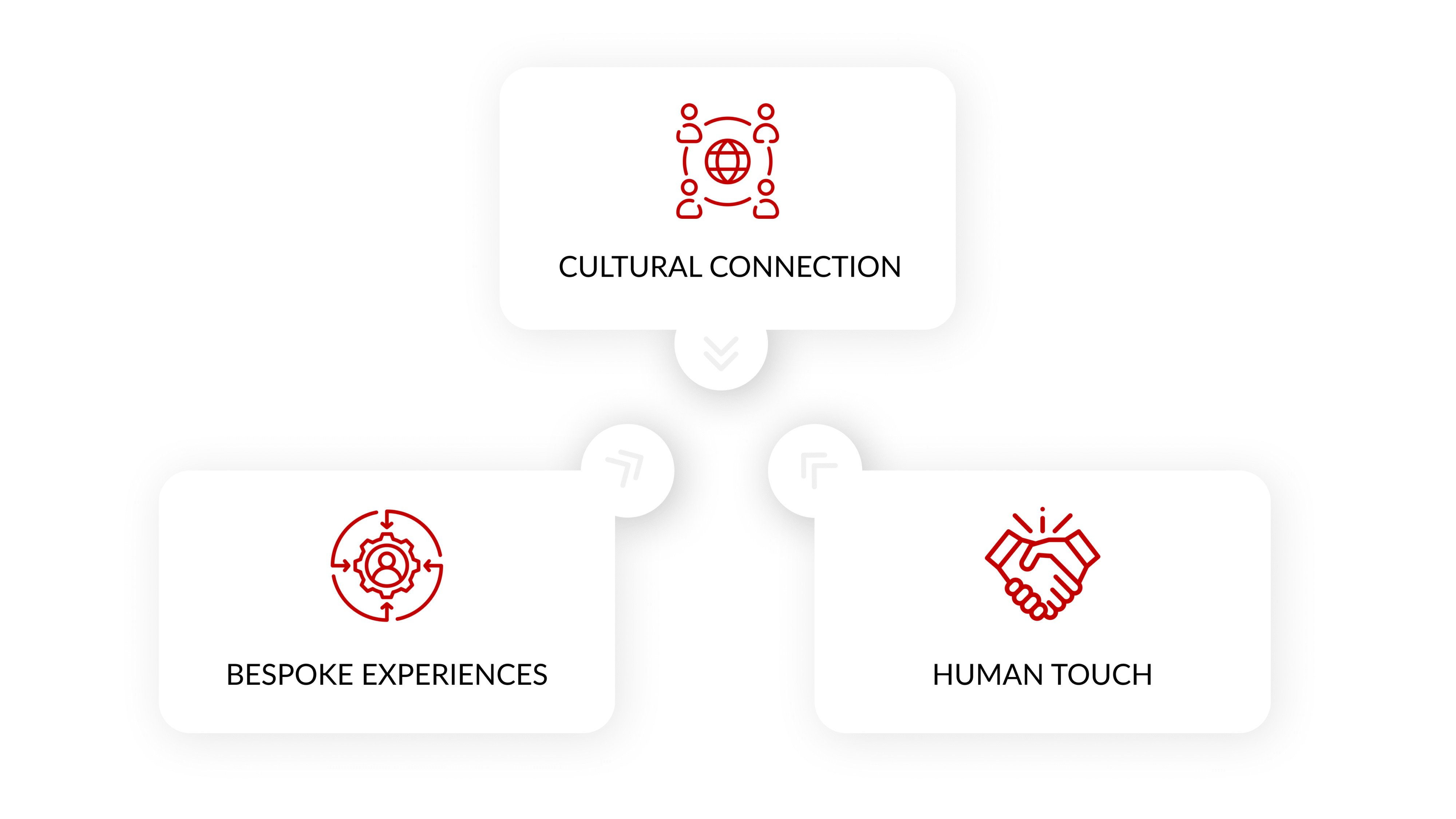
These consumers actively participate in shaping the products, services, and campaigns they engage with, moving from passive recipients to co-creators of value. Three key drivers define this shift:
- Cultural Relevance: The Guochao movement shows that young Chinese consumers increasingly value brands that celebrate local heritage in innovative ways. Brands blending tradition with modernity can connect deeply with these consumers.
- Bespoke Experiences: Customers are seeking tailored experiences that reflect their preferences, from personalized gifts to curated in-store services. Luxury pastry brands in Beijing and Chengdu, for example, have revived traditional recipes for Gen Z, creating a bridge between nostalgia and personalization.
- Human Connection: Even as technology expands personalization capabilities, human interactions — like warm greetings, personal attention, and ongoing relationship-building — remain essential to driving both loyalty and sales.
In short, today’s consumers want to be part of the journey. Brands that invite participation, actively listen, and create co-designed experiences are gaining loyalty and engagement.
GenAI as a Tool to Drive Personalization and Accelerate Efficiency
To meet the growing demand for hyper-personalized and culturally relevant experiences, companies in China are increasingly turning to GenAI as a strategic enabler.
However, GenAI is not a silver bullet — it is a tool that amplifies human creativity, empathy, and strategic decision-making rather than replacing them.
When applied thoughtfully, it allows brands to scale innovative solutions and deliver experiences that feel both personal and contextually relevant to their audiences.
Forward-thinking brands are already demonstrating the potential of GenAI in creative and operational contexts. For instance, Lancôme celebrated its 90th anniversary in 2025 by collaborating with artist Cai Guo-Qiang and his AI model cAI™ to create Rose of Paris, a gunpowder artwork symbolizing renewal.

This creative initiative became the centerpiece of a Chinese New Year campaign featuring brand ambassador Ni Ni. The campaign blended storytelling, limited-edition products, and a fusion of tradition and innovation, showing how AI can complement artistic vision and enhance cultural resonance.
Luxury conglomerate LVMH is another example of GenAI integration at scale. Its internal AI assistant, MaIA, supports Maisons across the group in content creation, clienteling, mock-up generation, and data-driven insights. With over 2 million monthly queries, MaIA enables teams to streamline product development, marketing, and retail while preserving its luxury craftsmanship.

In essence, GenAI functions as a force multiplier: it enhances human creativity, improves operational efficiency, and helps companies deliver experiences that resonate emotionally with their audience — all while freeing teams to focus on strategic, high-value activities rather than repetitive tasks.
For brands operating in China’s dynamic and digitally savvy market, mastering this balance between AI capabilities and human insight is essential to remain competitive and meaningful in the eyes of consumers.
Leading Change Means Leading Through Uncertainty
Driving digital transformation and achieving operational efficiency in China — or any dynamic market — requires more than implementing new technologies. It starts with cultivating an innovative leadership mindset and embracing cultural change.
Leaders must adopt the traits of a curious challenger, remain relentlessly courageous, communicate persuasively, and act as mindful connectors who bridge teams, functions, and geographies.
Too often, organizations stall while waiting for certainty, fearing missteps in a fast-changing environment. Yet, true growth demands boldness, speed, and adaptability. Leaders who can embrace uncertainty and take informed risks create the conditions for sustained innovation.
Leading Through Ambiguity
Success in digital transformation for operational efficiency requires moving forward even when the full roadmap isn’t visible. Innovation rarely comes from certainty — it emerges through experimentation, rapid iteration, and decisions based on hypotheses and early signals rather than perfect information.
“Don’t wait for perfect alignment. Many of today’s most exciting innovations — like Meituan’s drone deliveries or EHang’s flying taxis — seemed far-fetched just a few years ago. Innovation happens when we bet on the future before it is fully clear and build off one prototype at a time.”
Nishtha Mehta – Change Facilitator | The Innovative Leaders Coach – PCC ICF
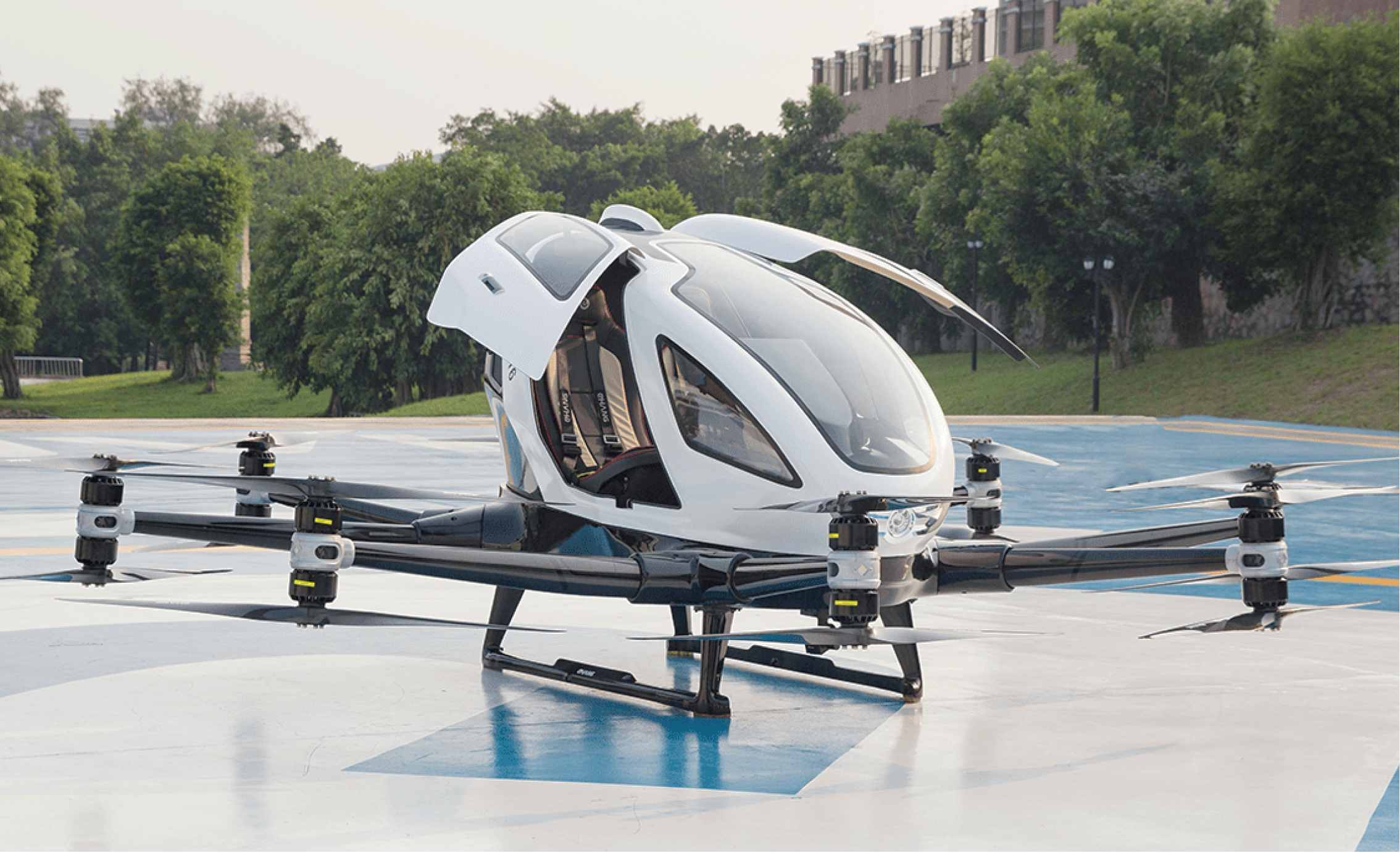
In January 2025, EHang began public demonstrations of its flying taxis in Shanghai, aiming for full commercial service in designated zones by the end of the year, with a longer-term vision for fixed-route air shuttle services across China by 2030.
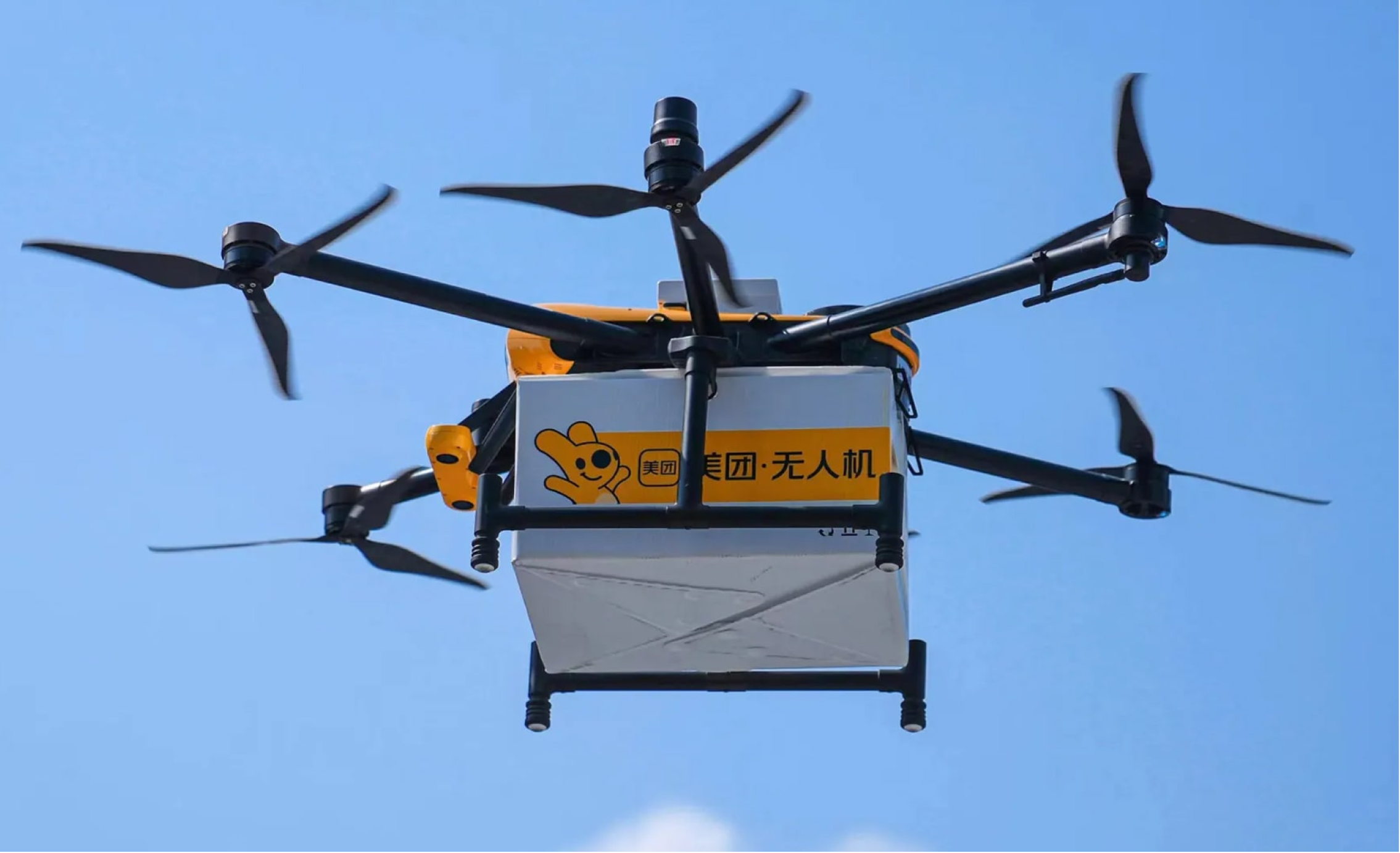
Meituan launched its first commercial drone delivery service in Shenzhen in early 2021, expanding to 53 routes in major cities like Beijing and Shanghai and completing over 450,000 orders by the end of 2024.
These cases highlight that acting decisively, even amid uncertainty, can accelerate adoption, generate learning, and unlock competitive advantage.
Cultivate Inclusive, Cross-Functional Decision-Making
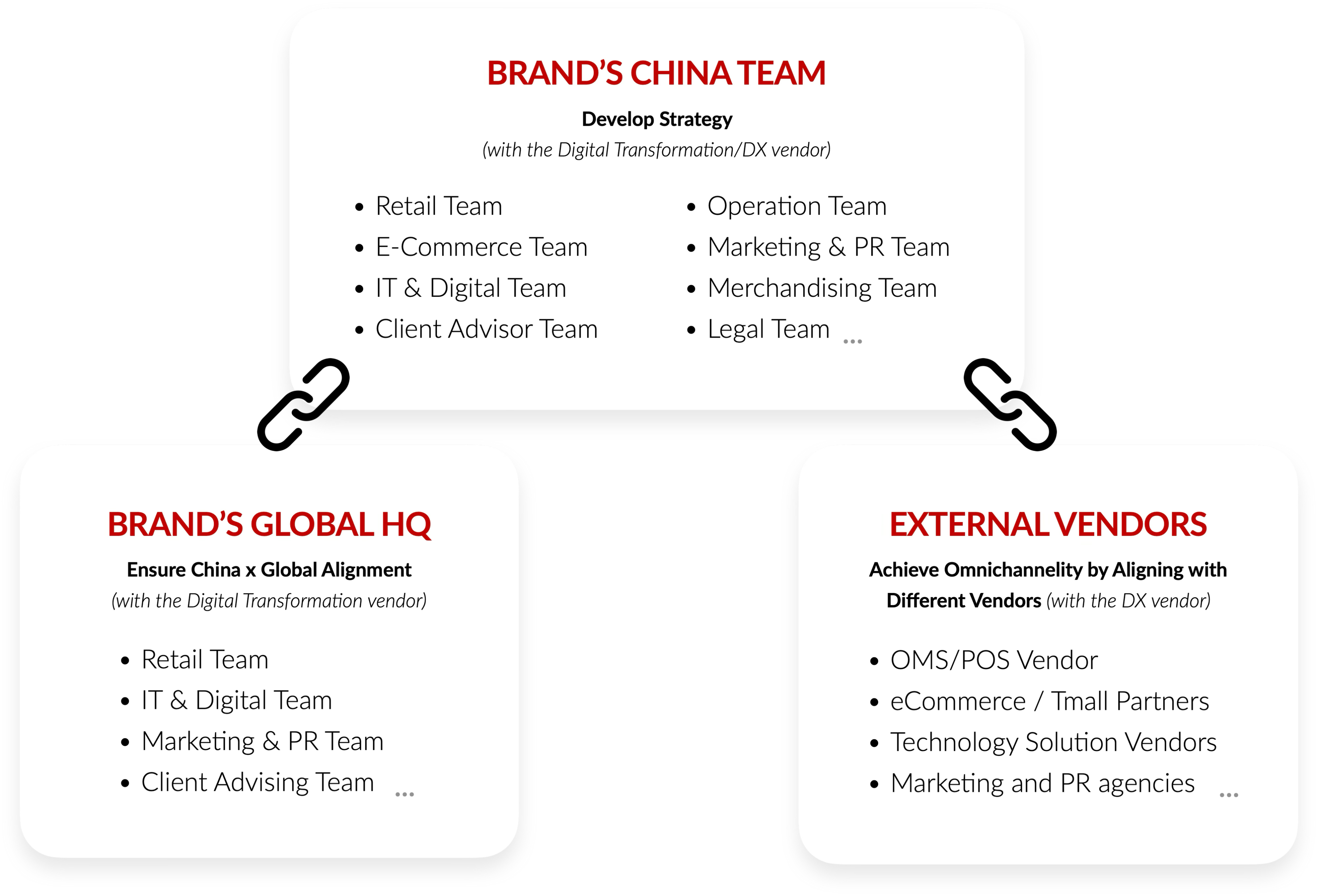
Digital transformation and innovation extend beyond technology — they are, at their core, about people. To ensure lasting impact, organizations must establish the right conditions for alignment, collaboration, and experimentation. To move with speed and avoid siloed approaches, leadership teams should:
- Facilitate open and inclusive decision-making
- Strengthen cross-functional collaboration across Marketing, CRM, Retail, IT, and beyond
- Involve diverse voices with third-party perspectives — from consumers and frontline teams to consultancies and cross-industry experts — to break internal echo chambers
At the same time, no transformation or efficiency drive can succeed without deliberate investment in people. Companies must also focus on:
- Technical skills: data literacy, digital fluency, automation know-how
- Human capabilities: communication, creativity, empathy, critical thinking
- Leadership mindset: fostering innovative leaders who can navigate ambiguity and inspire change
- AI-human collaboration: enabling employees to co-exist and thrive alongside technology
These complementary skill sets enable employees to co-exist with AI and technology, while also cultivating the mindset of innovative leaders who can navigate ambiguity and inspire change.
Balancing Efficiency with Human-Centric Focus
Above all, operational efficiency is not just about reducing costs or automating workflows — it’s about building resilient, future-ready organizations led by leaders who can balance technology with humanity.
True efficiency comes when leaders enhance every stage of the digital journey with emotional empathy, cultural sensitivity, and personalized customer engagement, ensuring that automation strengthens rather than replaces human connection.
Innovative Leaders = Tech x Human Touch → Greater Efficiency
Stay tuned for the upcoming ITC Insights Vol.2 whitepaper, where we dive deeper into how brands can achieve hyper-personalization in China by leveraging digital transformation and GenAI effectively.


