
Drupal continues to evolve as a leading platform for building modern digital experiences. In this article, we explain why a Drupal 11.3.0 upgrade is a smart move for organizations looking to boost performance and future-proof their web content management projects.
Executive Summary:
The new Drupal 11.3.0 update can bring:
1. Faster performance: Handle more users and traffic without extra hosting costs.
2. Modern and future-ready: Optimized for fast, flexible sites and modern frontends.
3. Easier content management: New tools make editing quicker and simpler for teams.
4. Lower costs: Improved efficiency reduces infrastructure and support expenses.
5. Safe and seamless upgrade: Simple, low-risk process with long-term support.
Table of contents
What is Drupal Used For?
Drupal is a leading open-source content management system (CMS) used by organizations worldwide to build and manage websites, digital experiences, and applications.
Valued for its flexibility and scalability, Drupal supports both traditional websites and modern headless architectures, where it serves as a powerful backend for custom frontends like Next.js.
Its robust features and adaptability make it a trusted choice for B2C, B2B businesses, governments, and nonprofits alike.
Benefits of Upgrading to Drupal 11.3.0 for Your Website Performance (and Business)
1. Massive Performance Boost for API-Driven Systems
Drupal 11.3.0 delivers a major performance boost for organizations using Drupal as the CMS system behind their website.
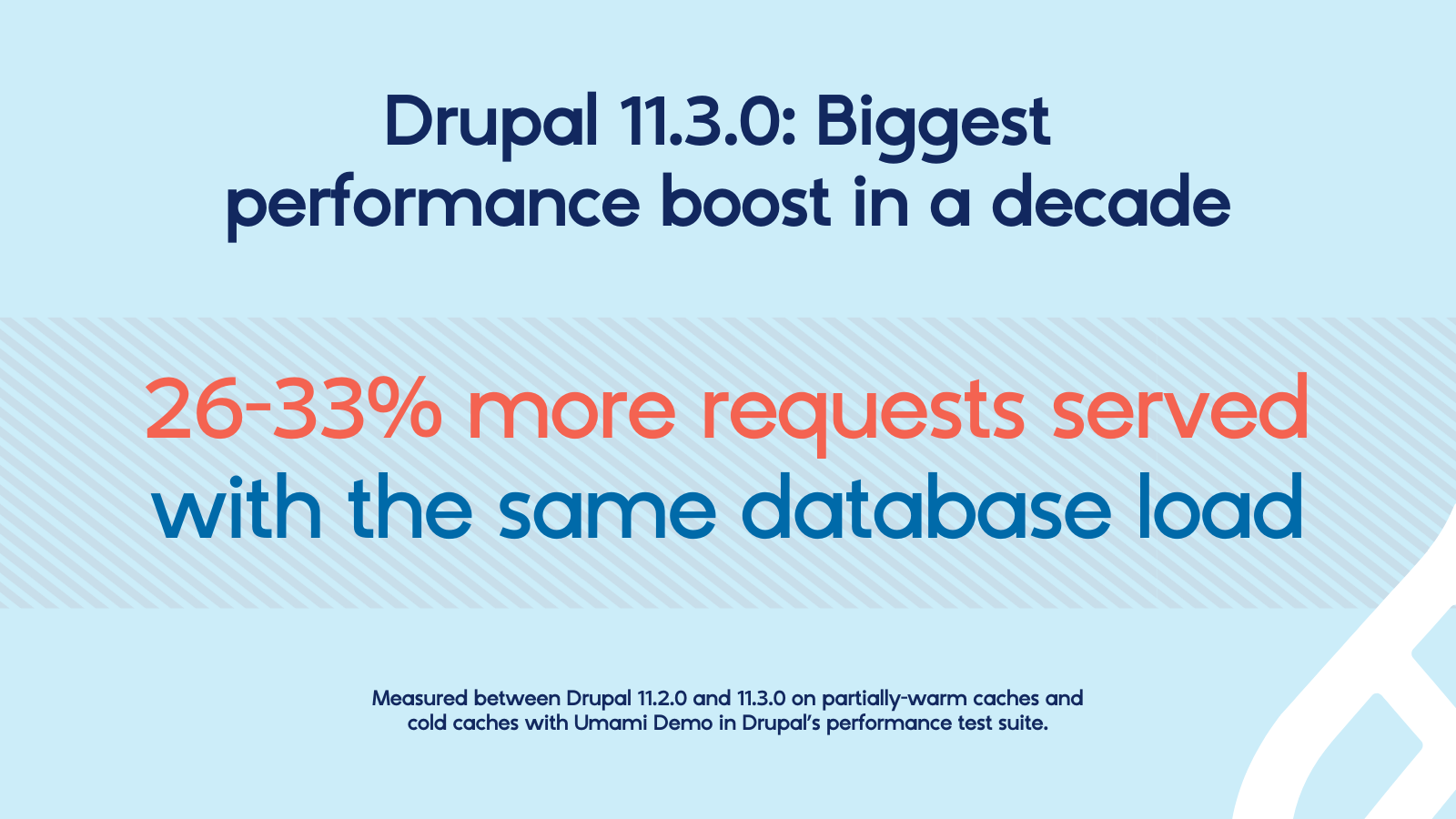
Official tests show it can handle 26–33% more user requests without putting extra strain on your database. In practical terms, this means your website can support more visitors and heavier traffic without needing to pay for more powerful servers.
This is possible because Drupal 11.3.0 introduces several technical improvements:
- Faster Routing: Drupal finds and delivers content more quickly, improving overall site speed.
- More Efficient Access Checks: The system checks who can access content in a smarter way, reducing unnecessary work.
- Smarter Internal Caching & Less Duplicated Work: Drupal reuses information and avoids repeating the same tasks, so everything runs faster and uses fewer resources.
- 33% Fewer Database Queries & Request Batching with PHP Fibers: Drupal asks the database less often and can group similar tasks together, keeping your site fast even during busy times.
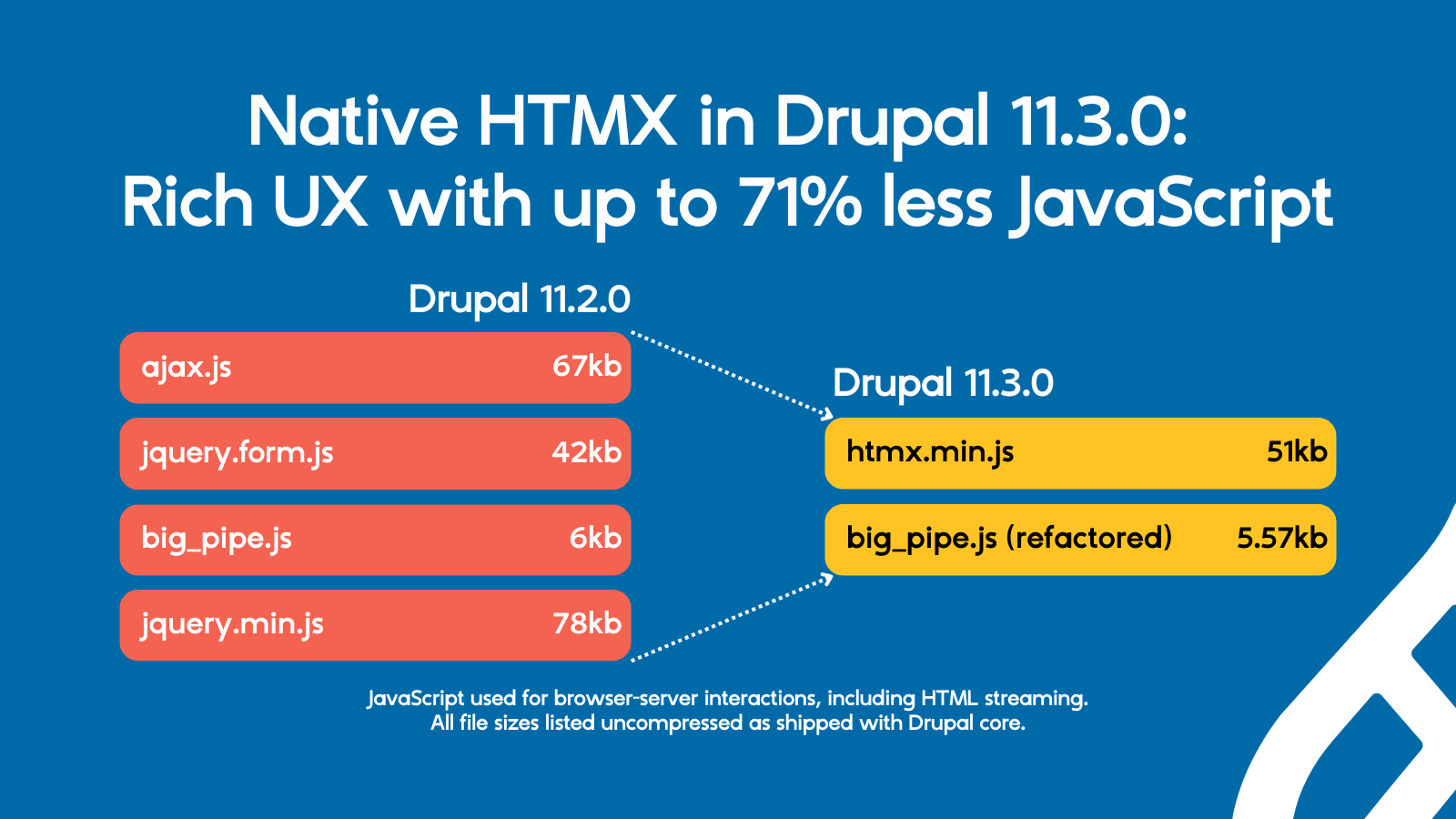
- 71% Less JavaScript via HTMX: The admin area is much faster and easier to use, thanks to a big reduction in background code.
- 62% Reduction in Queries for Entity Reference Revisions: Managing complex content is now much quicker, solving slowdowns that used to happen with advanced features.
- Enhanced “BigPipe” Integration: Pages start to appear on screen faster, so users don’t have to wait as long for content to load.
What This Means for Headless Setups
For companies using a “Headless” Drupal setup — where the backend (i.e., Drupal) manages the content and the frontend (e.g., Next.js) handles what visitors see — this upgrade leads to quicker site speeds, lower Time to First Byte (TTFB), and greater stability during traffic surges.
You can also delay expensive upgrades to your database, because the new version is much more efficient.
In short, you get better performance at the same hosting cost, giving you more value from your existing infrastructure.
2. Built for Modern, High-Concurrency Use Cases
The upgrade is designed for modern, high-concurrency use cases. API-level improvements support server-side rendering and incremental static regeneration with frameworks like Next.js, as well as handling multiple parallel requests and absorbing traffic spikes from content delivery networks (CDNs) such as Vercel, Cloudflare, and Akamai.
This results in more predictable performance under heavy load and increased system stability during peak times. Your site will remain responsive and reliable even as your audience grows.
3. Enhanced Drupal Admin Experience with HTMX
Drupal 11.3.0 now includes built-in support for HTMX, a tool that helps make admin screens faster and more interactive, while using much less technical code behind the scenes. Thanks to this improvement, the amount of code needed for admin tasks is reduced by up to 71%.
For your team, this means editing and managing content in Drupal will feel quicker, smoother, and more reliable. Admin dashboards will load faster, be easier to use, and have fewer technical issues — helping your business work more efficiently every day.
To Sum Up
On the business side, your site can handle higher traffic without additional infrastructure investment, and end users will notice improved frontend performance. Operational and support costs are reduced thanks to greater efficiency and stability.
With Drupal 11 as the long-term supported version, your platform is future-proofed, and technical debt is minimized compared to staying on Drupal 9 or early Drupal 10.
IT Consultis (ITC) is an award-winning digital agency specializing in Drupal CMS solutions, including end-to-end website design, development, system integrations, maintenance, and technology upgrades.
We can ensure a seamless process with zero downtime or disruption to your operations when implementing this Drupal upgrade.


